
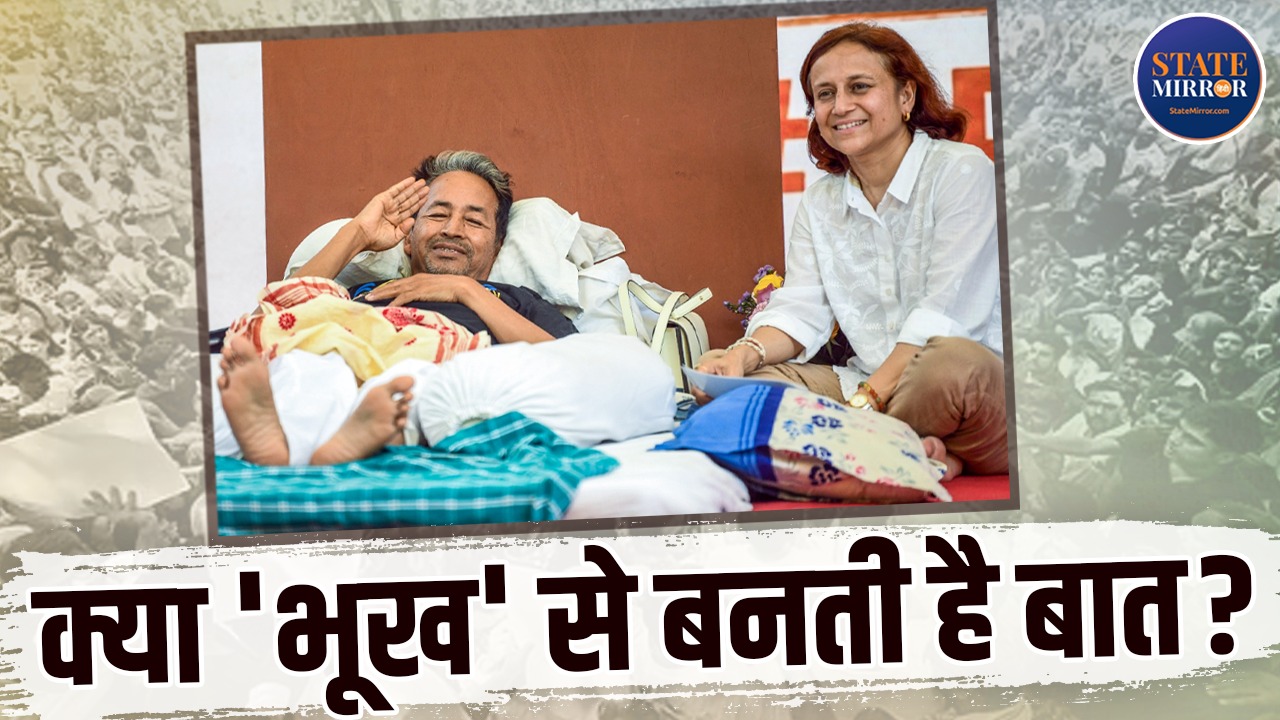
What has been the success rate of Sonam Wangchuk’s movements, when were the protests done, how much success was achieved?

Sonam Wangchuk Protest History: Ladakh’s social worker Sonam Wangchuk is once again in the headlines. Wangchuk, who raised his voice for the welfare of students, improvement in the education system and social issues, went on a long fast at Jantar Mantar in Delhi demanding NEET paper leak and reform in the examination system. After his hunger strike which lasted for about 26 days, talks were held with the government and after written assurances he ended his fast.
The history of Sonam Wangchuk’s movements has not been limited to protests only. His social struggle has centered around education reforms, constitutional rights of Ladakh and environmental protection. Influenced by Gandhian ideology, Wangchuk has made non-violent movement and hunger strike the main means of raising his voice. Wangchuk has led many big movements in his life. Some of which have been successful while some have remained in between.
When did Wangchuk protest?
1. After completing her engineering studies, Sonam Wangchuk realized that the students of Ladakh were continuously lagging behind in the current government education system. Regarding which Sonam Wangchuk had launched the Sekmol movement in the year 1988. He founded SECMOL (Students’ Educational and Cultural Movement of Ladakh) in the year 1988. This was the beginning of alternative and practical education model in Ladakh, which aimed to provide better education to the students according to their local conditions.
2. After the India-China border dispute in June 2020, Sonam Wangchuk appealed to the countrymen to boycott Chinese products. He called upon people to use their purchasing power i.e. ‘wallet power’ and start a social campaign to promote self-reliance.
3. In March 2024, Sonam Wangchuk went on a 21-day marathon fast in Leh demanding constitutional protection and inclusion of Ladakh in the Sixth Schedule of the Constitution. After this movement, he also led the Delhi Chalo Padyatra from Leh to Delhi. The objective of this campaign was to convey the demands of the people of Ladakh at the national level.
4. In September 2025, Sonam Wangchuk again agitated demanding full statehood status for Ladakh and its inclusion in the Sixth Schedule of the Constitution. During this time, he was also detained amid the situation created after the protests in Leh.
5. In June-July 2026, Sonam Wangchuk started a hunger strike at Jantar Mantar in Delhi against alleged irregularities and paper leaks in competitive examinations. He started a fast from 28 June 2026 in support of Cockroach Janata Party (CJP), which lasted for about 26 days.
How many movements of Sonam Wangchuk were successful?
1. The movements regarding inclusion of Ladakh in the Sixth Schedule and environmental protection attracted a lot of attention at the national level. After these movements, the process of formal talks moved forward between the central government and the representatives of Ladakh.
2. His fast over the NEET paper leak ended with talks with the government. The government accepted his 3 conditions. However, the biggest demand of the movement, the resignation of Education Minister Dharmendra Pradhan, has not been fulfilled. But the government had to break her fast by talking to Sonam Wangchuk.
3. Sonam Wangchuk’s most successful campaigns include SECMOL and the artificial glacier i.e. Ice Stupa project. SECMOL introduced a new model in the field of education in Ladakh, while the Ice Stupa campaign popularized new technology for water conservation and tackling water crisis. These initiatives received international recognition and were honored with honors such as the Ramon Magsaysay Award.

Comments are closed.