
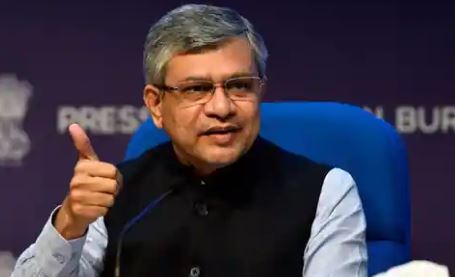

New Delhi: Railway Minister Ashwini Vaishnaw Tuesday announced that the new South Coastal Zone will come into existence and start functioning from June 1, 2026.
Addressing a gathering after the Ground Breaking Ceremony of Google Cloud India AI Hub at Visakhapatnam, Vaishnaw said, “Gazette Notification for the creation of South Coastal Railway Zone will be issued, with June 1, 2026, being notified as the effective date.”
He added that this development marks a significant step toward strengthening the Railway Administration in Andhra Pradesh.
“The minister further explained that Andhra Pradesh has received a record railway budget allocation of Rs 10,134 crore, a substantial increase compared to the Rs 886 crore allocated in earlier years for the combined states of Andhra Pradesh and Telangana,” a press note from the Railway Ministry said.
Vaishnaw noted that railway projects worth approximately Rs 1,06,000 crore are currently underway in Andhra Pradesh, aimed at enhancing connectivity across the state, including links to ports, tourism destinations, and major cities, it said.
At present, there are 17 railway zones in the country and the South Coastal Zone will be the 18th one.
On June 8, 2025, Prime Minister Narendra Modi virtually laid the foundation stone of this new zone, the announcement for which was made in February 2019.
According to the Railway Ministry, the purpose of creating SCoR is to improve operational efficiency and provide focused service to the growing passenger and freight demands in the region.
The minister announced that Andhra Pradesh has achieved 100 per cent electrification of its railway network, positioning it among the leading regions in Railway Modernization.
On passenger services, he mentioned that 16 Vande Bharat trains and 22 Amrit Bharat train services currently serve the state, improving travel efficiency and comfort.
Additionally, he stated that the entire East Coast Railway Corridor is being upgraded to a four-line network, which is expected to double capacity and enable the operation of up to 500 new trains.

Comments are closed.