The number of first graders born in 2020 and due to enter elementary school in the 2027 academic year is projected to fall below 300,000, The Korea Times reported, citing data released by the Korean Statistical Information Service (KOSIS) and the Korean Educational Development Institute (KEDI).
South Korea recorded 272,337 births in 2020, a 10% decline from the previous year, according to the Ministry of Data and Statistics.
This year’s elementary school enrollment fell to a record low of 301,442, the lowest figure since the government began collecting data in 1964. Enrollment peaked in 1986, when 1.05 million students entered elementary school.
|
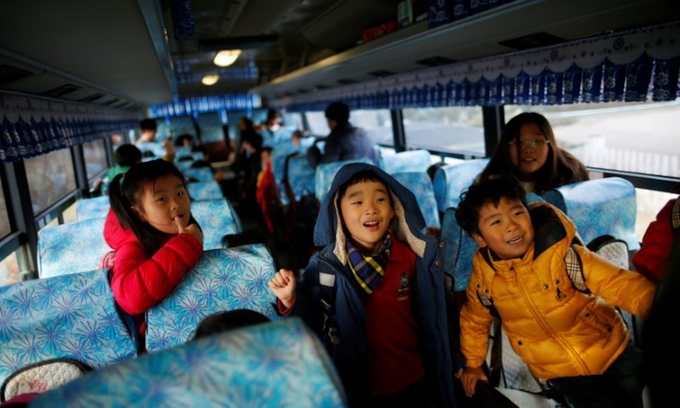
Children are seen inside a school bus at the Daesungdong Elementary School, a school inside the demilitarized zone separating the two Koreas, in Paju, South Korea, Nov. 22, 2016. Photo by Reuters |
The shrinking school-age population has raised concerns over school closures, particularly in rural areas, and a widening education gap between regions.
As schools outside the capital region shrink to just a handful of students per grade, children face limited peer interactions and restricted academic programs, according to The Korea Herald.
This widening educational disparity risks driving more families toward the capital, further draining enrollment from the communities they leave behind.
The cumulative number of shuttered elementary, middle, and high schools nationwide climbed to 4,037 in 2026, up from 4,008 the previous year, according to official data from the South Korean Ministry of Education.
First-grade enrollments are projected to keep shrinking until 2030, with figures expected to remain above the 200,000 threshold, following the birth statistics recorded in 2024.
After years of steady decline, South Korean national births climbed to 238,317 in 2024 and rose again to 254,341 in 2025, the Ministry of Data and Statistics said.