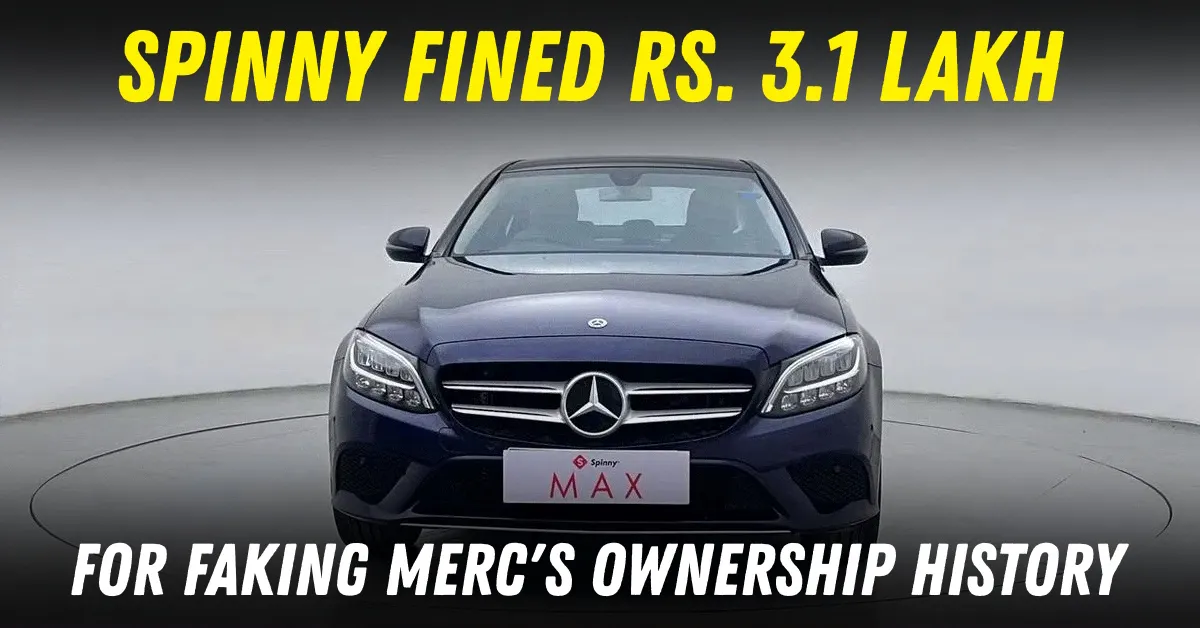
A Hyderabad used-car buyer, Bhavana Reddy, has won compensation after a Mercedes-Benz sold through Spinny as a single-owner vehicle turned out to have a more complicated ownership history.
NewsMeter reports that the District Consumer Disputes Redressal Commission ordered Spinny to pay about Rs 3.10 lakh after finding deficiency in service and unfair trade practice in the transaction. The case is also a reminder that a polished online listing and inspection report should never replace an independent check of the registration history.
Bhavana Reddy of Madhapur, Hyderabad, purchased a pre-owned Mercedes-Benz through Spinny after the vehicle was represented as having one previous owner. After the purchase, the buyer discovered records indicating multiple ownerships.
Ownership count forms part of a used car’s identity and directly affects how the next buyer evaluates it. A third- or fourth-owner luxury car is generally harder to resell than an otherwise similar first-owner example.
The commission accepted the core complaint and held the seller responsible for the mismatch between the represented ownership history and the information that later emerged. It directed Spinny to compensate the buyer, with the total monetary relief reported at around Rs 3.10 lakh.
None of these questions proves a multi-owner car is bad. A well-maintained third-owner Mercedes can be a better purchase than a neglected first-owner one. But the buyer must know the truth before deciding what the car is worth.
Luxury cars make the issue more important because depreciation is already steep and repair costs can be high. An ownership discrepancy can make the eventual resale even harder. A buyer paying extra for a supposedly single-owner example is therefore purchasing both the vehicle and a specific history attached to it.
Before paying for any used car, check the RC details independently. The registration certificate should identify the current ownership serial, while official vehicle records can help verify registration information. Ask for the original service history and match dates and odometer readings across workshop invoices, insurance documents and inspection records.
For a premium car, an authorised service-centre history check is particularly useful. It can reveal recorded mileage, major repairs and service visits that may not appear in a seller’s advertisement. Insurance history is another useful cross-check because previous claims can expose accident repairs or inconsistencies in ownership and usage.

It is that certification does not transfer all responsibility for due diligence away from the buyer. Online platforms inspect thousands of cars and standardise the purchase process, but their listings and reports are still information on which a customer is being asked to rely.
If a vehicle is advertised as single-owner, accident-free or carrying a particular service history, those claims influence its price. They need to be accurate.
For buyers, save screenshots of the original listing, inspection report, payment receipts and written communication. If a dispute appears later, an advertisement that has disappeared from the website is much harder to prove without a saved copy. Most importantly, verify the ownership count before transferring the full amount.