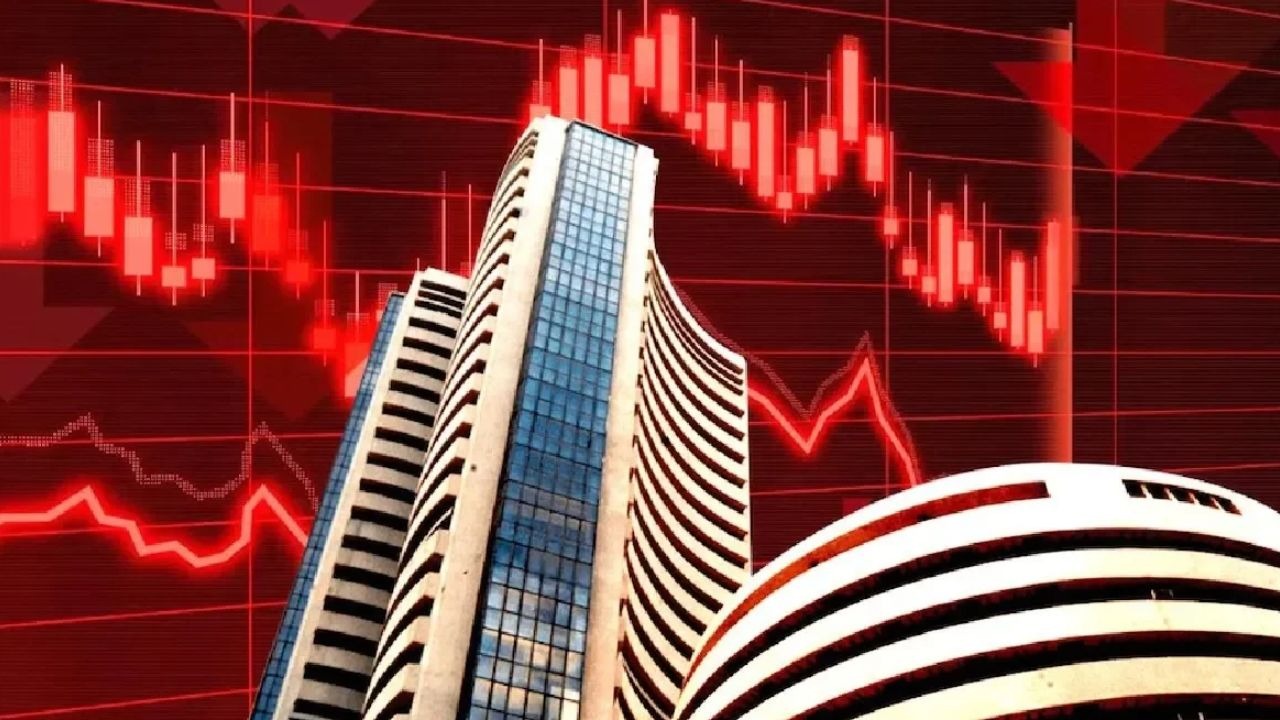
New Delhi: The Indian stock market started the week on a weak note as benchmark indices witnessed heavy selling pressure on Monday, August 17. The Sensex slipped over 300 points to trade around the 77,674 level, while the Nifty 50 fell below the crucial 24,300 mark.
The sharp decline has raised concerns among investors. The big question now is whether the market fall signals an upcoming slowdown or is simply a healthy correction that could offer fresh buying opportunities.
Markets Under Pressure for Second Straight Session
Indian equity markets remained under pressure for the second consecutive trading session. The decline follows Friday's weak closing, when both Sensex and Nifty ended marginally lower.
Investors are currently adopting a cautious approach amid uncertainty in global markets. The fear of higher risks has led many traders to reduce exposure and wait for clearer signals.
Global Uncertainty Weighs on Sentiment
The recent weakness in the market has been linked to several global factors, including volatility in crude oil prices, changes in bond yields and geopolitical tensions.
Major sectors such as IT, FMCG, PSU banks and financial services witnessed selling pressure as investors moved towards safer positions. Weakness in heavyweight stocks also affected overall market sentiment.
Some Sectors Show Resilience
Despite the broad-based decline, some sectors managed to remain stable. Automobile, pharmaceutical, healthcare, metal and media stocks showed relative strength as investors continued selective buying.
Market experts believe investors should avoid panic decisions during periods of volatility and focus on fundamentally strong companies.
Is This a Buying Opportunity?
Analysts suggest that every market decline does not indicate a recession. Corrections are often part of the market cycle, especially after strong rallies.
However, global uncertainties may continue to keep markets volatile in the near term. Investors should follow a disciplined approach, assess risks and focus on long-term investment goals rather than reacting emotionally to short-term movements.