New Delhi:Gallbladder operation may appear easy from outside, but sometimes the picture changes completely as soon as you reach inside the operation theatre. Severe swelling, adherent tissues, scars caused by chronic disease and altered structures within the body can pose a challenge to the surgeon, where even small mistakes can increase the risk. In such complex cases, robotic-assisted surgery techniques are now being seen as an important option.
Experts from the Department of Surgical Disciplines, All India Institute of Medical Sciences (AIIMS), New Delhi, have outlined the journey in gallbladder surgery from open operations to mini-laparotomy, traditional laparoscopy and now robotic surgery. The experience of more than 1,500 robotic-assisted surgeries across various specialties in the department also reflects the growing use of this technology.
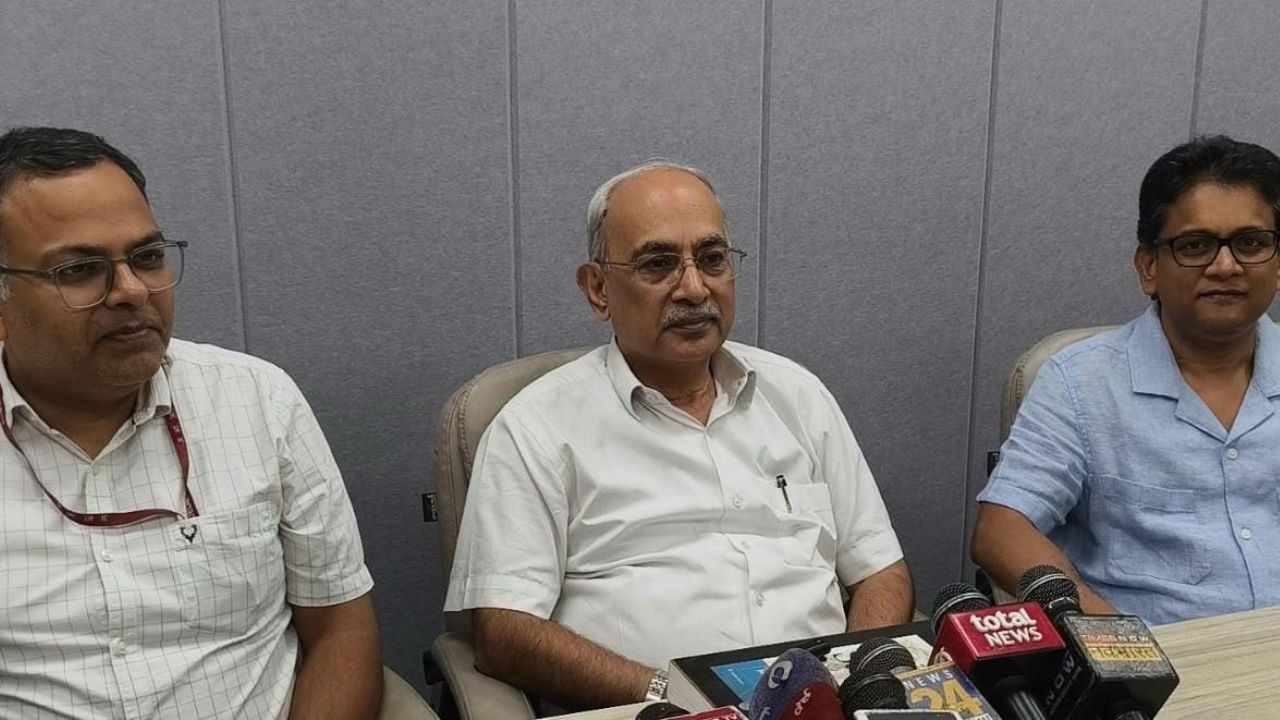
Professor Hemanga K of the Surgical Disciplines Department of AIIMS. According to Bhattacharjee, gallbladder surgery is not always the same. It is often not possible to fully estimate the actual condition of the swelling and internal adhesions before the operation begins. The actual anatomy revealed during the operation may be completely different from what was previously expected. In such circumstances, robotic technology can help surgeons work through complex structures by providing better visibility and more controlled manipulation of instruments.
The inside picture is visible in three dimensions
The da Vinci robotic system used at AIIMS provides high-quality three-dimensional images to surgeons. The special equipment attached to it is capable of performing movements in a controlled manner from different angles. According to experts, when it is difficult to see any part inside the body or to reach the equipment there, then this technical capability can prove useful. The special thing here is that the robot does not perform the operation on its own. Control during the entire procedure remains in the hands of the surgeon performing the operation. The robotic system does not replace the surgeon, but provides better visibility and additional ability to operate instruments. The final decision depends on the medical understanding and experience of the surgeon.
Technology is also important for the new generation surgeons
Professor Asuri Krishna, head of Surgery Unit-4 of AIIMS, described robotic-assisted surgery as important from the point of view of training upcoming surgeons. According to him, for doctors learning minimal incision based surgery, the robotic system provides a different medium to understand the structure of the body and learn the controlled movements of the instruments. This can help develop the skills and confidence of surgeons during training.
Dr. Chambar is witness to the changing picture of surgery from open operation to robot.
Dr. Sunil Chambar, Head, Department of Surgical Disciplines, AIIMS Delhi, who has closely observed the changing phase of gallbladder surgery, described this journey as very important. He has worked with all technologies—open operations, mini-laparotomy, traditional laparoscopic surgery and now robotic-assisted surgery—in his career.
According to Dr. Chambar, every new technique of surgery builds on the achievements of its previous era. In his experience laparoscopy had made a big difference in gallbladder surgery, but the robotic system is another important step in this evolutionary journey.
He expressed hope that in the coming time, as surgeons gain more experience in robotic technology, a major change may be seen in the field of gallbladder surgery and the use of robotic surgery may increase further in the future.
From open operations to mini-laparotomy, then laparoscopy and now robotics—gallbladder surgery has come a long way. According to the experience of AIIMS experts, this journey of technology is not just a story of changing machines, but also a change towards providing the surgeon with more clarity, control and additional ability to operate in complex situations.
AIIMS New Delhi was established in the year 1956 through an Act of Parliament. It is an autonomous institute of national importance, where along with treatment of patients, medical education, training and research is also done. The institute provides services in various medical and super-specialty areas and has long been working towards advancing the standards of medical education and healthcare services in the country.