
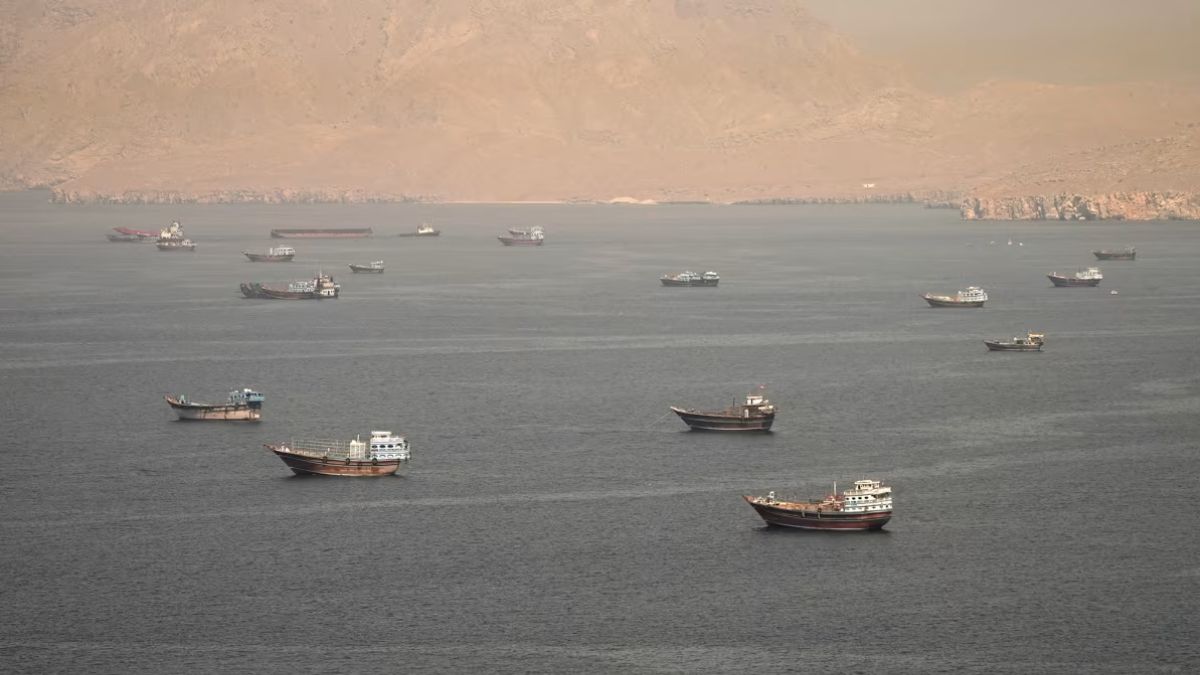
Strait of Hormuz tensions rise after Iran warns ships and US launches retaliatory strikes

The fragile peace between the United States and Iran has entered a dangerous new phase, with the Strait of Hormuz once again becoming the center of global attention. Just days after both countries agreed to halt fighting, fresh military action and conflicting rules for commercial shipping have raised fears that one of the world’s most important trade routes could remain unstable for weeks.
The latest tensions began after Iran’s Revolutionary Guards issued a warning to commercial vessels using the Strait of Hormuz. They said any ship travelling through the waterway without Tehran‘s permission or outside its designated route would be responsible for the consequences. The statement immediately raised concerns across the global shipping industry because the narrow waterway carries about 20% of the world’s oil and liquefied natural gas supplies.
Within hours of that warning, the Singapore-flagged container ship Ever Lovely was struck by an Iranian drone, according to a US official. The incident marked the first reported attack on a commercial vessel since the ceasefire agreement was announced and quickly put the future of the deal under fresh scrutiny.
Strait of Hormuz shipping routes leave companies caught between Iran and the US
The drone strike prompted the United States to launch military strikes against Iranian targets around the Strait of Hormuz on Friday. President Donald Trump described the attack on the cargo ship as a “foolish violation” of the ceasefire agreement. Despite the retaliation, US officials stressed that the strikes were carefully limited and were not intended to restart a broader military campaign.
The dispute is a growing disagreement over who controls shipping through the Strait of Hormuz. Under the ceasefire agreement, Iran committed to making its best efforts to ensure commercial vessels could pass safely through the waterway. However, Tehran has also made it clear that it believes it should play a direct role in managing maritime traffic rather than simply allowing ships to pass freely.
Iran’s Revolutionary Guards have instructed vessels to coordinate only with their naval forces and avoid routes that have not been approved by Tehran. At the same time, Iran’s newly formed Persian Gulf Strait Authority has reportedly introduced a system requiring ships to submit authorization requests before entering the strait in exchange for what it calls a Safe Passage Guarantee.
This has created confusion for ship operators because there are now effectively 3 different routes through the Strait of Hormuz. One route passes through Omani waters, another follows the traditional central shipping lane that was widely used before the conflict, and a third route is controlled by Iran. Choosing between them has become a political decision as much as a navigational one.
Shipping companies face higher costs and growing security risks
For shipping companies, every option carries its own risks.
Operators that avoid Iran’s preferred route worry their vessels could become targets for harassment or attack. Those who choose the Iranian corridor fear they could later face sanctions if relations between Washington and Tehran deteriorate again. Maritime experts say companies are now forced to balance physical safety against financial and legal risks.
The uncertainty has also pushed insurance costs sharply higher. During the recent conflict, owners of Very Large Crude Carriers were paying more than $1 million in additional insurance premiums for a single voyage through the Strait of Hormuz. While the ceasefire has reduced immediate fears of a wider conflict, insurance rates remain elevated because the security situation is still unclear.
The confusion disrupted efforts to restore normal shipping activity. After the attack on Ever Lovelythe International Maritime Organization paused a coordinated humanitarian operation that was helping hundreds of commercial vessels leave the Persian Gulf safely. Maritime analysts also reported that several ships turned back instead of continuing through the strait after the latest violence.
Meanwhile, more vessels are choosing the southern route near Oman to reduce the risk of dealing directly with Iranian authorities. Experts warn this has resulted in ships sailing much closer together than usual, increasing the possibility of accidents in one of the world’s busiest maritime corridors.
US-Iran ceasefire faces its first major test
The latest developments highlight the gap between diplomatic agreements and reality on the water.
Although leaders in Washington and Tehran agreed to stop fighting, many of the practical details surrounding commercial navigation remain unresolved. Shipping companies say they still lack clear guidance on which routes are considered safe and whether following Iran’s instructions could create future legal or financial problems.
Iran insists it has the right to oversee shipping through the Strait of Hormuz, while the United States continues to support unrestricted commercial navigation. Until both sides reach a common understanding, every cargo ship entering the region will have to navigate not only military threats but also competing political demands.
For global markets, the stakes extend well beyond the Middle East. The Strait of Hormuz remains the world’s most important energy corridor, and even limited disruptions can affect oil prices, shipping costs and supply chains across multiple continents. The ceasefire may have reduced the immediate risk of a full-scale war, but the latest confrontation shows that lasting stability will depend on more than a signed agreement. It will require both sides to establish clear rules that commercial shipping can trust before confidence fully returns to one of the world’s busiest waterways.

Comments are closed.