
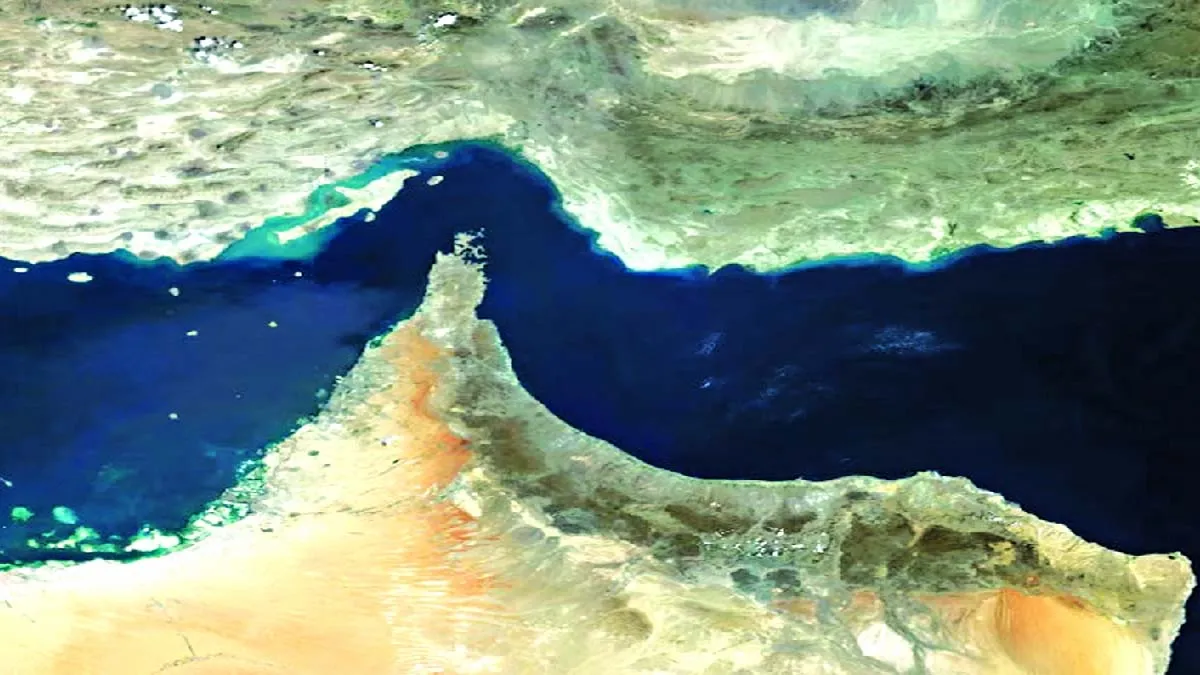
Strait of Hormuz: When war broke out in the Gulf, a 1000 year old friend came in handy for India.

The impact of Iran war and increasing tension in West Asia (Mid-East) is now directly visible on India’s trade and economy. Especially after the closure of the Strait of Hormuz, there has been a huge and historic change in India’s export routes. Amidst this geopolitical crisis, a very old and trusted friend of India has emerged as a trouble-shooter.
The result of this is that in April 2026, Singapore has achieved the title of India’s second largest export destination, surpassing the United Arab Emirates i.e. UAE. Now after America, Singapore has become the biggest export market for India. This historic change in the business world is not limited to just paper figures, but it clearly shows how a global crisis can change the supply chain and trade map of the entire world in a few months.
Trade with Singapore increased, UAE suffered a big blow
If we look at the figures, in April 2026, India’s exports to Singapore increased by a record 180 percent and crossed $3.20 billion, whereas in the same month last year this figure was only $1.14 billion. In contrast, exports to UAE, which has been India’s second largest export market for a long time, have registered a huge decline of 36 percent. Exports to UAE have declined from $3.43 billion last year to only $2.18 billion.
Trade experts believe that this reshuffle is a direct result of the Strait of Hormuz crisis. Due to obstruction in this very important sea route from March 2026, sending goods through UAE has not only become extremely expensive but is also proving to be risky. For this reason, Indian exporters immediately stepped forward and found a safe alternative route in the form of Singapore.
1000 years old relationship from the era of Chola kings came in handy
In this time of crisis, the almost one thousand year old historical relationship between India and Singapore has once again emerged as a lifesaver. If we turn the pages of history, in the 11th century, India’s deep trade and cultural relations were established with the Malay region (which includes today’s Singapore) during the maritime campaigns of the glorious Chola kings of South India, especially Rajendra Chola I. You will be surprised to know that the original name of Singapore, ‘Singhapura’ i.e. the city of lions, is also inspired by the Sanskrit language, which testifies to the centuries-old unbroken connection between the two countries.
Big turmoil in trade map with Gulf countries
The direction of the wind is changing rapidly not only on the export front but also on the import front. India’s imports from Oman have increased three times in the month of April this year. On the other hand, a huge decline of 47 percent has been seen in imports from Qatar, while the pace of imports from Saudi Arabia has once again increased. One thing has become crystal clear from these major ups and downs in trade with Gulf countries that India no longer wants to depend only on traditional Gulf routes for its needs. Indian companies are now giving preference to those routes and countries where the supply chain remains completely safe and stable.
What does this mean for the Indian economy?
The most positive aspect of this big change is that now India’s export market is diversifying. Strengthening trade relations with ASEAN countries can open new doors of progress for Indian companies. However, the other side of the coin is that the new sea route may be a little longer and more expensive than the old routes, due to which the fear of increasing export costs will remain constant.
Experts clearly say that if the Strait of Hormuz crisis continues like this for a long time, then Singapore will forever become a major and main export hub of India. This is the reason why the Indian government and the country’s big businessmen are now eyeing to take their trade with South East Asia and ASEAN region to new heights.

Comments are closed.