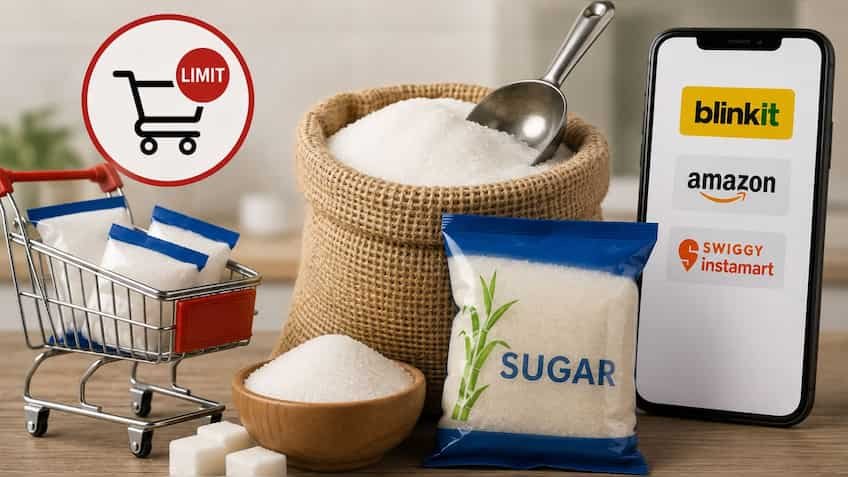
Sugar Shortage Hits E-Commerce Apps: Sugar supplies have come under pressure on e-commerce and quick-commerce platforms ahead of the festive season. Blinkit, Amazon and Swiggy Instamart have introduced purchase limits in the last week of August 2026. The limits vary across platforms and locations.
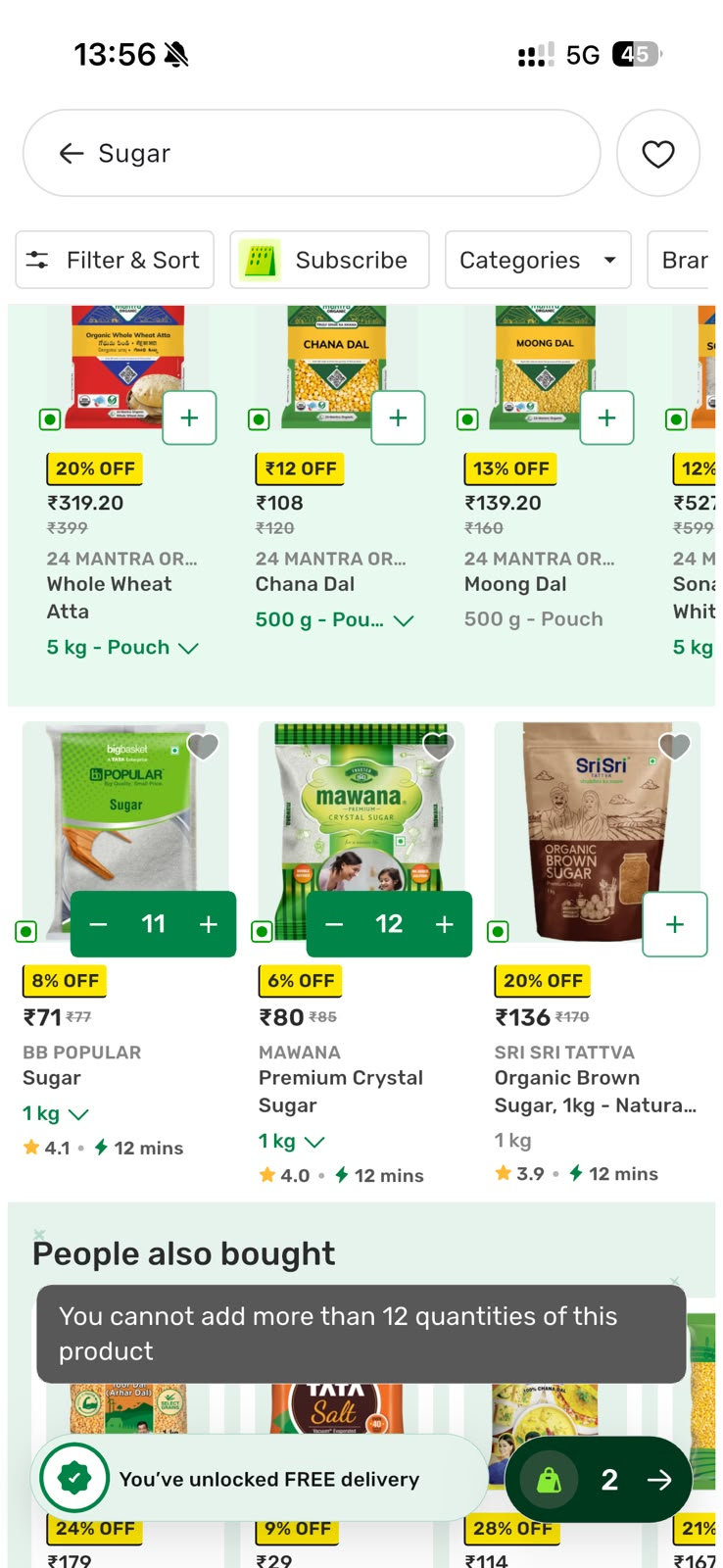
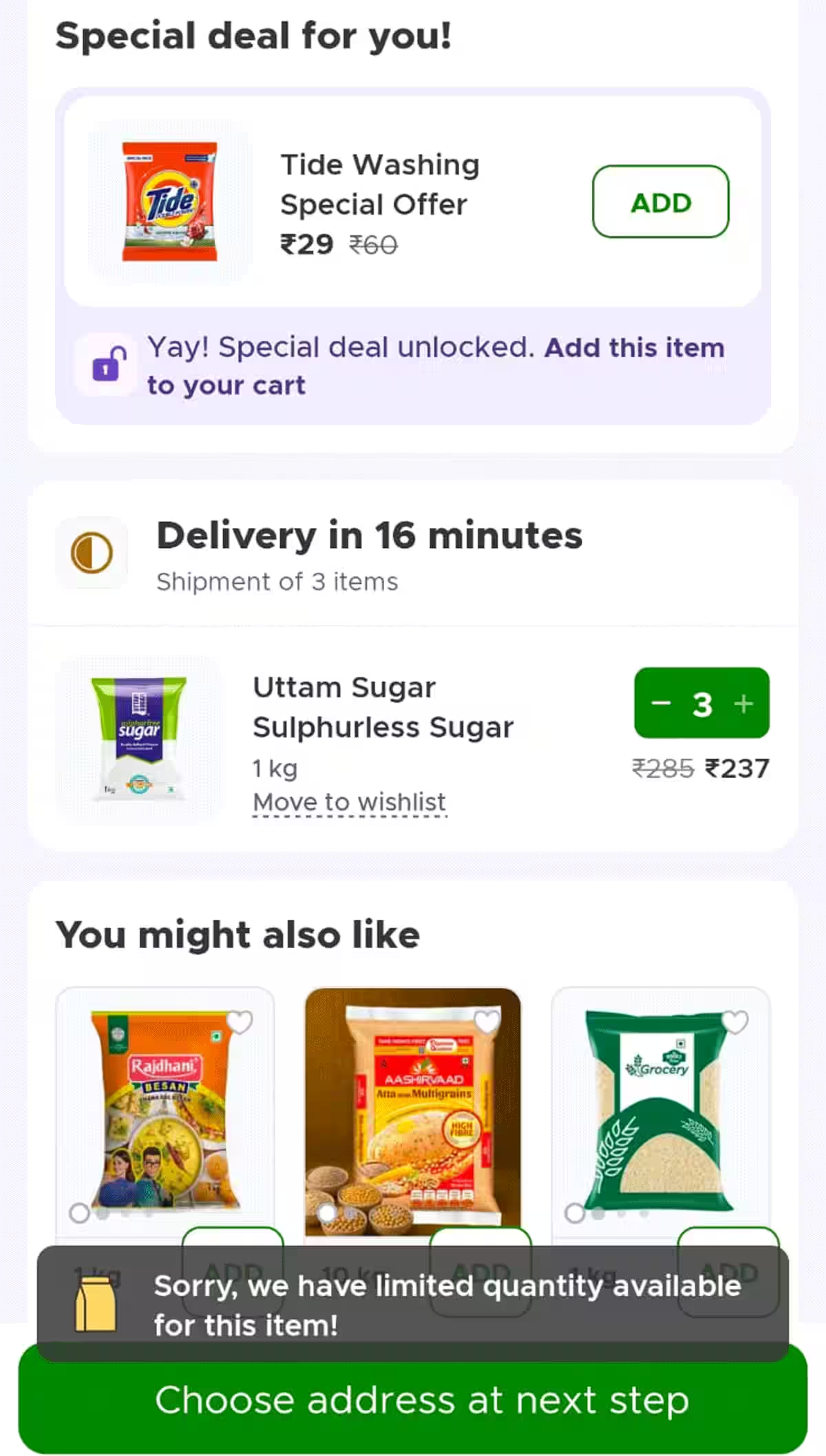
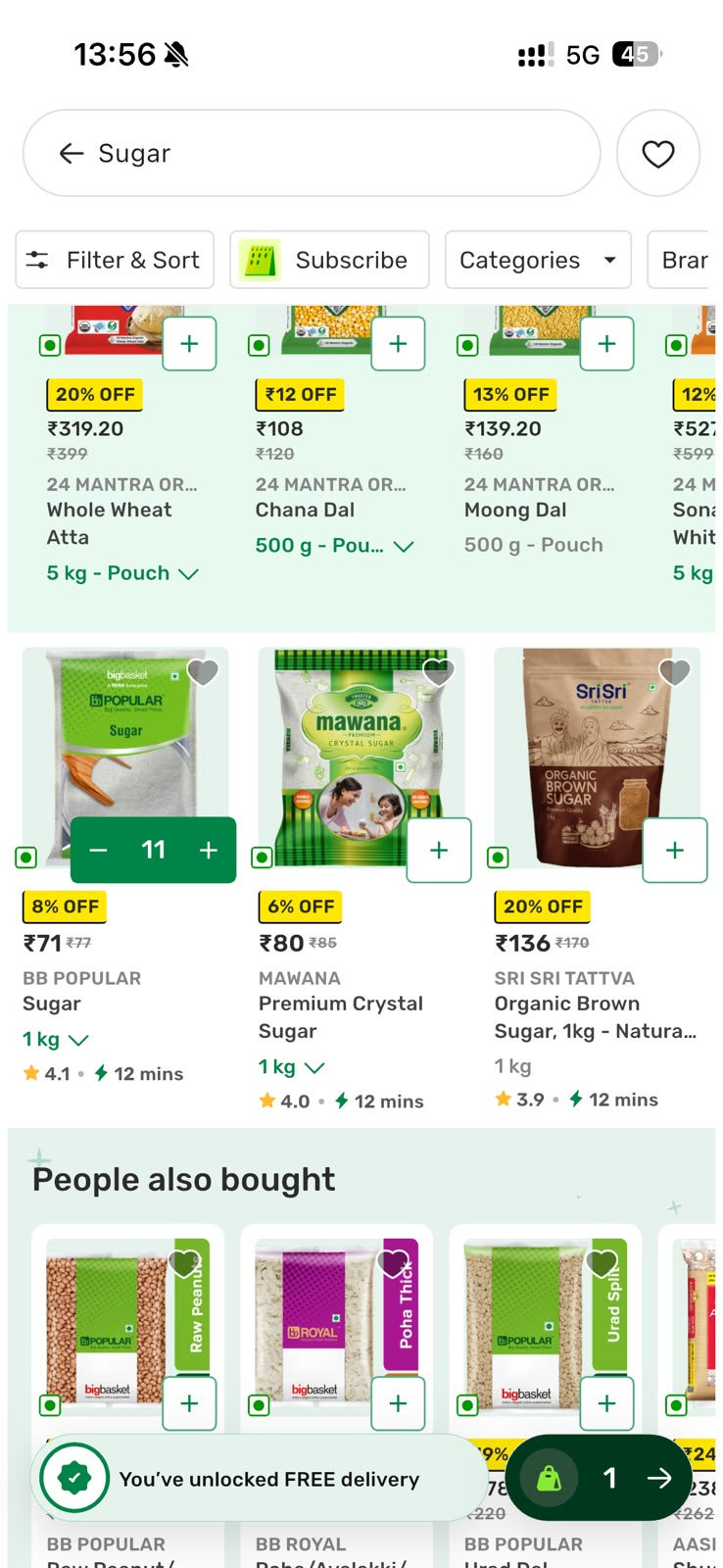
Amazon has capped sugar purchases at 2 kg, while Blinkit allows up to 3 kg per order. Swiggy Instamart has restricted some products to one packet at a time. Several sugar brands are also showing as out of stock on Flipkart and JioMart. BigBasket is allowing purchases of up to 12 kg in select areas of Delhi-NCR.
Sugar prices rise on online platforms
Packaged sugar is currently available at around Rs 71 to Rs 80 per kg on several platforms.
On Amazon, Dhampur White Crystal Sugar is priced at Rs 72 for a 1 kg pack. Customers can buy a maximum of 2 kg.

On Blinkit, Uttam Sugar is priced at Rs 79 per kg. Whole Farm Grocery Sugar is available at Rs 74, while Fortune Sugar is priced at Rs 75 per kg. Customers can buy up to 3 kg.
On Swiggy Instamart, a 2×1 kg pack of Madhur Sugar is priced at Rs 128. Customers can order only one unit.
BigBasket allows up to 12 kg in select areas of Delhi and Noida. BB Popular Sugar is priced at Rs 71 per kg, while Mawana Premium Crystal Sugar costs Rs 80 per kg.
Why is sugar under pressure?
The purchase limits come amid higher demand and supply concerns ahead of the festive season. The restrictions are also aimed at preventing bulk buying and hoarding.
Is ethanol responsible for the sugar price rise?
The recent rise in sugar prices has also brought attention to the link between sugar and ethanol production. Sugar can be diverted towards ethanol production. This has raised concerns that higher ethanol production could reduce the amount of sugar available for consumers.
However, the PIB data does not support the view that ethanol diversion is the main reason for the current sugar price rise.
Sugar diverted for ethanol production fell from around 12 per cent in 2022-23 to around 9 per cent in 2025-26. At the same time, nearly three-fourths of India’s ethanol now comes from grains, particularly maize.
This means ethanol is not taking away an increasing share of sugar from consumers. The current pressure on sugar prices and online availability needs to be viewed in the wider context of production, demand and market conditions.
India’s sugar industry
India is the world’s second-largest sugarcane producer. The sector supports nearly 5 crore farmers and around 5 lakh workers in sugar factories and allied industries.
Sugarcane production has reached 500 MMT in 2025-26, up around 43.5 per cent from 348.44 MMT in 2015-16. The area under cultivation has also increased from 49.27 lakh hectares to 58.87 lakh hectares.
Uttar Pradesh and Maharashtra are the top sugarcane-producing states.
India exported 8 lakh MT of sugar in 2025-26, compared with 0.47 lakh MT in 2016-17. Major export destinations include Sri Lanka, West Asia and East Africa.
The government has fixed the Fair and Remunerative Price (FRP) of sugarcane at Rs 365 per quintal for the 2026-27 sugar season. The basic recovery rate is 10.25%. The FRP was Rs 230 per quintal in 2016-17.
What does it mean for consumers?
The purchase limits could make bulk buying difficult for large families, weddings and catering businesses. Consumers needing 10-20 kg may have to use different platforms or visit local grocery stores.
While online availability is under pressure, adequate sugar buffer stocks are available. Sugar production in 2025-26 is also expected to remain sufficient.