
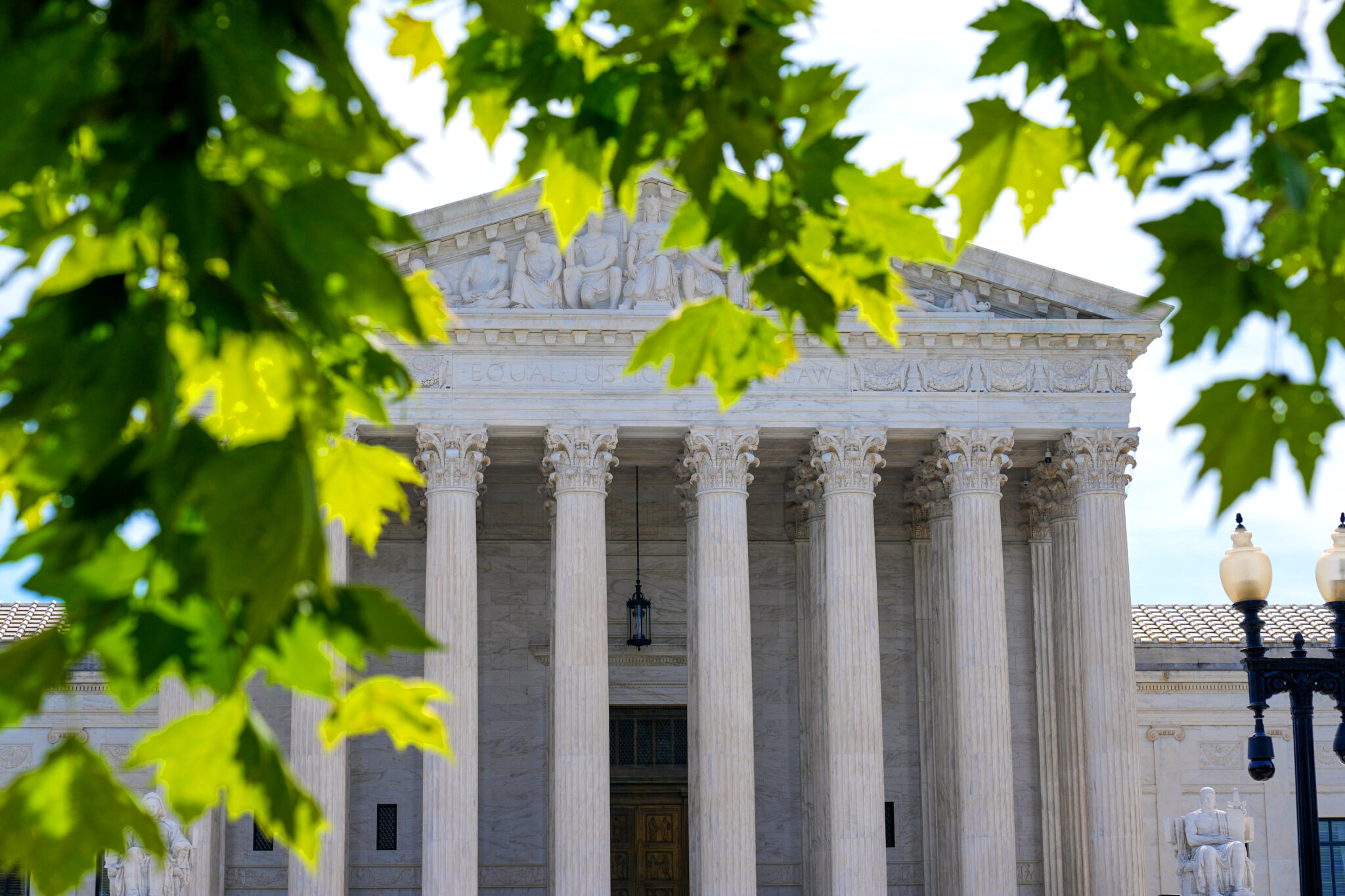

Supreme Court Clears Trump Admin to End Haiti, Syria TPS Protections/ TezzBuzz/ WASHINGTON/ J. Mansour/ Morning Edition/ The U.S. Supreme Court ruled 6-3 that the Trump administration can end Temporary Protected Status (TPS) for migrants from Haiti and Syria. The decision allows the Department of Homeland Security to revoke protections for roughly 356,000 people from the two countries. The ruling is expected to accelerate deportation efforts while prompting renewed political and legal battles over immigration policy.
- Supreme Court ruled 6-3 in favor of the Trump administration.
- Decision allows DHS to terminate TPS for Haitians and Syrians.
- About 350,000 Haitians and 6,000 Syrians could lose deportation protections.
- Majority ruled TPS decisions are generally not subject to judicial review.
- Liberal justices dissented, arguing courts should review whether legal procedures were followed.
- Immigration advocates warned deportees could face dangerous conditions.
- The ruling follows a similar Supreme Court decision affecting Venezuelan TPS recipients.
- TPS remains a temporary humanitarian program without a path to citizenship.
Supreme Court Allows Trump Administration to End TPS Protections for Haitians and Syrians
The U.S. Supreme Court ruled Thursday that the Trump administration can move forward with ending Temporary Protected Status (TPS) for hundreds of thousands of migrants from Haiti and Syria, marking another major immigration victory for the White House.
In a 6-3 decision, the court overturned lower court rulings that had temporarily blocked the Department of Homeland Security from ending the humanitarian protections.
The decision immediately clears the administration to begin terminating TPS for approximately 350,000 Haitians and about 6,000 Syrians, potentially exposing them to deportation.
Court Says Immigration Officials Have Broad Authority
The administration argued that Congress intended TPS decisions to remain largely within the authority of the executive branch and beyond routine judicial review.
The Supreme Court’s conservative majority agreed.
“The Secretary’s TPS designation decisions are not subject to judicial review,” Justice Samuel Alito wrote for the majority.
Federal officials argued that Temporary Protected Status was always designed to be temporary and that courts should not substitute their judgment for that of immigration officials.
Challenge Focused on Safety and Alleged Bias
Attorneys representing Haitian migrants argued that Haiti and Syria remain too dangerous for returning migrants because of ongoing violence, instability and humanitarian crises.
They also contended the administration rushed the termination process and alleged racial bias influenced the decision.
During the 2024 presidential campaign, President Donald Trump amplified false claims about Haitian immigrants, which attorneys cited as evidence of discriminatory intent.
The majority rejected that argument.
“But whatever one may think of the cited statements, they are insufficient to show that the termination of Haiti’s TPS designation was based on the race of the Haitian people,” Alito wrote.
He added that Haitian people should not be subjected to character attacks.
Liberal Justices Strongly Disagreed
The court’s three liberal justices issued a forceful dissent.
Justice Elena Kagan argued that courts should be allowed to determine whether federal officials properly followed the law when ending TPS protections.
She also concluded that race appeared to play a role in the administration’s actions.
“The statements fairly shout, in their racial undertones and overtones alike, that race entered into the President’s resolve to remove Haitians from this country,” Kagan wrote.
“Respectfully, I dissent from the Court’s decision that they may instead be put on the next plane.”
Immigration Advocates Warn of Serious Consequences
Lawyers representing Haitian migrants warned that the ruling could have deadly consequences.
“Simply put, the Supreme Court’s ruling will directly result in thousands of innocent people dying violent, needless deaths,” attorneys Geoff Pipoly and Andy Tauber said.
The attorneys urged the Senate to pass legislation extending deportation protections for Haitians after a bipartisan House measure stalled in the Senate.
NAACP President Derrick Johnson also criticized the ruling.
“This ruling is a devastating betrayal of Haitian families who have lived, worked, and contributed to this country for years –- only to be cast out based on anti-Black immigration sentiment,” he said.
TPS Program Faces Continued Rollback
The ruling follows another recent Supreme Court decision allowing the Trump administration to terminate TPS protections for Venezuelan migrants.
Since returning to office in January 2025, the administration has ended or announced plans to end TPS designations for people from 13 countries.
Immigration attorneys argued that conditions in Haiti remain especially dangerous due to widespread gang violence and political instability.
Court filings also cited cases in which four Haitian women deported earlier this year were later found dead after returning to Haiti.
The United States originally granted TPS to Haitians following the devastating 2010 earthquake and repeatedly renewed the designation because of ongoing instability.
Syrian nationals first received TPS in 2012 after civil war erupted, with protections continuing through years of conflict and political upheaval.
What Temporary Protected Status Provides
Congress created Temporary Protected Status in 1990 to protect migrants already living in the United States from being returned to countries experiencing armed conflict, natural disasters or other extraordinary conditions.
The program allows recipients to legally remain in the country and obtain work authorization for renewable periods of up to 18 months.
TPS does not provide permanent legal status or a pathway to U.S. citizenship.
Thursday’s ruling represents one of the most significant judicial decisions affecting humanitarian immigration protections during President Trump’s second term and could reshape the future of Temporary Protected Status for hundreds of thousands of migrants.
More on US News
Comments are closed.