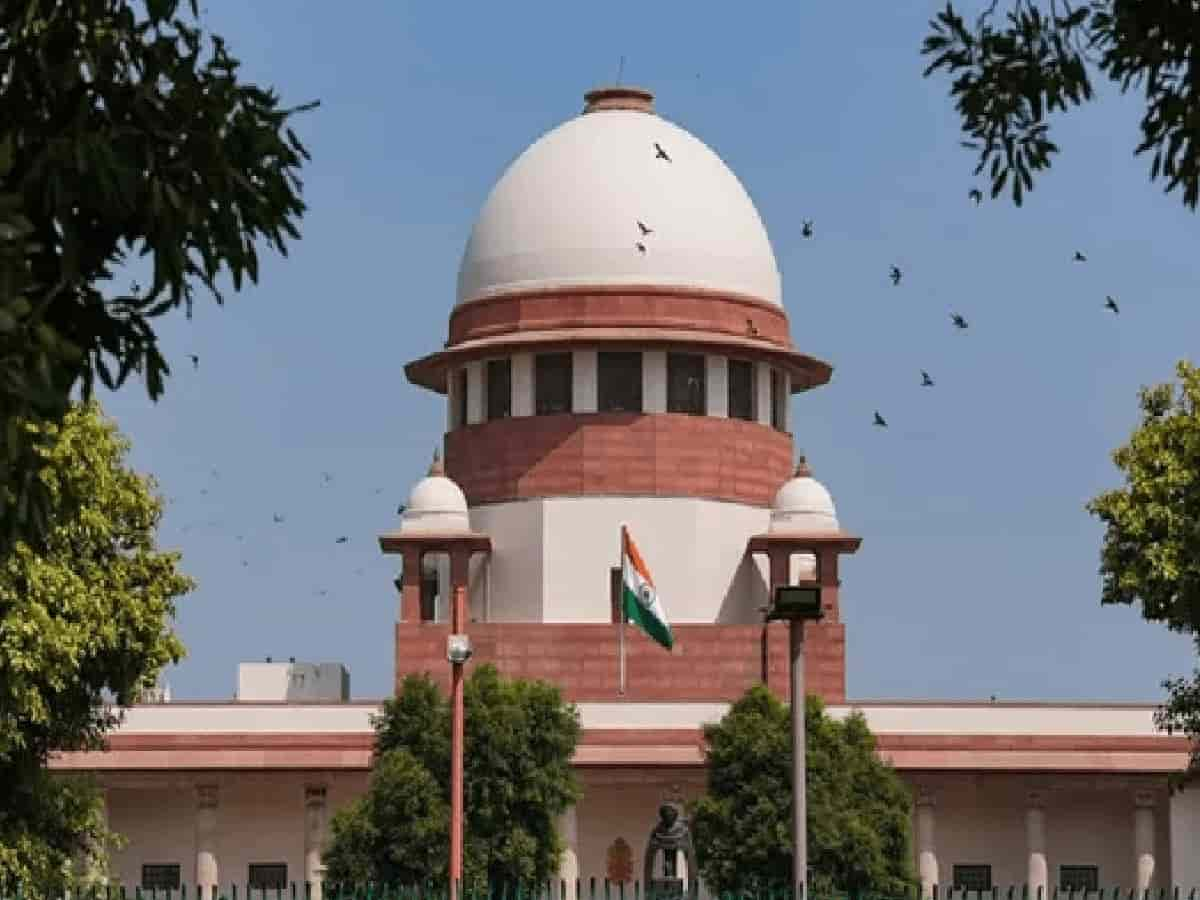
In a significant constitutional affirmation governing affirmative action in public employment, the Supreme Court of India has reiterated its landmark March 11, 2026 verdict, ruling that the salary or earnings of parents employed in Public Sector Undertakings (PSUs) or the private sector cannot by itself serve as the sole criterion to exclude Other Backward Class (OBC) candidates under the creamy layer principle. Dismissing the central government’s application seeking prospective application of the judgment, a division bench comprising Justice P.S. Narasimha and Justice R. Mahadevan held that there was no sound legal ground to postpone the operation of the decision. While granting the Centre an additional two-month window to implement administrative relief for the affected litigants, the apex court firmly clarified that parental status, occupational hierarchy, and structural equivalence must be evaluated rather than relying on a mechanical tally of monthly paychecks.
Upholding the March 11 Verdict: Why the Centre’s Plea for Deferral Failed
The legal tussle stems from the Supreme Court’s March 11, 2026 ruling in the batch of appeals titled Union of India vs. Rohith Nathan and Otherswhich resolved longstanding disputes raised by successful Civil Services Examination candidates. In that decision, the court had determined that candidates whose parents worked in public enterprises or private corporate establishments could not be mechanically grouped into the creamy layer merely because their parental annual salary crossed the general financial ceiling.
Seeking relief against immediate implementation, the Union Government filed an application invoking the court’s plenary powers under Article 142 of the Constitution, urging the bench to make the ruling strictly prospective. The Centre argued that applying the ratio to past selection cycles could disrupt settled administrative procedures, generate administrative chaos, and cause prejudice to candidates who were not impleaded as parties to the original litigation.
Rejecting these contentions, the bench observed that the March 11 judgment conclusively settled the substantive rights of the candidates before the court. The judges noted that extending the legitimate fruits of reservation, cadre allocation, and service postings to the qualified petitioners would neither disturb the settled seniority of third-party officers nor necessitate reopening concluded recruitment drives or finalized appointments. The bench recalled that as early as December 20, 2016, the Department of Personnel and Training (DoPT) had notified aspirants that allotments under the Civil Services Examination 2016 would remain contingent upon the final outcome of these pending appeals, removing any surprise or administrative uncertainty.
Status Over Salary: The Essence of the 1993 Office Memorandum
The core constitutional debate centered on how the creamy layer test is structured under the landmark Indra Sawhney framework and the foundational Department of Personnel and Training Office Memorandum (OM) dated September 8, 1993. Under the 1993 OM, the creamy layer identification was intentionally anchored on social and occupational status rather than naked economic income.
The guidelines established that children of Class I / Group A and certain Class II / Group B direct recruits in government civil posts stand excluded because their administrative authority signifies social advancement. For employees working in public sector undertakings, nationalized banks, defense establishments, and the private sector, Category II(C) of the 1993 OM mandated that creamy layer exclusion would apply only upon establishing institutional equivalence between their functional posts and Group A or Group B civil government ranks.
However, because successive central administrations failed to formally formulate this functional equivalence across commercial sectors over the past three decades, recruitment authorities began relying on a clarificatory executive letter dated October 14, 2004. That letter directed officials to compute gross salary under the residual Income and Wealth Test (Category VI) whenever equivalence was missing. The Supreme Court held that this bureaucratic shortcut was legally flawed. A secondary clarificatory letter could not supersede the foundational 1993 OM, which explicitly barred the inclusion of salary and agricultural income when applying the economic income test. Mechanically penalizing children of PSU or private sector employees based solely on gross salary—while exempting children of Group B government officers earning comparable or higher pay—amounted to hostile discrimination in violation of Articles 14 and 16 of the Constitution.
Scope of Application: Supernumerary Adjustments and Pending Claims
Addressing apprehensions regarding widespread administrative fallout across public services, the Supreme Court emphasized that the immediate relief remains confined to the contesting parties before the judicial forum. The Union Government had originally been granted six months from March 11 to enforce compliance, and the bench extended this implementation window by an additional two months. To prevent displacement of serving civil servants, the court directed the creation of supernumerary posts wherever required to accommodate eligible candidates who meet the non-creamy layer criteria.
For candidates situated in identical circumstances across the country whose grievances remain pending before various High Courts, the Central Administrative Tribunal (CAT), or administrative fora, the bench outlined a clear roadmap. The apex court refrained from issuing a blanket pan-India mandate for all pending claims, ruling instead that respective adjudicating tribunals and courts must examine individual cases on their merits. However, the bench made it clear that while adjudicating those disputes in accordance with law, authorities must consider the binding interpretation of the 1993 OM and the 2004 letter established in the March 11 judgment.
Executive Autonomy: Establishing Equivalence and Future Policy Formulations
While providing relief to the litigants, the Supreme Court underscored the doctrine of separation of powers, affirming that the central government retains absolute authority to design, refine, and modernize its creamy layer policy. The court noted that it would be improper for the judiciary to prescribe rigid statutory deadlines for evaluating job parity across diverse corporate hierarchies or to micromanage stakeholder consultations.
The bench noted that determining functional equivalence between modern corporate designations, banking roles, and public sector positions vis-à-vis conventional civil service cadres falls squarely within the policy domain of the executive and the legislature. The government remains free to amend its reservation framework, revise income thresholds, or establish clear sectoral equivalence tables, provided such policies adhere to constitutional guarantees of equality and the principles articulated by the court.
High Court Upheld: National Book Trust Ruled an Organ of the State
In a concurrent constitutional pronouncement delivered on Friday, another bench of the Supreme Court comprising Justice Prashant Kumar Mishra and Justice Augustine George Masih held that the National Book Trust (NBT) falls within the definition of “State” under Article 12 of the Constitution. The bench dismissed an appeal filed by the Chairman of the National Book Trust challenging a 2012 full-bench verdict of the Delhi High Court.
Writing for the bench, Justice Mishra affirmed that the government exercises deep and pervasive control over the publishing body, encompassing funding, institutional objectives, and the appointment of key leadership personnel. Because Article 12 governs entities against which citizens can directly enforce their fundamental rights under Articles 32 and 226, the judgment confirms that employees, authors, and citizens can approach constitutional courts against arbitrary actions by the Trust, reinforcing institutional accountability across autonomous public bodies.