
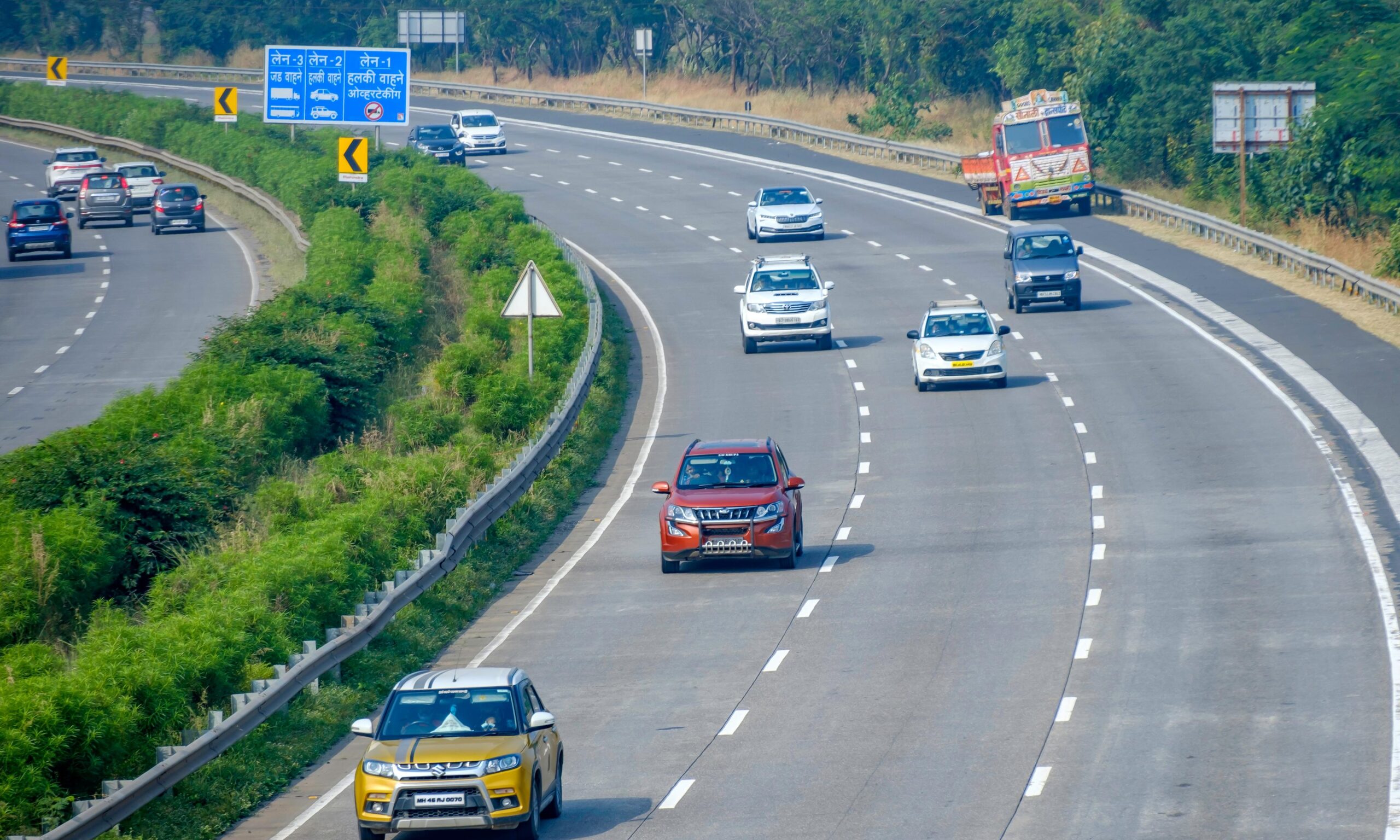

The Supreme Court has issued a set of pan-India guidelines to enhance road safety, including a ban on the parking of heavy vehicles on the expressways. The move comes after the apex court noted that highways should not become dangerous stretches due to administrative lapses or infrastructure gaps.
A bench of Justices JK Maheshwari and AS Chandurkar noted that national highways constitute two per cent of India’s total road length, and that they account for nearly 30 per cent of all road fatalities.
Systemic failures
Issuing directions to the ministry of road and transport, National Highways Authority of India (NHAI) and states and Union Territories to make roads safer, the bench observed that the loss of even a single life to avoidable hazards like illegal parking or blackspots, etc., represents a failure of the state’s protective umbrella.
Also read: Centre consults states on stricter Motor Vehicles Act rules to avoid pushback
“The loss of even a single life to avoidable hazards like illegal parking or blackspots etc., represents a failure of the State’s protective umbrella. The ‘Right to Life’ enshrined under Article 21 of the Constitution of India is not merely a guarantee against the unlawful taking of life, but a positive mandate upon the State to ensure a safe environment where human life is preserved and valued,” the top court said in its order of April 13.
It passed the order in a suo motu case registered in the aftermath of the loss of 34 lives in successive road accidents on November 2 and 3, 2025, in Phalodi in Rajasthan, and Rangareddy in Telangana due to the systemic negligence and catastrophic infrastructure failures.
People’s safety
The bench, which issued pan-India directions said, “Recognising the safety of the commuter as an integral facet of the right to live with dignity as a constitutional obligation under Article 21 of Constitution of India, it is necessary in the interest to address the systematic root causes that these interim directions are issued in exercise of powers under Article 142 of the Constitution of India.”
Also read: Mysuru-Bengaluru Highway accidents: Nearly 300 people killed in 3 years
The bench said the court reiterates that no pecuniary or administrative constraint can outweigh the sanctity of human life, and the strict timelines provided herein reflect the urgency of this constitutional obligation.
Highway parking ban
It directed that no heavy or commercial vehicle shall park/stop on any national highway carriageway or paved shoulder except at a designated bay, lay-bye, or wayside amenity.
It said enforcement of the direction shall be effected through the Advanced Traffic Management System – ATMS real-time alerts to State Police, GPS – timestamped photographic evidence, and integrated eChallan generation.
Crackdown on roadside structures
“These directions must be complied with by the officials and personnel of National Highway Authority of India, state police, state transport department. The district magistrates of the concerned districts shall set-up a standard operating procedure for this purpose as regards periodical inspections and patrolling by all these authorities. These directions must be complied within 60 days from the date of this order,” it said.
Also read: Delhi-Dehradun Expressway opens with 12km wildlife corridor; here are key highlights
One of the important directions included prohibition with immediate effect on construction/operation of any new dhaba, eatery, or commercial structure within the Right of Way (ROW) of any national highway.
“District magistrates shall enforce demolition/removal of all new or existing unauthorised structures within 60 days, in terms of the CNH Act procedure and SOP dated August 7, 2025,” the bench directed.
Moreover, the bench said no department, authority, or local body shall grant or renew any licence, NOC, or trade approval for any site within highway safety zones without prior NHAI/PWD clearance and all such existing licences for such sites shall be reviewed within 30 days.
Patrolling, surveillance push
The bench further directed, “In every district wherever the national highway passes through, the concerned district magistrate within 15 days of this order constitute a district highway safety task force in every district across India within seven days of this order, comprising officers of the district administration, police, NHAI (or concerned land-owning agency), PWD, and local bodies.”
Also read: Report a dirty highway toilet, win Rs 1,000 on FASTag from NHAI
Similarly, it directed surveillance, patrolling and illegal parking surveillance of national highways, operationalisation of Advanced Traffic Management System – ATMS comprising cameras, speed detectors, emergency response and wayside amenities, construction of truck lay-bye facilities, accident blackspots and lighting and institutional co-ordination, reporting and road safety committee.
It directed MoRTH to file a compliance report after seeking data from different states and agencies before this court within 75 days from the date of uploading of this order.
Compliance window
“The respective authorities may take appropriate steps to coordinate with and facilitate all stakeholders for the purpose of carrying out the directions passed by this court. It is further made clear that, in case there are issues regarding compliance, the parties are at liberty to approach this Court,” the bench said, as it has posted the matter for compliance after two months.
On December 15, last year, the top court mulled formulating pan-India guidelines to prevent road accidents on expressways and national highways.

Comments are closed.