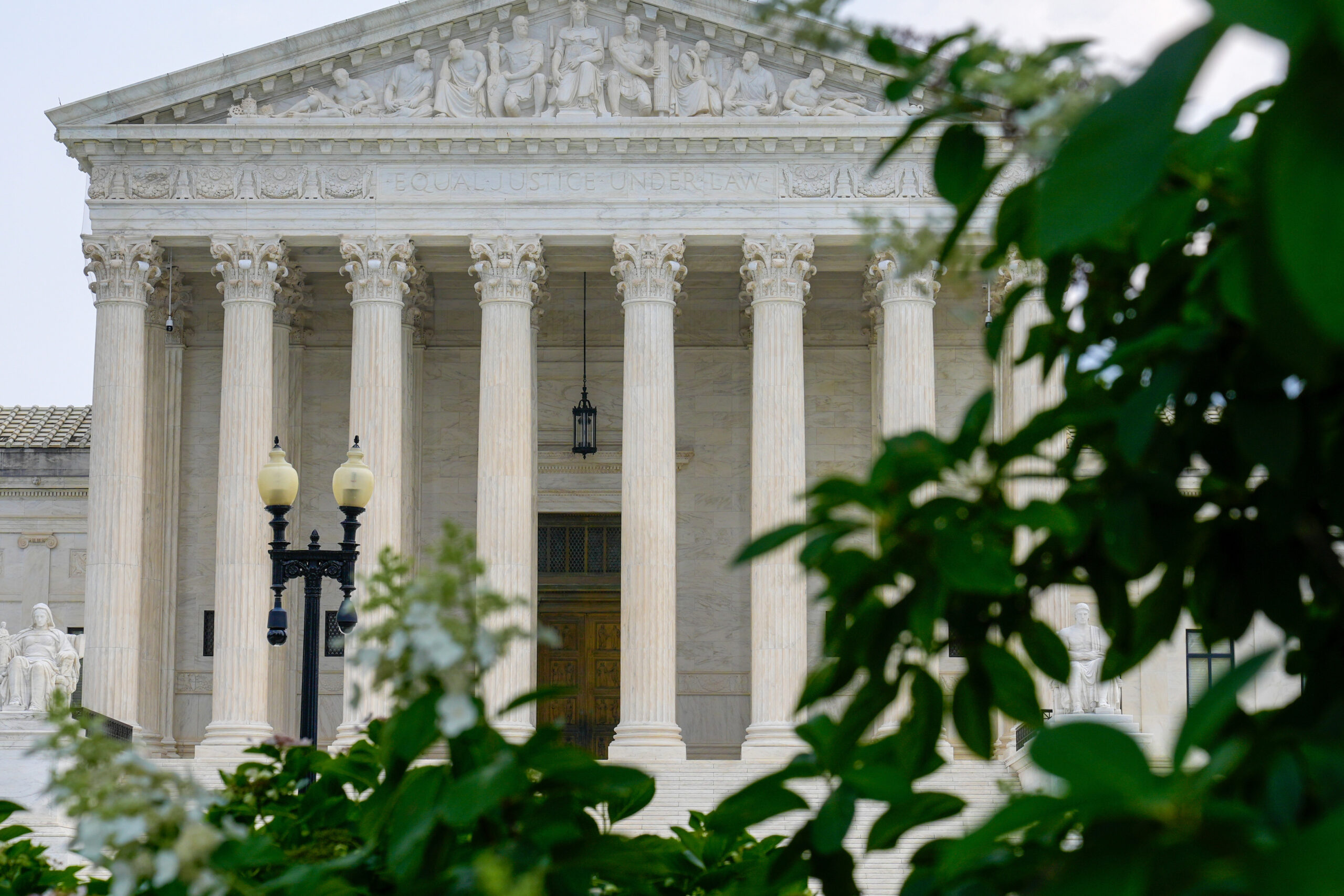
Supreme Court Opens Path for Trump Mail-Voting Restrictions Before Midterms/ TezzBuzz/ WASHINGTON/ J. Mansour/ Morning Edition/ The Supreme Court opened a path for the Trump administration to implement restrictions on mail-in voting ahead of the November midterms. The conservative majority did not decide whether Trump’s executive order was lawful, ruling instead that the states challenging it lacked legal standing. A separate nationwide injunction remains in place, while election officials warn that changing procedures shortly before ballots are mailed could cause disruption.
Quick Look
- The Supreme Court ruled that the suing states lacked legal standing.
- The justices did not decide whether Trump’s order is constitutional or lawful.
- Trump’s order would create federal lists of voters eligible to receive mail ballots.
- The Postal Service could refuse ballots from states that do not comply.
- Democratic officials from 23 states and Washington, D.C., challenged the order.
- A separate nationwide injunction continues to block implementation.
- The administration asked a federal judge Monday to lift or suspend that injunction.
- North Carolina begins mailing military and overseas ballots Sept. 4.
- Approximately 30% of votes in the 2024 presidential election were cast by mail.
- Additional lawsuits and implementation challenges are expected.

Deep Look
Supreme Court clears one obstacle to Trump’s voting order
WASHINGTON — The Supreme Court opened a path Monday for the Trump administration to pursue restrictions on mail-in voting, though significant legal and practical obstacles remain before the November midterm elections.
The court’s conservative majority did not rule on the legality of President Donald Trump’s executive order. Instead, it concluded that the Democratic-led states challenging the policy did not have the legal right, or standing, to bring the case at this stage.
“The Court’s disposition of this application does not mean that any measure taken by the Government to implement the Order will necessarily be lawful. On that score, time will tell,” the majority wrote in an unsigned order.
The emergency ruling is not a final decision on the underlying legal questions and leaves room for further lawsuits if the administration begins implementing the order.
Liberal justices dissent from the ruling
The Supreme Court’s three liberal-leaning justices publicly dissented.
Justice Ketanji Brown Jackson wrote that the decision “lets another shoe drop in the Kafkaesque nightmare that our precedents have been steadily creating for certain plaintiffs who seek to bring election-related challenges.”
New York Attorney General Letitia James called the ruling a “painful setback” but said it would “not be the final word.”
Derek Muller, a law professor at Notre Dame University, said the decision marks only the beginning of what could become an accelerated series of legal disputes.
“This is just the first inning of a very fast nine-inning game,” Muller said.
Trump order would create federal eligibility lists
Trump signed the executive order in March as part of his long-running campaign against mail-in voting.
The order directs the administration to develop lists of voters deemed eligible to receive mail ballots. It also instructs the U.S. Postal Service to deliver mail ballots only to people appearing on those lists.
Requirements released Friday would prohibit the Postal Service from transporting mail ballots from states that do not comply with the executive order.
Neither the Postal Service nor the White House immediately responded to requests for comment.
States argue Trump exceeded presidential authority
Democratic officials representing 23 states and the District of Columbia sued to block the order.
They argued that the Constitution assigns the administration of elections to states and Congress rather than the president. They also warned that federal intervention could produce confusion, disenfranchise eligible voters and enable partisan manipulation.
“The consequences of allowing such transformative changes to take effect so close to this fall’s elections would be extreme,” attorneys for the states wrote.
Dozens of state and local election officials urged the Supreme Court to keep the order frozen because preparations for the midterms were already underway.
Senate Minority Leader Chuck Schumer said the policy was intended to make it “harder for Americans to vote” and promised that Democrats would “fight every attempt to hijack mail-in voting and rig the rules before voters have their say this November.”
Nationwide injunction remains in effect
A federal judge in Massachusetts initially blocked implementation of Trump’s plan for the midterm elections in the states that brought the lawsuit. An appeals court upheld that decision.
The same judge later issued a separate nationwide injunction in another case. That order remains an obstacle to implementation despite Monday’s Supreme Court ruling.
The Trump administration asked the Massachusetts judge Monday night to lift or suspend the nationwide order in light of the Supreme Court’s decision.
The Justice Department had appealed to the high court in late July on procedural grounds, arguing that the states brought their lawsuit prematurely.
Federal lawyers said the Massachusetts ruling “blocks the government’s ability to finalize and implement the President’s proposed policies to promote election integrity for the upcoming federal elections in November.”
A dozen Republican-leaning states supported the administration, arguing that state governments would have input in preparing the final voter lists.
Conflicting lower-court decisions fuel uncertainty
A federal judge in Washington reached a different conclusion from the Massachusetts court and allowed Trump’s order to proceed.
An appeals court upheld that ruling while leaving open the possibility of future legal challenges after the administration takes concrete steps to implement the policy.
The conflicting decisions mean the administration could face more litigation even if the remaining nationwide injunction is lifted.
The Supreme Court’s order addressed only the states’ standing and did not resolve whether Trump has the constitutional or statutory authority to impose the restrictions.
Election calendar leaves little time for changes
Time is becoming a significant obstacle to implementing major changes before the midterms.
North Carolina will begin sending ballots to military personnel and overseas voters on Sept. 4. Other states are expected to follow within weeks.
The Postal Service outlined its implementation plans last week, but election officials argue that changing mail-ballot procedures after preparations have begun could confuse voters and administrators.
David Becker, a former Justice Department lawyer who co-wrote a book challenging Trump’s claims about the 2020 electionsaid the Supreme Court had created “pure chaos leading up to the midterm elections, waiting weeks after an administration filing, and just days before mail ballots go out, to completely rewrite the rules.”
Trump continues campaign against mail voting
Trump has repeatedly claimed that mail voting generates widespread fraud, despite strong evidence that the voting method is secure. He has also used mail ballots himself.
He blamed mail voting, without credible evidence, for his 2020 loss to Democrat Joe Biden. Trump describes the new restrictions as safeguards against voting by non-U.S. citizens.
The president has also advocated legislation requiring documentary proof of citizenship to register or vote.
Noncitizen voting is already illegal, can result in deportation and has been found to be exceedingly rare.
Mail voting has grown increasingly popular among supporters of both parties. Federal data show that approximately 30% of all ballots cast in the 2024 presidential election were submitted by mail.
A 2025 Brookings Institution study identified about four cases of fraud for every 10 million mail ballots cast.
The Supreme Court previously rejected Trump-backed arguments seeking tighter rules for mail ballots, ruling 5-4 that states may count ballots received after Election Day. Unlike Monday’s emergency order, that decision followed full legal briefing and oral arguments.
More on US News