
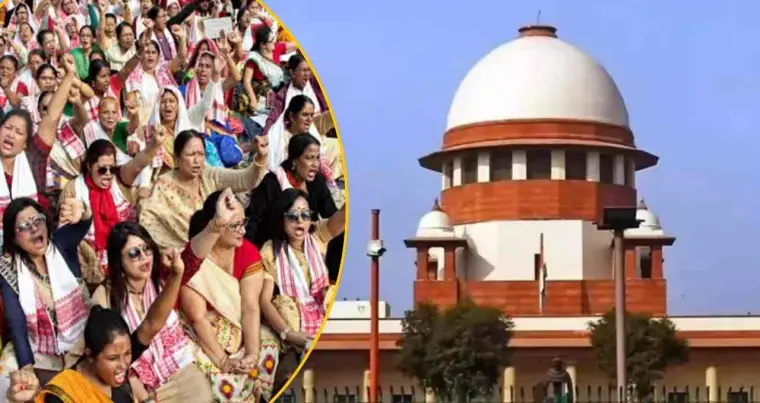

The Supreme Court of India on Thursday declined to entertain a petition seeking 50 percent reservation for women in the judiciary and in positions of government counsel. The Court stated that the issue falls within the domain of policy-making and does not warrant direct judicial intervention. It advised the petitioner to approach the appropriate competent authority with the demand.
The petition pertained to increasing gender representation in the country’s judicial system, including the High Courts, the Supreme Court, and district courts, by seeking equal opportunities and reservation for women judges and government lawyers.
According to the petition, the participation of women in the judiciary remains limited and requires concrete measures for improvement. The petitioner sought a direction to ensure at least 50 percent representation of women in judicial appointments in the High Courts and the Supreme Court. A similar 50 percent reservation was also sought for government lawyers representing the State across all levels of courts, from district courts to the apex court.
The plea contended that gender balance in key institutions such as the judiciary would strengthen the democratic framework. It cited data presented in Parliament indicating that out of 813 serving judges across the country, only 116 are women, constituting approximately 14.27 percent. The petition further stated that representation in the Supreme Court is lower, with only one woman judge currently serving.
During the hearing, the Supreme Court observed that such decisions fall within the policy-making sphere. The Court stated that structural changes in the judiciary or appointment processes must be undertaken at the legislative and administrative levels. It reiterated that the petitioner may present the demand before the relevant authorities or policy-making bodies.
The Court also declined to hear another petition seeking to make voting compulsory. The plea proposed penalizing citizens who deliberately abstain from voting by imposing fines or restricting access to government benefits. A Bench headed by the Chief Justice questioned whether individuals unable to vote due to employment or other constraints should be subjected to penalties.

Comments are closed.