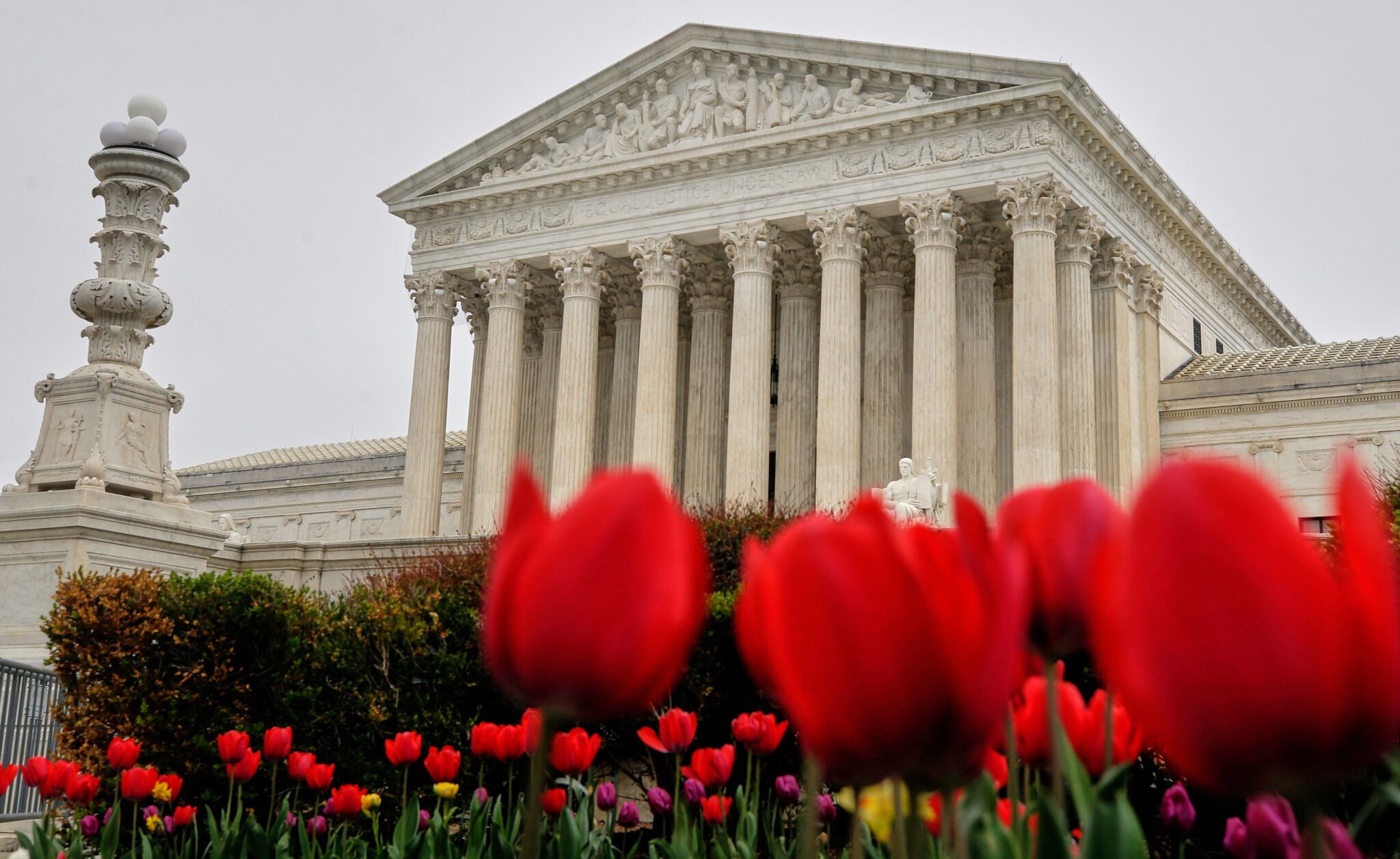
Supreme Court Rejects Trump Mail-Ballot Restrictions Ahead of Midterms/ TezzBuzz/ WASHINGTON/ J. Mansour/ The Supreme Court rejected the Trump administration’s attempt to impose new Postal Service requirements on mail ballots before the 2026 midterm elections. Election offices can continue distributing ballots under their existing state procedures as voting gets underway. Although litigation continues, the court indicated that the administration’s plan was “unlikely to succeed on the merits.”

Quick Look
- The Supreme Court declined to suspend lower-court decisions blocking the new requirements.
- Existing state mail-voting procedures will remain in place for the midterms.
- Trump’s plan called for uniform ballot envelopes and a federal voter-information portal.
- The Postal Service could have withheld ballots from states that failed to comply.
- Election officials warned that implementing the changes so late could disrupt voting.
- Approximately one-third of American voters use mailed ballots.
- Eight states conduct their elections almost entirely through the mail.
- Three justices expressed varying levels of support for implementing the plan.
- The underlying lawsuits remain unresolved.
- The majority’s language suggests that the rules may also face difficulty in future elections.

Deep Look
Supreme Court Preserves Existing Mail-Voting Procedures
The Supreme Court removed much of the uncertainty surrounding mail voting in the 2026 midterm elections by rejecting President Donald Trump’s attempt to implement new Postal Service requirements while voting was already underway.
The decision leaves existing procedures in place. Election offices across the country may continue sending ballots according to their states’ established rules without adopting the administration’s proposed system immediately before the election.
“Now, we can finally move forward and get back to what we do best: conducting our elections without a dark cloud hanging over us — fairly, openly, for the people, by the people,” California Secretary of State Shirley Weber, a Democrat who oversees voting in a state where all voters receive a mail ballot, said in a statement after the decision.
Trump’s Executive Order Prompted the Dispute
The legal battle originated with an executive order Trump signed in March concerning election administration and mail voting.
The administration subsequently developed a plan that would have required states to use a uniform envelope design for mailed ballots. States also would have been required to upload lists of eligible voters to a federal online portal that was still being developed.
Under the plan, the U.S. Postal Service could decline to deliver ballots for states that failed to satisfy the new conditions.
Lower courts blocked the rules, and the administration asked the Supreme Court to suspend those decisions. The justices declined, allowing ballots to continue moving through the postal system under existing practices. Supreme Court filing
Officials Warned That Millions Could Be Affected
A whistleblower report submitted to Congress warned that the Postal Service requirements could result in millions of ballots not being distributed.
Election administrators also maintained that making extensive procedural changes shortly before a federal election would create logistical problems and risk voter confusion.
The dispute unfolded through a succession of lawsuits, court orders and emergency appeals. That left election officials uncertain about which requirements would apply while states were already beginning to distribute ballots.
Mail voting accounts for approximately one-third of ballots cast nationally. Administrators said applying an entirely new federal process at this stage would be difficult and potentially disruptive.
Voting Is Already Underway in Several States
The timing of the case made the uncertainty particularly significant. Some states had already begun distributing mail ballots, while others were preparing to do so.
Officials worried that voters might become uncertain about whether they were eligible to receive ballots or whether the ballots mailed to them would remain valid.
Following the Supreme Court’s decision, voting-rights organizations and election officials emphasized that each state’s established procedures would remain in effect.
“Utahns can have confidence that the 2026 election will proceed as normal,” said Utah Lt. Gov. Deidre Henderson, a Republican serving as the state’s chief election officer.
Eight States Depend Heavily on Mail Voting
The possibility of last-minute changes presented the greatest challenge in the eight states where elections are conducted almost entirely by mail:
- California
- Colorado
- Hawaii
- Nevada
- Oregon
- Utah
- Vermont
- Washington
These states do not maintain the same extensive networks of in-person polling locations found elsewhere because mail ballots serve as their primary voting method.
Reconfiguring their systems shortly before Election Day would have required new procedures for ballot production, voter information and delivery.
“This is a victory for Oregonians, the right to vote, and the rule of law,” said Oregon Secretary of State Tobias Read, a Democrat. “This provides voters and elections officials with the certainty they need ahead of a major, federal election, and it sends a clear message to this country: Presidents don’t run elections, the people do.”
Nevada Officials Express Relief
Nevada Secretary of State Cisco Aguilar described his response to the Supreme Court’s decision as “one of relief, but also excitement, because today the voters really won across America.”
More than half of Nevada voters used mail ballots during the state’s June primary. Aguilar said that makes the method “critical” to ensuring that voters can participate.
He nevertheless warned that the prolonged dispute had already affected public confidence.
The Democratic official said “some of the damage has already been done,” referring to misleading claims about the reliability of voting by mail.
“You can trust the process,” Aguilar urged voters. “Please participate.”
Lower Courts Previously Blocked the Plan
Federal judges had prevented the administration from applying the new Postal Service rules during the midterms. The government then asked the Supreme Court to stay, or temporarily suspend, those lower-court decisions.
The Supreme Court rejected that request.
Justices Samuel Alito, Brett Kavanaugh and Clarence Thomas expressed varying degrees of willingness to permit the administration to use the plan in the current election or in future contests.
However, a majority indicated that the administration was “unlikely to succeed on the merits” when the legality of the plan is fully considered.
The court’s decision concerned whether the rules could take effect while litigation continued. It did not issue a final ruling resolving every legal question surrounding Trump’s executive order.
Court’s Language Could Affect Future Elections
Election-law specialists said the majority’s assessment of the administration’s legal position was important because the justices did not have to address the underlying merits when denying emergency relief.
“The court didn’t have to explain that it was disinclined to side with the government on the merits, but it did that, and that is a sign for the future,” said Derek Muller, a Notre Dame law professor.
That language could influence how lower courts handle the continuing litigation and whether the administration attempts to revive the requirements for elections after 2026.
It does not formally invalidate the executive order, but it signals that a majority of the Supreme Court currently views its legal foundation skeptically.
Critics Questioned the Election-Integrity Benefits
David Becker, a former Justice Department lawyer and executive director of the Center for Election Innovation & Research, said implementing Trump’s order “would have done nothing for election integrity but would have imposed a vast and expensive new bureaucracy on the states” and disenfranchised voters.
Becker interpreted the majority’s discussion of the merits as an indication that the requirements are unlikely to survive the ongoing legal challenges.
He said “it is unlikely these rules will ever apply to any election.”
He added, “Thanks to the rule of law, voters will not need to worry about this.”
What the Decision Means for Voters
For the 2026 midterms, voters should follow the mail-ballot instructions issued by their state and local election offices.
The Supreme Court’s action means states do not have to adopt the proposed federal envelope format or submit their voter lists through the administration’s unfinished online portal before distributing ballots.
The underlying legal dispute will continue, but the immediate threat of new Postal Service restrictions disrupting this year’s ballot distribution has been removed.
Election officials can now proceed with their previously established plans as voters decide control of Congress for the final two years of Trump’s current term.
More on US News