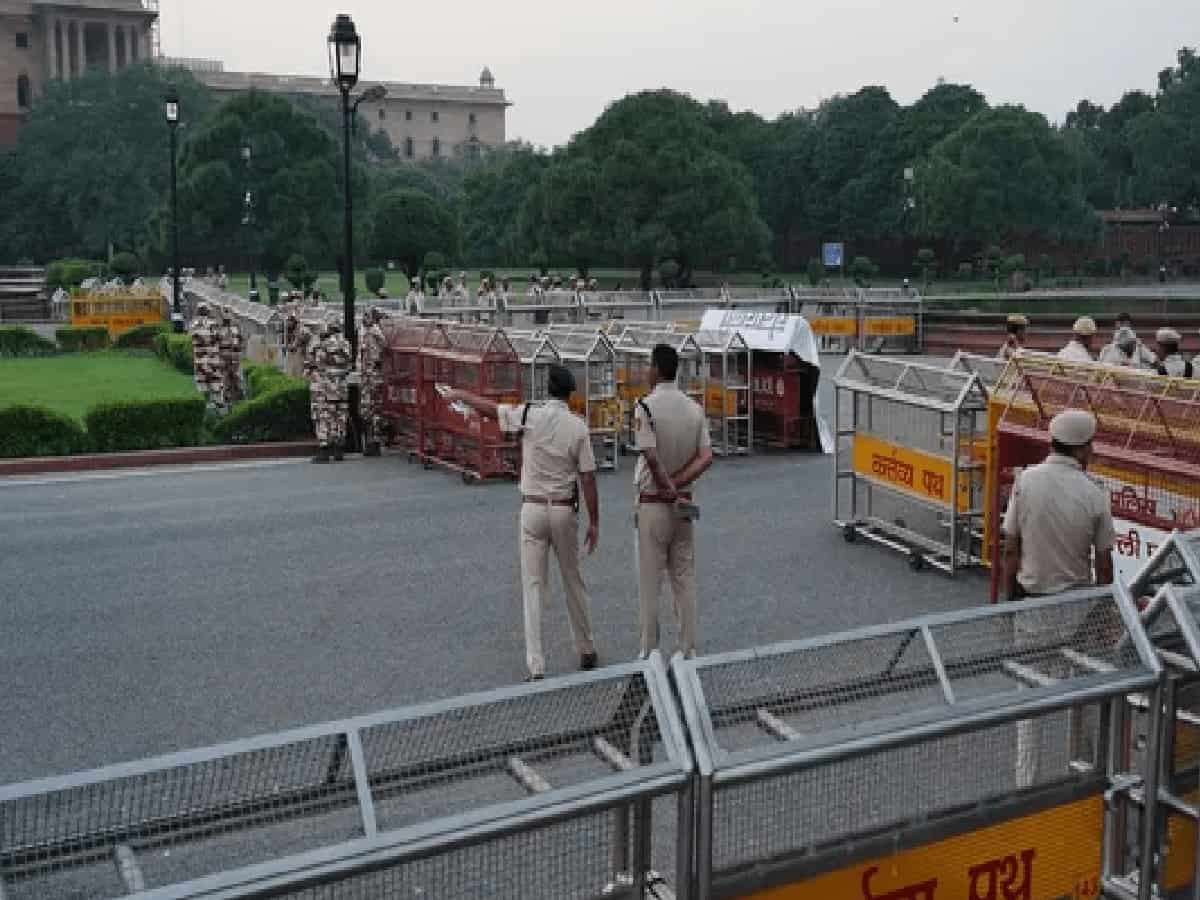
Expressing sharp concern over the complete paralysis of public transport across the National Capital Region, the Supreme Court pulled up authorities for imposing disproportionate restrictions ahead of the Cockroach Janata Party’s (CJP) proposed demonstration on October 10. A three-judge bench comprising Chief Justice Surya Kant, Justice Joymalya Bagchi, and Justice V. Mohana observed that while reasonable precautions are necessary to avert violence, the state cannot bring the entire capital to a standstill, pointedly remarking that authorities cannot “use a hammer to kill a fly.” The bench weighed in during an urgent hearing initiated after senior advocate Kapil Sibal highlighted the massive disruption caused by shuttering 57 Delhi Metro stations and cancelling multiple mail and express trains.
Unpermitted Agitations Are Unlawful: Bench Questions Legal Sanction
During the heated exchange in courtroom one, the bench strictly examined the legal legitimacy of the planned demonstration targeting Chief Election Commissioner Gyanesh Kumar:
Absence of Official Sanction: When the bench inquired whether the Delhi Police had sanctioned the Jantar Mantar assembly, it was informed that permission had been formally refused.
Justice Bagchi’s Clear Verdict: Justice Joymalya Bagchi categorically observed that without lawful administrative permission, any proposed protest remains inherently illegal, even as Kapil Sibal argued for the fundamental right to peaceful assembly.
Geographical Chokepoints: Chief Justice Surya Kant emphasized that recurring security flashpoints stem largely from holding demonstrations in heavily congested administrative epicenters, suggesting that designated open grounds with formal permits provide a balanced avenue for democratic demonstrations without paralyzing daily life.
Farmers’ Agitation Precedent: CJI Surya Kant recalled past rulings delivered during the farmers’ protests, reiterating that public roads and strategic urban zones cannot be occupied indefinitely under the guise of an ongoing sit-in.
Government Cites Past Violence and 17-Day Overstay
Appearing for the Centre, Solicitor General Tushar Mehta vigorously defended the preventive security umbrella by outlining grave security violations during past CJP agitations:
Previous Escalation: Mehta informed the court that during a previous demonstration granted a single-day permit, agitators forcibly occupied the site for 17 days, attempted to storm Parliament House, and injured more than 200 police personnel, alongside reported instances of molestation targeting on-duty women police officers.
Targeted Digital Restrictions: Addressing public perception, the Solicitor General clarified that mobile internet suspensions were not city-wide, but strictly confined to a sensitive four-kilometer perimeter along Raisina Road and Rashtrapati Bhavan.
Preventing Infiltration: Mehta explained that train cancellations were implemented to prevent thousands of unruly elements from boarding suburban lines to force entry into Central Delhi.
Prioritizing Commuters: Regulation Versus Outright Bans
The apex court clarified that its immediate intervention was centered entirely on protecting the everyday rights of regular citizens who have no role in the political agitation:
Protecting Daily Livelihoods: The bench underscored the plight of lakhs of daily wage earners, office-goers, students, and elderly commuters traversing into Delhi from satellite cities like Gurugram, Greater Noida, Ghaziabad, and East and South Delhi.
Public Transport as a Lifeline: Highlighting that the working-class populace relies entirely on the Delhi Metro rather than personal four-wheelers, the court stressed that blanket transit shutdowns inflict unwarranted hardship on the common public.
Call for Calibrated Movement: Emphasizing the vital legal distinction between arbitrary total bans and structured security regulation, the bench directed the Solicitor General to advise administrative authorities to review the blanket closures and restore metro and rail services under controlled monitoring, a directive Mehta assured he would communicate immediately.