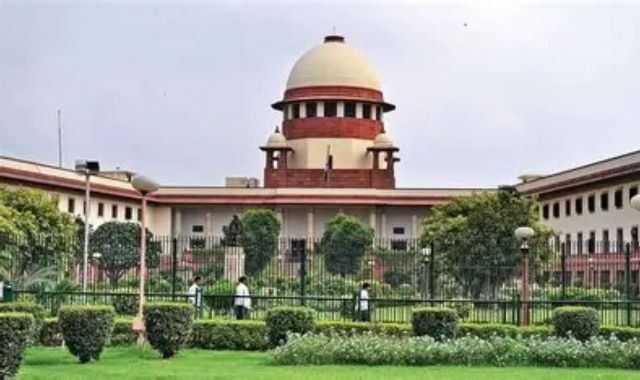
The Supreme Court has proposed that the families of murder victims be considered for financial compensation even when the accused are acquitted for lack of evidence, emphasising that the profound loss suffered by victims’ loved ones must not go unaddressed.
A division bench comprising Justices Satish Chandra Sharma and N Kotiswar Singh made the observation while acquitting a man in a 2011 double-murder case from Haryana. Despite overturning the conviction due to evidentiary gaps, the bench directed the District Legal Services Authority (DLSA) in Bhiwani to examine relevant victim compensation schemes and explore extending financial assistance to the families of the two deceased women.
The court noted that victims of crime and their dependants deserve consideration under victim protection frameworks, particularly in instances where trials end in acquittal because the prosecution fails to establish guilt beyond reasonable doubt. The bench instructed the Bhiwani DLSA to review the applicable legal provisions and submit its findings before the court.
The 2011 Bhiwani Double Murder
The case stems from the brutal killing of two widowed women, Shakuntala and Suman, in Ranila village of Haryana’s Bhiwani district on April 17, 2011. According to the prosecution, the women were dragged out of their homes and publicly beaten to death with sticks by their nephew, Naresh, and another man, Subhash, over suspicions regarding the women’s personal relationships—an act allegedly committed to protect perceived “family honour.”
Prosecutors alleged that Naresh first confronted Suman over an alleged affair with his aunt. When she objected to his interference, he allegedly dragged her outside and fatally assaulted her before proceeding to Shakuntala’s house and killing her in a similar manner.
Both accused were arrested two days later. In 2013, a fast-track court in Bhiwani convicted Naresh and sentenced him to death. However, upon reviewing the appeal, the Supreme Court concluded that the evidence on record was insufficient to sustain the conviction, leading to his acquittal.
Legal Framework for Victim Compensation
The Supreme Court’s directive is anchored in India’s statutory victim compensation framework—originally established under Section 357A of the Code of Criminal Procedure (CrPC) and now carried forward under the Bharatiya Nagarik Suraksha Sanhita (BNSS).
Under these provisions, state governments, in coordination with the Centre, are mandated to maintain funds for compensating victims or their dependants who require rehabilitation following a crime. Crucially, the law empowers courts to recommend compensation even when criminal proceedings end in an acquittal or discharge, ensuring that grieving families receive institutional support regardless of the trial’s outcome.