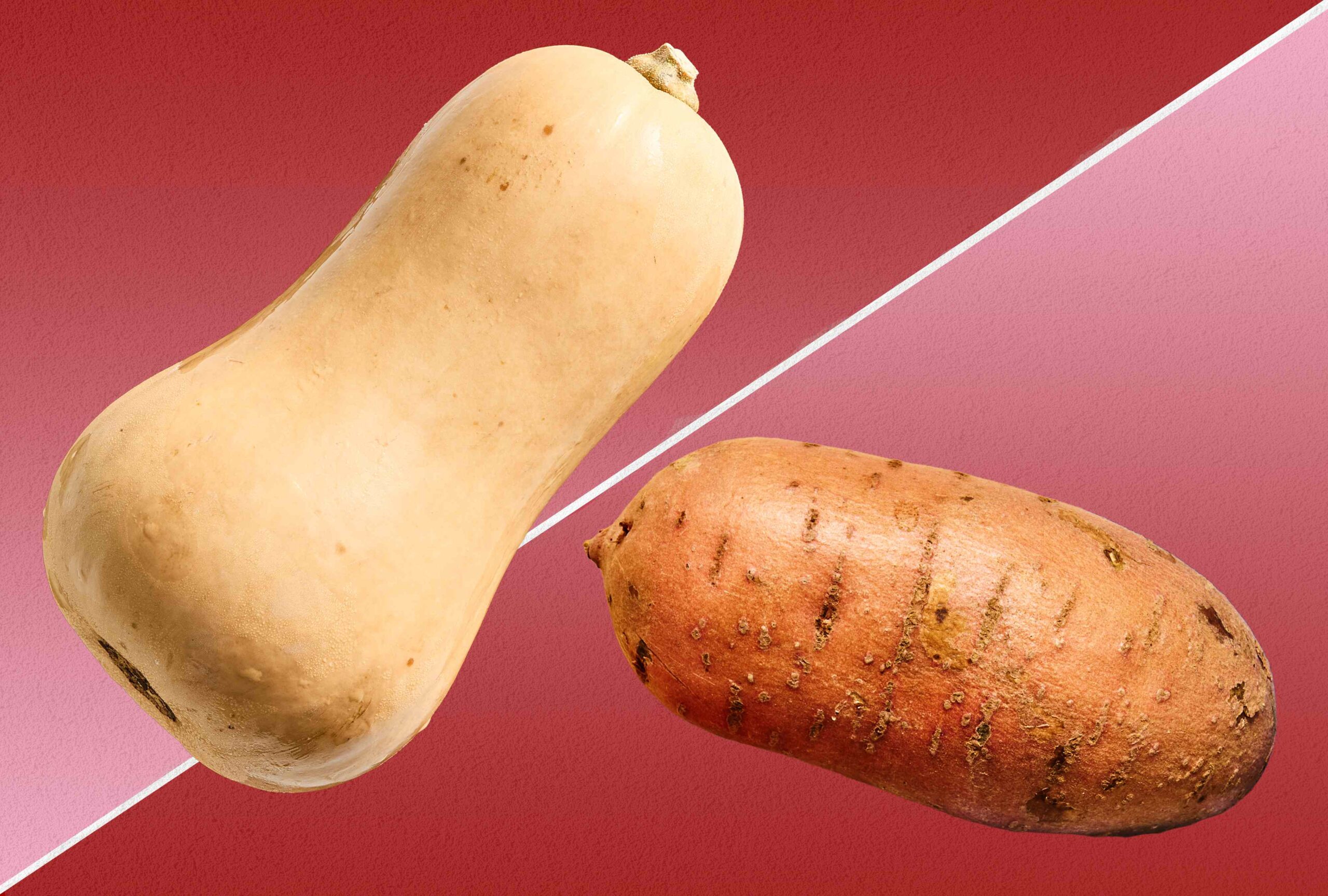
They are both starchy vegetables, but does one fare better for your blood sugar?
Reviewed by Dietitian Katey Davidson, M.Sc.FN, RD, CPT
Key Points
- Butternut squash has fewer carbs per serving, while sweet potatoes offer more fiber.
- Both vegetables provide important nutrients and can it into a blood sugar-friendly diet.
- Pair either vegetable with protein and healthy fats, and watch added sugars.
Blood sugar balance isn’t just a concern for people with diabetes. In fact, the majority of U.S. adults who have prediabetes don’t even know it. Keeping your blood sugar steady can help you feel more energized and lower your risk of type 2 diabetes and heart disease over time. And this starts with the carbohydrates you eat.
As you’re putting together your holiday plate or are simply deciding what to make for dinner, butternut squash and sweet potatoes are two popular carbohydrate-rich vegetables that may have you hesitating. They’re both orange, a little sweet and delicious with olive oil. But is one better than the other for blood sugar?
We asked dietitians to break down how sweet potatoes and butternut squash compare and whether you really need to choose.
How Sweet Potatoes Affect Blood Sugar
Sweet potatoes are a starchy carbohydrate, meaning they’ll raise your blood sugar more than non-starchy vegetables. A 100-gram serving (about a third of a medium sweet potato) has 80 calories, 17 grams of carbohydrates and 4.5 grams of fiber. Most of those carbs come from starch, with a smaller amount from naturally occurring sugars.
The fiber content is particularly important for blood sugar management. Fiber slows digestion, which helps sugars enter your bloodstream more gradually rather than all at once. And there’s more going on beneath the skin. “Even though sweet potatoes are starchy and can raise your blood glucose after you eat them, they’re rich in plant compounds that support your body’s ability to metabolize glucose better,” says Kelsey Kunik, RD. Sweet potatoes are also loaded with beta carotene (which your body turns into vitamin A), plus potassium and vitamin C.
Here are some tips for enjoying sweet potatoes while supporting steadier blood sugar:
- Keep an Eye on Portions. Aim for about ½ to 1 cup, or roughly a quarter of your plate.
- Keep the Skin On. Leaving the skin on can increase the fiber content.
- Pair With Protein and Fat. Add protein and healthy fat, like salmon, chicken, beans or a drizzle of olive oil, to help slow digestion.
- Skip the Sugary Toppings. Brown sugar and marshmallows turn a nutrient-packed vegetable into a dessert-like dish. Try cinnamon, smoked paprika or a dollop of strained (Greek-style) yogurt instead.
How Butternut Squash Affects Blood Sugar
Butternut squash is also a starchy vegetable, but it’s lower in carbohydrates. A 100-gram serving (about ½ cup cubed) has about 50 calories, 10 grams of carbohydrates and 2 grams of fiber.
“Gram for gram, butternut squash has about half the carbohydrates as sweet potatoes, meaning you can essentially eat twice as much for the same effect on your blood sugar,” says Kunik. However, butternut squash is lower in fiber, with less than half the fiber of sweet potatoes. In other words, you get fewer carbohydrates per bite, but also less fiber to help slow digestion.
Butternut squash still brings plenty to the table, though. It’s also rich in beta carotene, along with potassium and folate. Plus, since it’s lower in carbs, you can enjoy a larger serving while keeping your overall carbohydrate intake lower. This makes it a great pick if you love a big, satisfying portion.
Consider these tips for enjoying butternut squash while supporting steadier blood sugar:
- Enjoy a Larger Portion. Its lower carbohydrate content means you can enjoy a heartier serving while keeping carbs lower.
- Watch for Added Fat and Sugar. Butternut squash soups and casseroles often include cream, butter or maple syrup.
- Boost the Fiber. Since it has less fiber than sweet potatoes, pair it with fiber-rich foods like lentils, farro, leafy greens or pumpkin seeds.
- Add Protein. Toss roasted cubes into a grain bowl with chicken or chickpeas, or stir into a frittata.
Which is Better?
Sweet potatoes and butternut squash have more in common than you might think and you don’t have to choose one over the other. They’re both starchy vegetables that provide fiber and important nutrients, including beta carotene.
“All plant foods have superpowers. They just have different ones,” says Samantha Cassetty, M.S., RD. “Ounce for ounce, baked butternut squash has about 40% fewer carbs compared to baked sweet potatoes.” However, sweet potatoes offer more potassium and fiber.
If you want more food on your plate for fewer carbs, butternut squash is a great choice. But if you just love sweet potatoes, there’s no reason to cut them out over carb content alone. Feeling frustrated or deprived in the name of better blood sugar is a recipe for giving up quickly on your nutrition habits.
“Even though butternut squash has some nutrition advantages, both can easily fit into a blood sugar-friendly diet, as long as you’re paying attention to your portions,” says Kunik. Cassetty agrees: “Don’t get hung up on one food. Your overall eating pattern is more important, along with portion sizes of these foods on your plate.”
Our Expert Take
Sweet potatoes and butternut squash are both nutritious starchy vegetables that can fit into a blood sugar-friendly eating pattern. Butternut squash has fewer carbohydrates per serving, allowing you to enjoy a larger portion for fewer carbs. Sweet potatoes, on the other hand, provide more fiber, along with potassium and vitamin C. Both are rich in beta carotene, which your body converts into vitamin A.
Rather than choosing one over the other, the better approach is to pay attention to portion sizes, pair them with protein and healthy fat and go easy on sugary toppings. Pick the one you love, or better yet, enjoy both!