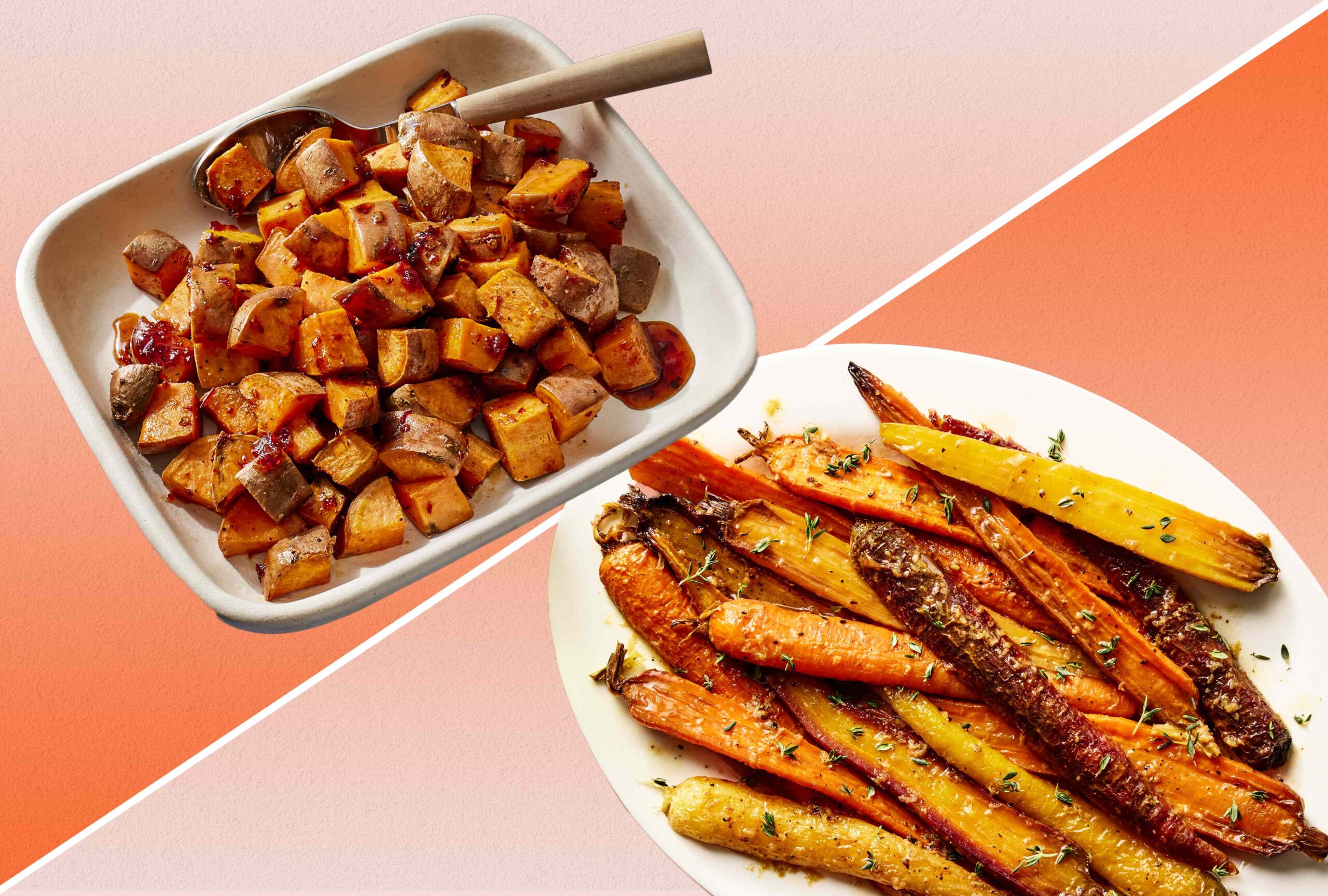
Both of these orange-hued veggies can protect your peepers.
Reviewed by Dietitian Madeline Peck, RDN, CDN
Key Points
- Both are rich in beta-carotene, which our bodies convert to vitamin A.
- Sweet potatoes provide vitamin C, which is a powerful antioxidant that reduces cellular damage in the eye.
- Carrots provide lutein, a nutrient that offers additional protection for your eyes.
Eye health isn’t just about your screen time or your glasses prescription; what you eat matters too. Research suggests that a well-balanced diet can help protect your vision as you age and reduce the risk of eye disease. If you are trying to support your eye health through your eating patterns, reach for orange produce like sweet potatoes and carrots, which are rich in nutrients that support healthy vision. But is there one orange veggie that reigns supreme? To find out if carrots or sweet potatoes are better for eye health, we spoke with dietitians and an ophthalmologist to learn more.
How Sweet Potatoes Impact Eye Health
Both sweet potatoes and carrots get their bright orange color from plant-based compounds called carotenoids. Sweet potatoes are exceptionally rich in a type of carotenoid called beta-carotene, which the body converts into vitamin A. “Vitamin A is crucial for maintaining a clear, healthy cornea (the outside covering of the eye) and is a key component of rhodopsin, a protein that allows our eyes to adapt to low-light conditions,” says Dagny Zhu, MD. Just one medium roasted sweet potato provides as much as 122% of the Daily Value for vitamin A.
But vitamin A isn’t the only antioxidant that sweet potatoes contain. “They also have vitamin C, which acts as an antioxidant and may help protect eyes from age-related damage,” says Kyrstin Draney, RD, LDN. One medium roasted sweet potato covers nearly a quarter of your daily vitamin C needs. Both vitamins A and C work together to neutralize free radicals and prevent cell damage that increases the risk of diseases like age-related macular degeneration. Since sweet potatoes package them both together, they’re a great pick for eye health.
How Carrots Impact Eye Health
Carrots have a reputation for being a go-to veggie for eye health. “Carrots are an excellent clinical recommendation because, in addition to being loaded with beta-carotene to decrease the risk of night blindness, they contain lutein,” says Zhu. Lutein is an antioxidant that is heavily concentrated in the macula, the part of the eye’s retina responsible for sharp, detailed central vision. “It acts almost like internal sunglasses for the eyes, filtering out harmful blue light and protecting the retina from the oxidative damage we see so often in aging eyes,” Zhu explains.
Like sweet potatoes, carrots are an excellent source of vitamin A. Just one cup of raw chopped carrots provides around 118% of the Daily Value for vitamin A. So does that extra vitamin A translate to even better eyesight? “Eating extra carrots won’t give someone better-than-normal eyesight if they’re already meeting their vitamin A needs,” says Johannah Katz, MA, RD, LDN.
Sweet Potatoes vs. Carrots: Which Is Better?
The short answer is that they’re both great options for eye health. “Clinically speaking, I never advise a patient to choose just one,” says Zhu. “Both are phenomenal, nutrient-dense options, but they offer slightly different profiles.” Sweet potatoes provide vitamin C and a little more beta-carotene per serving, but carrots provide a reliable source of macular-protecting lutein.
It’s important to note that how you enjoy carrots or sweet potatoes may also affect how much vitamin A your body absorbs. Since vitamin A is fat-soluble, you’ll absorb more of this eye-friendly nutrient by pairing it with a source of fat like olive oil.
At the end of the day, focus on dietary variety rather than on which food might be better than the other. “Eating a variety of orange and yellow vegetables ensures you get a comprehensive spectrum of the vitamins and antioxidants necessary to preserve visual acuity over time,” says Zhu.
Expert Tips for Better Eye Health
- Follow the 20-20-20 rule. “I am seeing a record number of patients—all ages—coming into the clinic with severe digital eye strain. To combat this, I tell all my patients to follow the 20-20-20 rule: every 20 minutes, look at something 20 feet away for at least 20 seconds. This relaxes the focusing muscle inside the eye and encourages blinking, which restores the tear film,” says Zhu.
- Know your numbers. “Keep your blood sugar and blood pressure within healthy ranges, since both affect your eyes over time,” says Draney. Make sure you are staying on top of annual physicals, and if your health care provider recommends it, monitor your blood pressure and/or blood sugar at home.
- Eat leafy greens and fatty fish. “Beyond orange vegetables, incorporate dark, leafy greens (like spinach and kale) and fatty fish into your diet. The omega-3 fatty acids in fish are clinically proven to improve the meibomian glands’ function in the eyelids, which is essential for preventing evaporative dry eye,” says Zhu.
- Wear UV-blocking sunglasses. You may already be routinely applying sunblock when going outside in the sun, but don’t forget that your eyes need protection too. Excess exposure to UV light from the sun can increase your risk of conditions like cataracts and eye cancer. Not all sunglasses provide UV protection. Look for ones that say 100% UV protection on the label or have a “UV 400” sticker.
Our Expert Take
Next time you’re at the grocery store, add both carrots and sweet potatoes to your cart. These orange veggies contain eye-friendly nutrients like vitamins A and C as well as lutein to protect your eyes from damage and reduce the risk of age-related eye diseases. To further support eye health, be sure to also incorporate dark green leafy green vegetables and fatty fish into your routine, give your eyes a break from the screen, wear UV-blocking sunglasses and stay on top of your blood pressure and blood sugar levels.