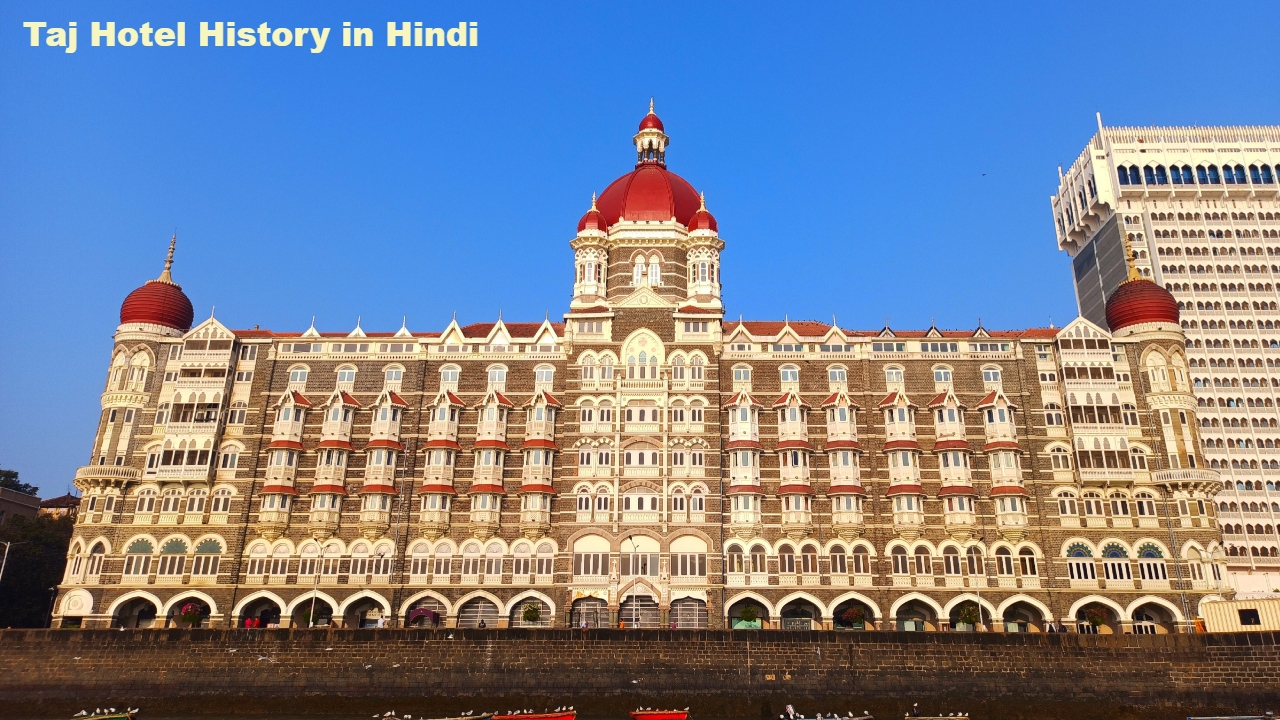
Taj Hotel History in Hindi: Bombay during the 1890s. One day Jamshedji Tata, counted among India's biggest industrialists, reached Watsons Hotel to meet a foreign friend of his. But as soon as they reached the main gate, a servant standing at the door blocked their way and said, “Sorry sir, you cannot go inside.” Jamshed ji was stunned to hear this.” When he asked the reason, the servant showed a board near the door. It was written on it Dogs and Indians Not Allowed. Entry of Indians and dogs is prohibited here.
That servant had no idea that the man whom he was just turning away from the door was not an ordinary Indian. He was the same person whose textile factory burned half of Bombay's kitchen. Who was counted among the biggest industrialists of the country and whom Mother India was going to count among her greatest sons in future. Just imagine, a person whose industries run an entire city, who had immense wealth and respect, was turned away from the door just because he was an Indian.
At that moment, Jamshed ji did not argue, nor did he quarrel with anyone, nor did he try to show his influence. But that insult lit a fire within him that later changed history. He took revenge but not with the sword but by building a building which left the British in tears. Today we will talk about a building which people consider just a hotel.
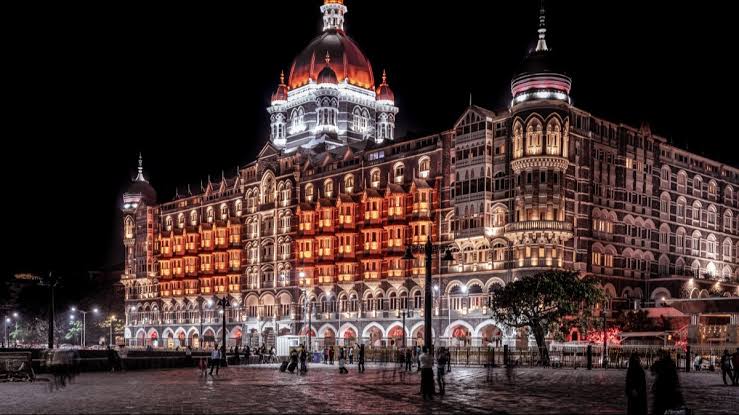
But the truth is that it is not just a hotel, but a living symbol of self-respect, self-respect and Indian pride. This is a story of stubbornness. It is the story of a dream and the story of a building that saw humiliation and terror but never learned to bow down. This is Taj Mahal Palace Hotel. It is said that in the last years of the 19th century, the whole of India was under British rule. Bombay i.e. today's Mumbai had become a rapidly developing commercial city. Ships came from all over the world via sea.
Cotton trade was at its peak and the influence of British rule was visible in every corner of the city. Jamshed ji Nasarwan ji Tata lived in this city. An industrialist whose thinking was decades ahead of his time. He achieved great success in the cotton textile trade and went on to lay the foundation of India's largest industrial groups. He had money, prestige and respect.
But that day one thing was taken away from them which is more valuable than any wealth. Self-esteem. Behind that calm face, a huge volcano was burning inside Jamshed ji's mind. He decided in his mind that he will build such a hotel which will be no less than any hotel in the world where a person will be identified not by his caste, color or country but by his respect. The year was 1898. Jamshedji Tata bought a large scale of land along the sea in the Colaba area of Mumbai.
Jamshed Ji Tata wanted that this hotel should not be a copy of any European building but should be such a confluence of India's cultural heritage and modern technology that every person would be stunned to see it. With this thinking in mind, he handed over the responsibility of this project to two Indian architects. Sitaram Khandera Vaidya and D N Mirza together envisioned a building that was decades ahead of its time. But perhaps fate had to test this dream too.
The construction work was still going on when the chief architect Sitaram Khanderao Vaidya suddenly passed away. The whole project seemed to stop for a moment. But Jamshed ji Tata was not one to accept defeat. He immediately attached British engineer WA Chambers to the project. So that the unfulfilled dream does not stop but can take a more grand form than before. Gradually a huge palace started taking shape.
Grand domes of Moorish style, beautiful chhatris of Florentine style, fine carvings of Rajputana style and the grandeur of European architecture all together. It was not just a hotel being built. It was becoming a wonderful confluence of arts of many civilizations. During construction, Jamshed ji Tata went to Paris. Saw the Eiffel Tower there. Its grandeur, its engineering and its steel structure impressed him deeply.
On his return, he ordered 10 huge pillars made of steel of the same quality which were later installed in the grand ball room of the Taj Mahal Palace. Just think. The man who was once turned away from a hotel door. Today the same person was bringing the world's best technology to India to decorate his dream. At a time when most of the houses in Bombay did not have access to electricity. Then its own power plant was installed in this hotel.
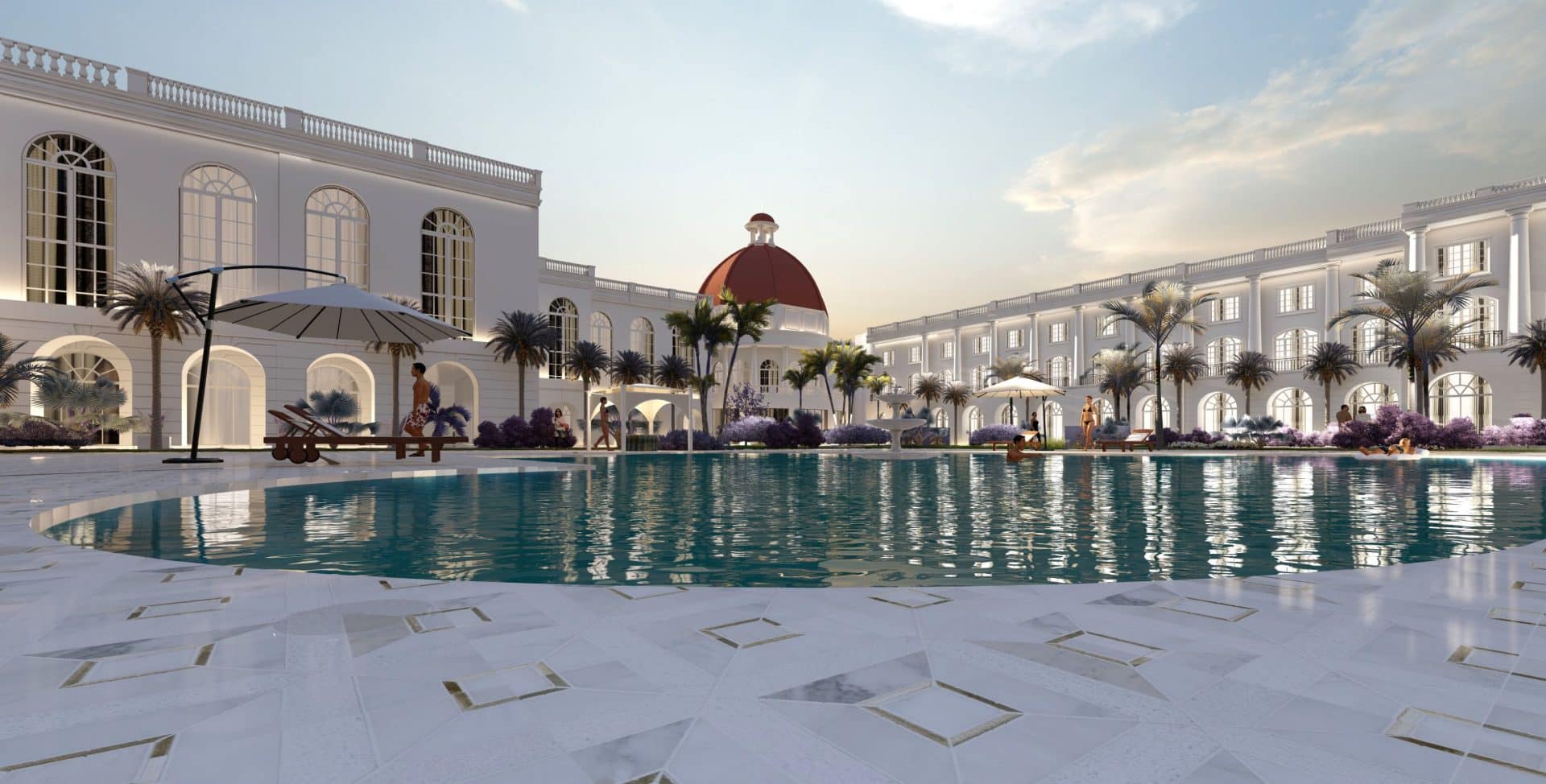
That means the hotel generated its own electricity. Electric fans were installed here. Modern electric lifts were installed and the most surprising thing was that one of the earliest mechanical cooling systems in Asia of that era was installed in this hotel. Which prepared about 15 tons of ice daily. There was a post office within the hotel. There was a chemist's shop. There was a provision for a permanent doctor. There was a Turkish bath house. It was not just a hotel, it had become a vibrant city in itself.
Now that day has come which was waited for years. 16 December 1903, when the Taj Mahal Palace opened its doors to the whole world for the first time. This was the harshest slap in history given to the British government at the hands of slave India. Within a few months, prominent British officers, the Prince and Viceroy Watson lost their way to the hotel and were drawn towards the Taj. As a result, the rickety Watsons Hotel gradually fell into huge debts and closed forever.
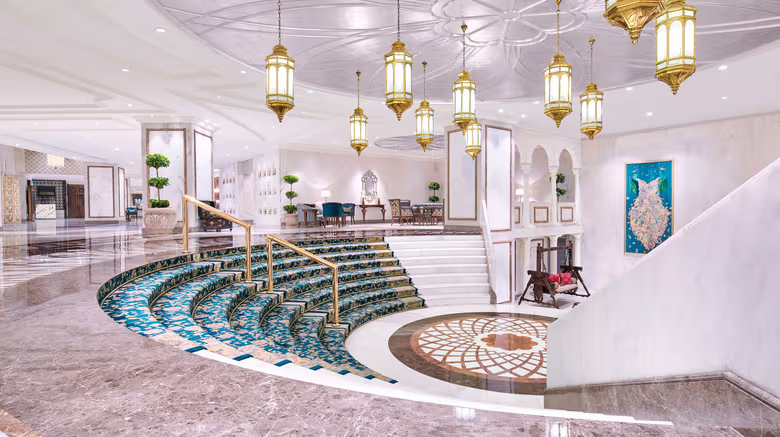
But there was also a deep sadness associated with this happiness. Jamshed ji Tata was able to see this dream come true, but could not see the long journey to its success. He died in 1904, shortly after the hotel's opening. But even after the departure of Jamshed ji Tata, his dream was not going to stop. Time passed and the Taj Mahal Palace gradually ceased to be just a hotel. It became the identity of India.
When foreign businessmen, members of royal families, industrialists, politicians and famous personalities from all over the world came to Mumbai, they considered it an honor to stay in the Taj Mahal Palace. This hotel also closely followed the history during India's independence movement. Mahatma Gandhi, Pandit Jawaharlal Nehru, Mohammad Ali Jinnah and many famous personalities of that era were associated with this hotel at one time or the other. India had become independent in 1947 and a glimpse of the confidence of that new India was visible in the Taj Mahal Palace also.
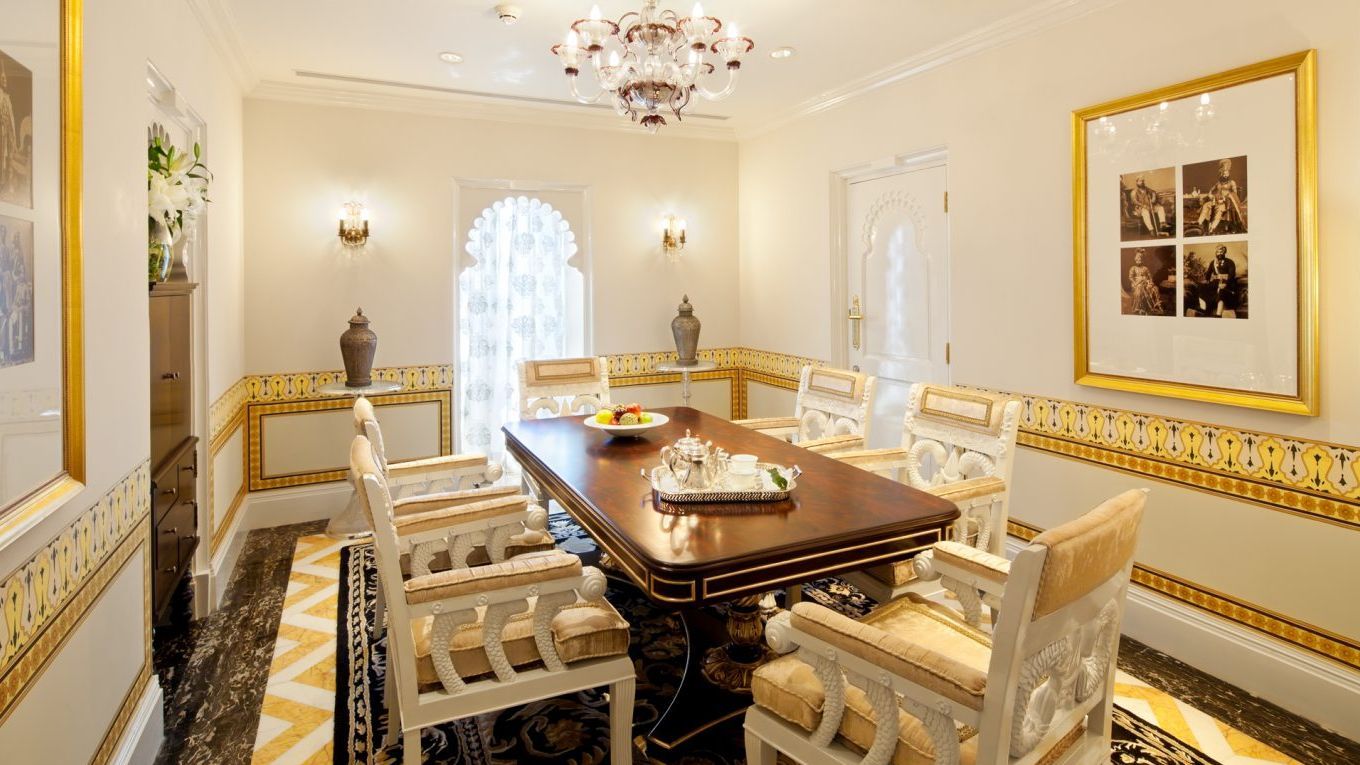
In 1973 a new modern tower was built next to this historic building. Which was named Taj Mahal Tower. But friends, the story you heard till now was just a trailer. Because the scariest and most painful story of this building is yet to come. On 26 November 2008, Mumbai was running at its usual pace. Preparations for dinner were going on in the grand hall of the Taj Mahal Palace. No one had the slightest idea that the next few minutes were going to be the most painful chapter in the history of India.
Lashkar Tayyaba terrorists, who had come via the Arabian Sea, had spread in different parts of Mumbai and their target was the Taj Mahal Palace Hotel. Because it was not just a hotel. It was a symbol of India's economic power and international identity. At around 9:40 pm, suddenly a loud sound of gunshots echoed inside the Taj Hotel. Within a few seconds the hotel, which was full of laughter, had turned into a silence of fear. The guests hid wherever they found space.
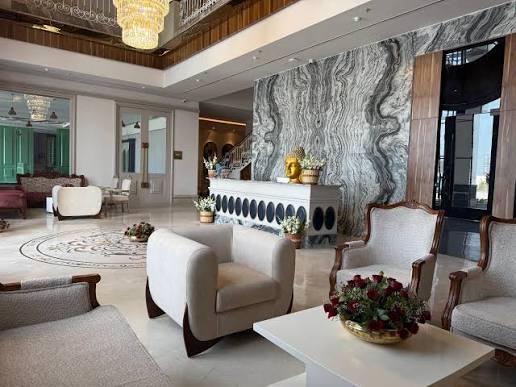
But amidst the same fear, there were some people who did not care about their lives. They were the employees of Taj Hotel. He considered it his first duty to get the guests out safely. Many employees even sacrificed their lives to save the lives of others. The operation continued for three consecutive days and nights. This was the first time India had seen such a long urban counter-terrorism operation. Finally, on the morning of 29 November 2008, the NSG commandos declared the operation over.
But this victory was achieved at a heavy cost. 166 innocent people lost their lives throughout the Mumbai attacks. After the attack, Ratan Tata himself reached the spot. He did not just talk about renovating the hotel. He personally met with those injured in the attack, the families of those killed and his employees. Just 25 days after the 21 December 2008 attack, the less damaged part of the hotel reopened.
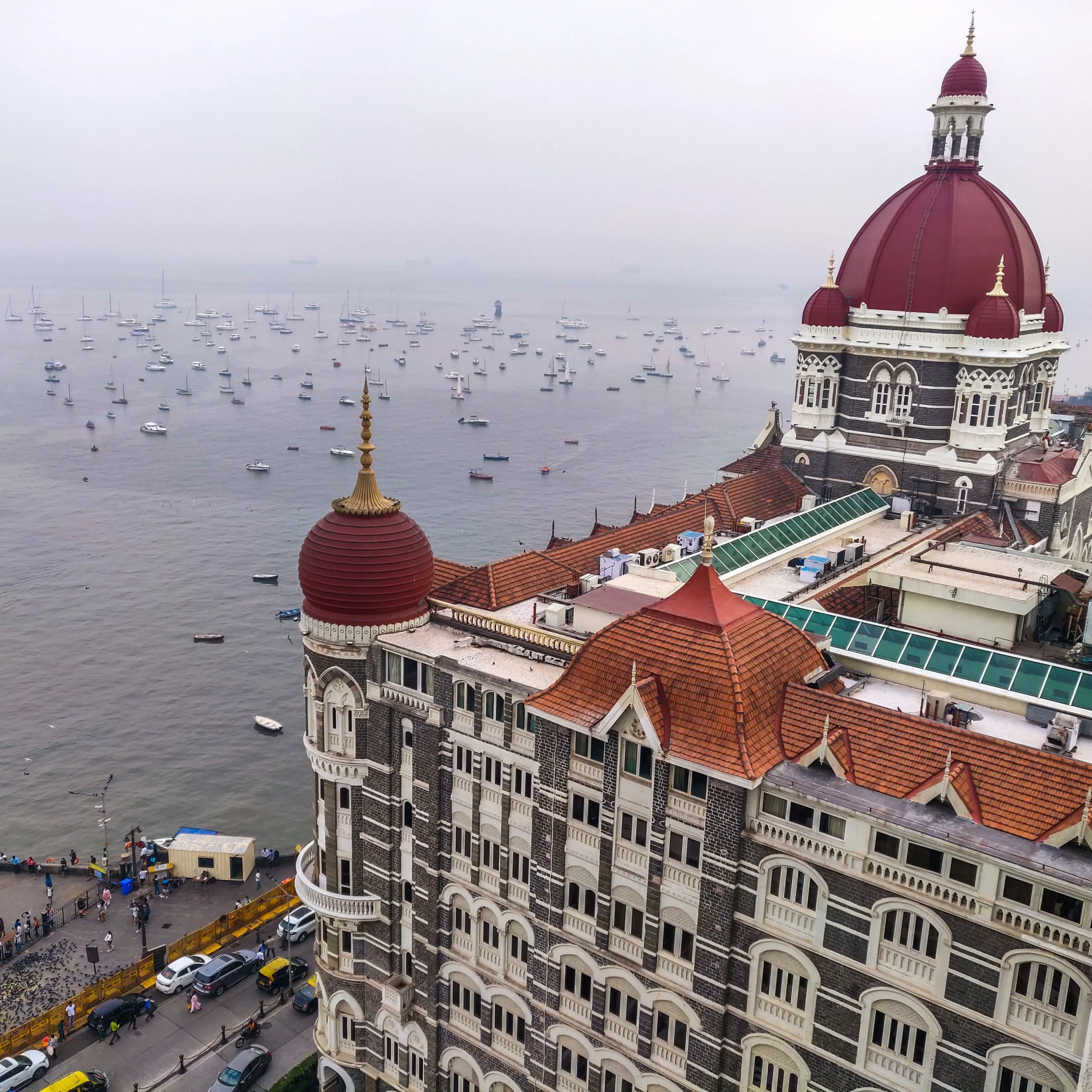
But it took years to completely restore the historical part. In March 2010, as renovations neared completion, the hotel permanently dropped the word Tower from its name. Now it is just called Taj Mahal Palace. Even today, there is a memorial plaque in the lobby of this hotel. On which the names of all those guests and employees who lost their lives that dreadful night are recorded.
In 2017, the building became the first building in India to be granted trademark protection for its architectural design. Now this dome of Mumbai was also included in the list of great buildings of the world like Eiffel Tower and Sydney Opera House. This is not just a hotel story. This is the story of that stubbornness which was born from an insult and became the pride of the entire country. This is the story of a building that saw fire, saw blood, but still did not bow its head. This is the immortal story of Taj Mahal Palace. If you liked this documentary then please like it. Stay connected with us for such true, historical and inspirational stories.