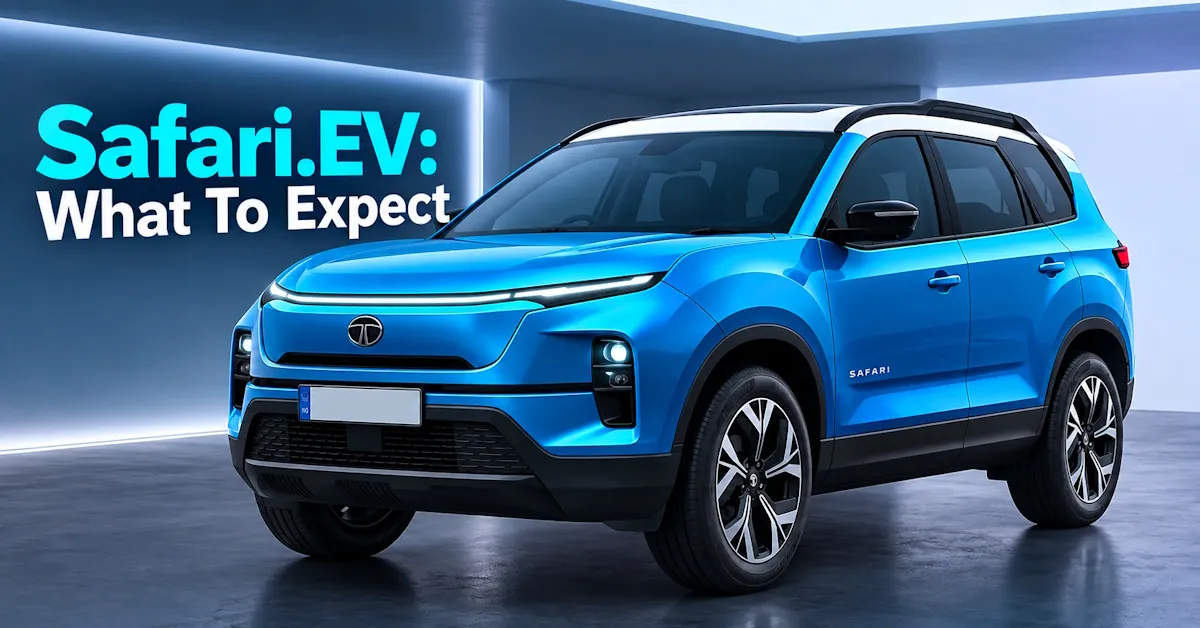
Tata Motors will soon be taking the covers off its flagship 7-seater electric SUV, which will be none other than the Safari.ev. It is believed that it will go on sale in India around the festive season of 2026. The upcoming electric SUV will help Tata Motors in taking on the newly launched MG Hector Tomahawk EV and the popular Mahindra XEV 9S. Now, without any delay, here’s everything you can expect from the upcoming Safari.ev.
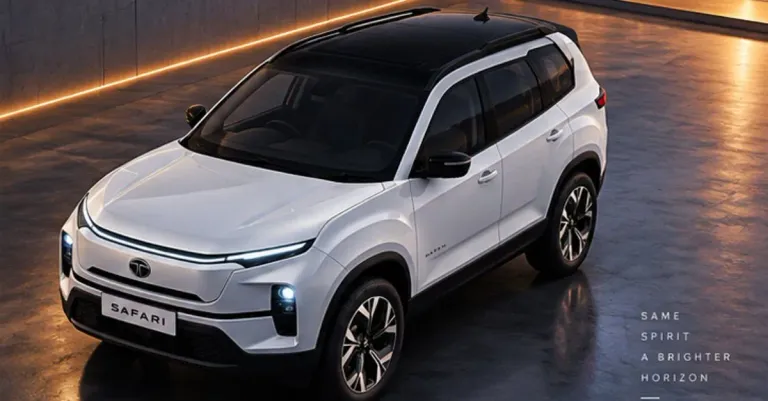
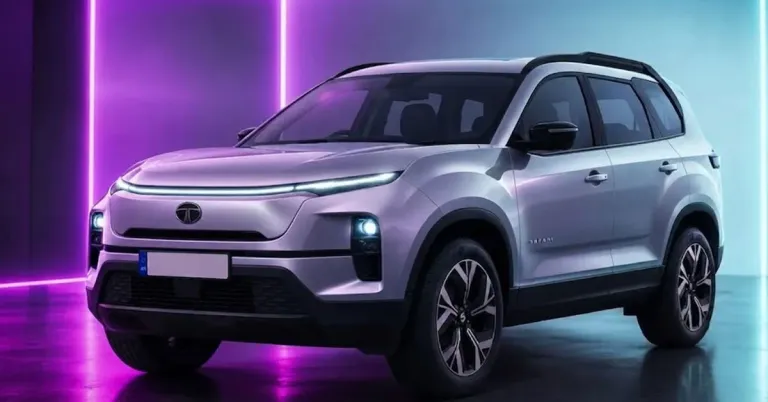
First off, let’s talk about the exterior design of the upcoming Tata Safari.ev. Although the latest test mules were seen with heavy camouflage, it has been noted that its overall silhouette will be similar to the existing Safari. It will retain the upright stance and three-row proportions. However, a number of EV-specific changes will help in distinguishing it from the petrol and diesel versions.
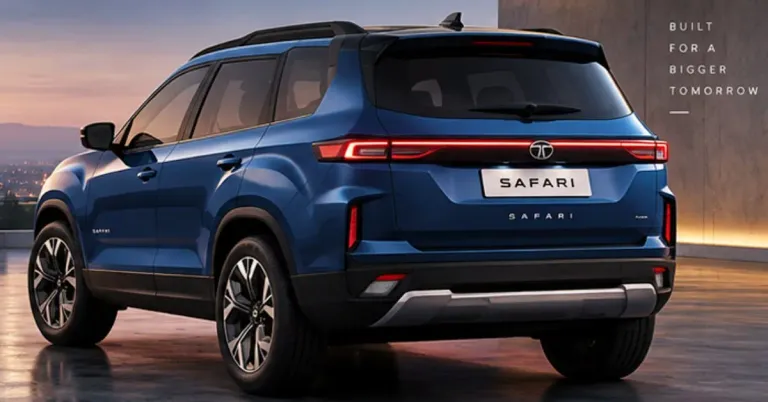
These changes could include a revised front fascia with a closed-off grille, new aerodynamic alloy wheels, a redesigned bumper and new lighting elements. The Safari EV could also retain the familiar connected lighting theme at the rear. Although the exact production design is yet to be confirmed.
The biggest talking point from the latest spy shots of the new Safari.ev is that the higher-spec variants of this SUV will boast a triple-screen layout. The current ICE-powered Safari gets only two displays, and presently, Tata currently offers its three-screen setup only with the Sierra and Sierra.ev. So, if this feature makes it to the production Safari.ev, it would help in differentiating the three-row SUV from the Harrier and also give it a more premium cabin.
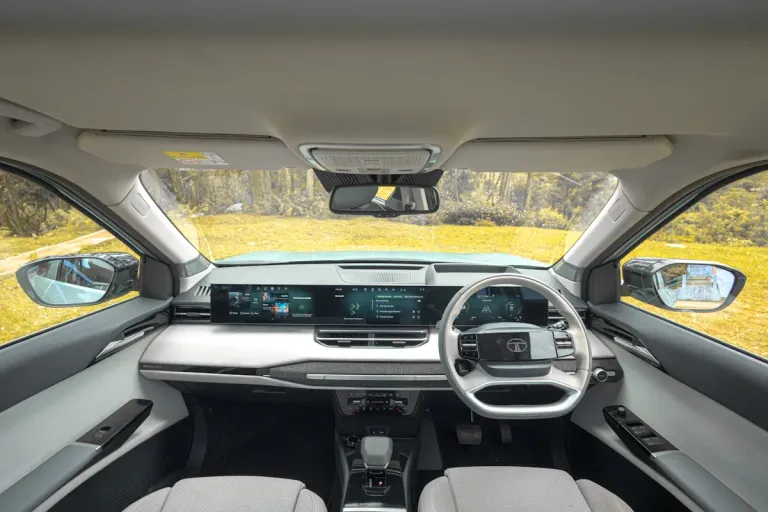
The Sierra.ev’s setup uses a 10.25-inch digital driver’s display, a 12.3-inch central touchscreen and a 12.3-inch passenger display. The passenger screen can be used for entertainment, including streaming content and gaming with a smartphone or Bluetooth gamepad. Some reports also suggest that the Safari.ev could get a larger 14.5-inch Samsung OLED touchscreen. However, the exact screen sizes have not been confirmed yet.
The Safari.ev is expected to get a more technology-focused cabin, as it will borrow a ton of equipment from the Harrier.ev and Sierra.ev. Along with the possible triple-screen layout, the SUV could get a digital inside rear-view mirror, panoramic sunroof, wireless Apple CarPlay and Android Auto, wireless charging, ventilated and powered front seats, a powered tailgate and multi-zone climate control.
A premium JBL audio system, ambient lighting and connected-car technology are also expected. The three-row layout means Tata will focus on passenger comfort as well. Some reports have suggested that it could get ventilated second-row captain seats. However, the exact seating configuration and feature list will depend on the final variants.
The Safari EV is expected to use the same 65 kWh and 75 kWh battery options seen on the Harrier.ev. However, it has also been reported that it is also expected to get a larger 80 kWh battery pack as well. As for the powertrain, the Harrier.ev uses a single electric motor and a dual-motor setup. And depending on the variant, the latter also offers all-wheel drive.
For reference, the Harrier.ev’s single-motor setup produces 238 bhp and 315 Nm. Meanwhile, its dual-motor AWD version makes a combined 313 bhp and 504 Nm. The Harrier.ev claims 538 km with the 65 kWh RWD version, 627 km with the 75 kWh RWD version and 622 km with the 75 kWh AWD version under the MIDC testing cycle.
Now, since the Safari.ev is larger and heavier, its certified range is expected to be slightly lower. However, it could also make up for the lost range due to its dimensions with its bigger 80 kWh battery pack. Most likely, the top-of-the-line Safari.ev will offer around 600 km of range in real life.
Apart from the electric powertrain, Tata could equip the Safari.ev with several EV-specific functions. Vehicle-to-Load (V2L) technology could allow owners to power external electrical devices using the SUV’s battery. Meanwhile, Vehicle-to-Vehicle (V2V) charging could allow compatible EVs to share energy.
The SUV could also get OTA software updates, smartphone-based remote functions, a digital key and Tata’s Arcade.ev connected suite. These features will add more functionality to the Safari.ev and help it compete with newer electric SUVs that are increasingly focusing on software and connected technology.
Safety is also expected to remain an important part of the Safari EV’s equipment list, like most of its other models. The SUV could get Level 2 ADAS features such as adaptive cruise control, lane-keep assist, blind-spot monitoring and automatic emergency braking.
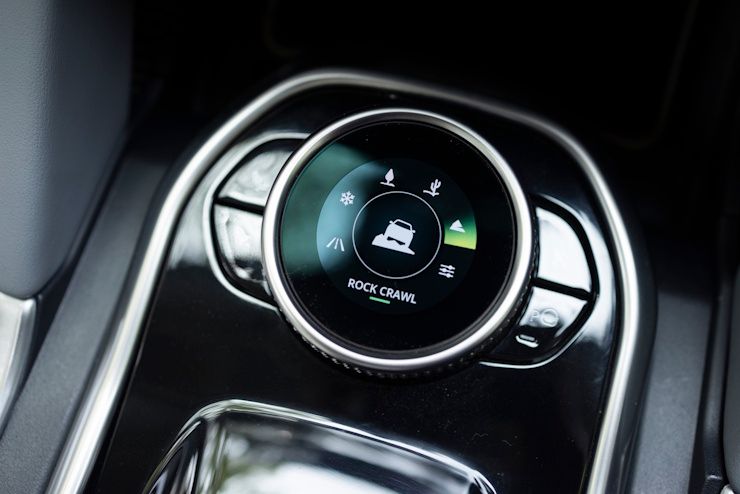
A 360-degree camera, electronic stability control, hill-hold assist, hill-descent control and multiple terrain modes could also be offered. It is also expected to get the same 540-degree camera and up to seven airbags, although Tata has not confirmed these details yet. The final safety equipment is expected to vary depending on the variant.
The Tata Safari.ev is expected to launch in India around the festive season of Diwali. However, Tata has not announced an official launch date yet. The Safari.ev is expected to be positioned above the Harrier.ev and could be priced around Rs 22 lakh to Rs 32 lakh (ex-showroom), depending on the battery, drivetrain and variant. Its main electric SUV rivals are expected to be the Mahindra XEV 9S and the newly launched MG Hector Tomahawk EV.