
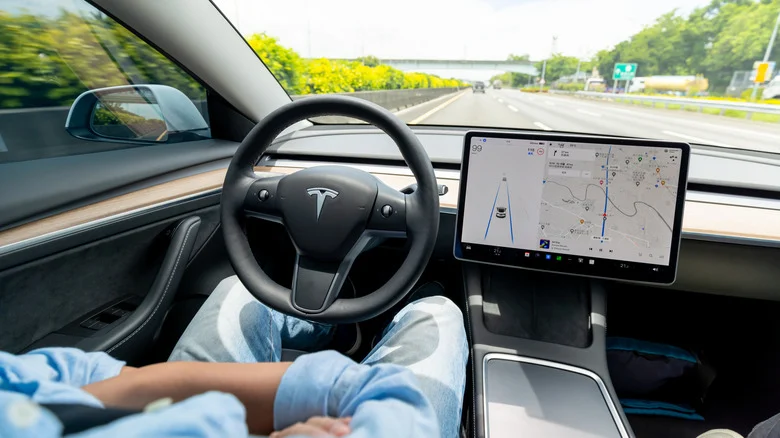

New details released by the National Transportation Safety Board (NTSB) have shed fresh light on a fatal Tesla crash in Katy, Texas, suggesting that the vehicle’s Full Self-Driving (Supervised) system was not in control during the final moments before impact.
According to the agency’s preliminary investigation, data recovered from the vehicle showed the driver pressed the accelerator pedal to 100%, effectively overriding Tesla’s driver assistance software. The Model Y was traveling at more than 70 mph on a residential road with a posted speed limit of 30 mph before crashing into a house on June 14.
The collision claimed the life of 76-year-old Martha Avila, who was inside the home when the vehicle struck it.
Vehicle data aligns with Tesla’s initial response
The newly released findings support Tesla’s early statement made shortly after the incident. At the time, the company maintained that its Full Self-Driving (Supervised) system was unlikely to have caused the high-speed crash because the software is designed to operate cautiously on neighborhood streets.
Tesla CEO Elon Musk had also publicly questioned claims blaming the software, stating that the vehicle’s behavior was inconsistent with how Full Self-Driving normally functions in residential areas.
The NTSB report indicates that while the driver assistance system was engaged before the crash, the driver’s full accelerator input overrode the system’s control, allowing the vehicle to accelerate rapidly.
Investigation reconstructs the final moments
Investigators said the Tesla was traveling along Rose Hollow Lane when it approached an intersection. Security camera footage reviewed by the NTSB showed the vehicle accelerating through the intersection before leaving the roadway and crashing directly into the residence.
The agency noted that weather conditions were clear, the road surface was dry, and visibility was good, ruling out adverse environmental factors as contributors to the crash.
Officials are continuing to analyze additional vehicle data, driver actions, and system performance as part of the ongoing investigation.
Driver faces criminal charges and civil lawsuit
The driver, identified as 44-year-old Michael Butler, has been charged with manslaughter. According to investigators, Butler told authorities that he had passed out while using Tesla’s Full Self-Driving (Supervised) feature.
The victim’s family has also filed a lawsuit against both Butler and Tesla, alleging negligence. The case raises broader questions about driver responsibility when advanced driver assistance systems are active.
Reports from local media also revealed that investigators found Google searches allegedly linked to Butler that included phrases such as “Tesla FSD not aggressive enough” and “Tesla FSD too timid.” Authorities have not indicated whether those searches played any role in the incident but have included them as part of the investigation.
Scrutiny of driver assistance technology continues
The National Highway Traffic Safety Administration (NHTSA) is conducting its own investigation into the crash alongside the NTSB review.
Unlike fully autonomous vehicles, Tesla’s Full Self-Driving (Supervised) system requires drivers to remain attentive and ready to take control at all times. The latest findings reinforce the distinction between driver assistance and true self-driving technology, a point regulators have repeatedly emphasized as advanced driving systems become more common on public roads.
While the NTSB’s report is preliminary and does not assign final responsibility, the recovered vehicle data provides the clearest picture yet of what happened in the moments before the fatal crash. The agency’s final report, expected after the investigation concludes, will determine the probable cause and may include safety recommendations for automakers and regulators alike.

Comments are closed.