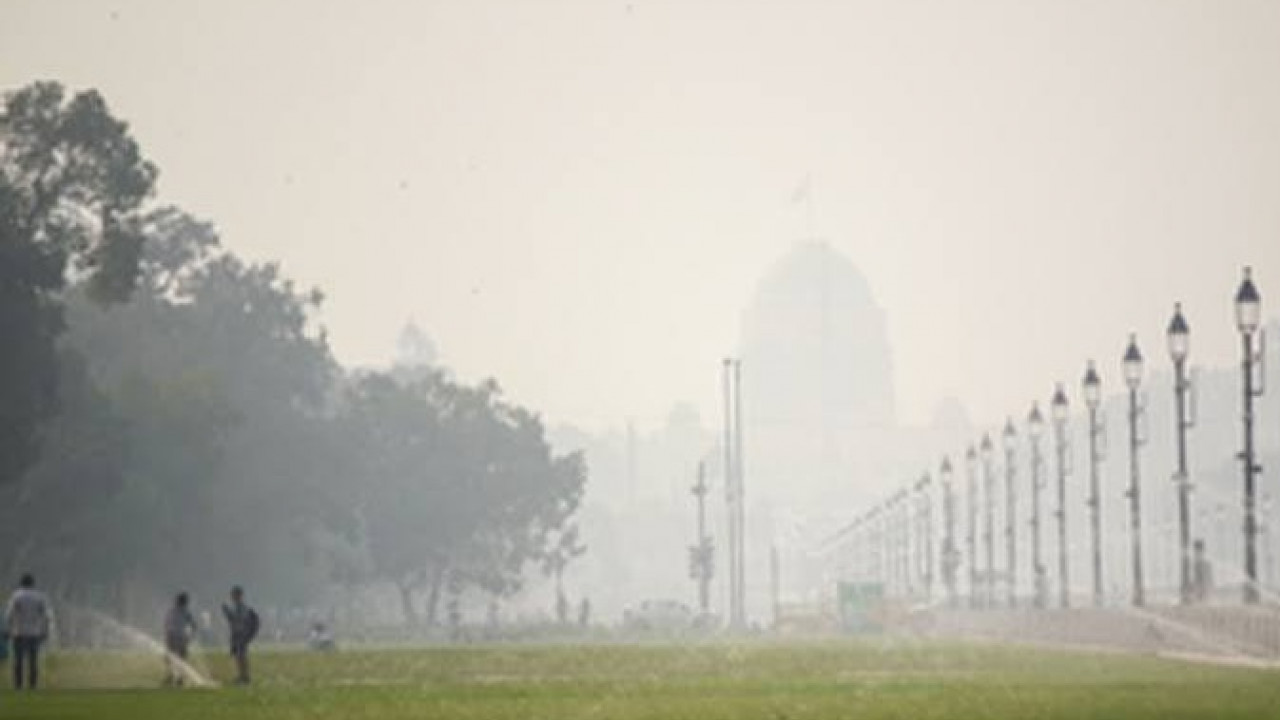
New Delhi. The air quality in the capital Delhi and surrounding areas is continuously deteriorating. Even on Saturday morning, the Air Quality Index (AQI) crossed the 400 mark in many areas of Delhi, due to which the situation remains critical. According to Central Pollution Control Board (CPCB) data at 8 am, Delhi's average AQI was recorded at 367, which falls in the 'very poor' category. However, this figure was recorded above 400 at many monitoring centers in the city.
Critical situation in many areas of Delhi
According to CPCB data, pollution levels remain dangerous in different areas of Delhi. AQI was 433 in Punjabi Bagh, 425 in Vivek Vihar, 421 in Jahangirpuri and Mundka, 418 in Rohini, 410 in Bawana and Dwarka Sector-8 and 409 in Narela, DTU and North Campus. Apart from this, AQI remained beyond 400 in Alipur, ITO and Patparganj also.
On Friday, air quality was in the 'severe' category at 24 out of 59 monitoring stations in Delhi, while the situation was recorded 'very poor' in 30 areas.
Noida and Ghaziabad are also in bad condition
The air condition in the NCR areas adjacent to Delhi also remains worrisome. AQI 414 was recorded in Sector-62 of Noida, which falls in the severe category. However, AQI was 285 in Sector-116, 279 in Sector-125 and 257 in Sector-110.
Loni in Ghaziabad was the most polluted, where AQI was recorded at 332. Whereas, AQI was 294 in Sanjay Nagar, 292 in Wave City and 287 in Indirapuram.
GRAP-3 implemented, but impact limited
In view of the increasing pollution, the Commission for Air Quality Management (CAQM) on Friday implemented the third phase of the Graded Response Action Plan (GRAP) in the entire Delhi-NCR with immediate effect.
Under this, non-essential construction and demolition work has been completely banned. There is a ban on the operation of BS-III petrol and BS-IV diesel four-wheelers in Delhi and NCR. Apart from this, instructions have been given to conduct education in schools up to class five in hybrid mode. However, despite these restrictions, no significant improvement in air quality has been seen.
There was interruption in the data of monitoring centers also.
Amidst this crisis, another matter of concern has come to light. According to reports, around a dozen air quality monitoring centers in Delhi faced disruptions in recording data on Friday, making it difficult to ascertain the actual level of pollution.
Analysts believe that as Diwali is approaching, the pollution caused by firecrackers can further deteriorate the air quality. In such a situation, the situation is expected to reach 'serious' category in the coming days.