
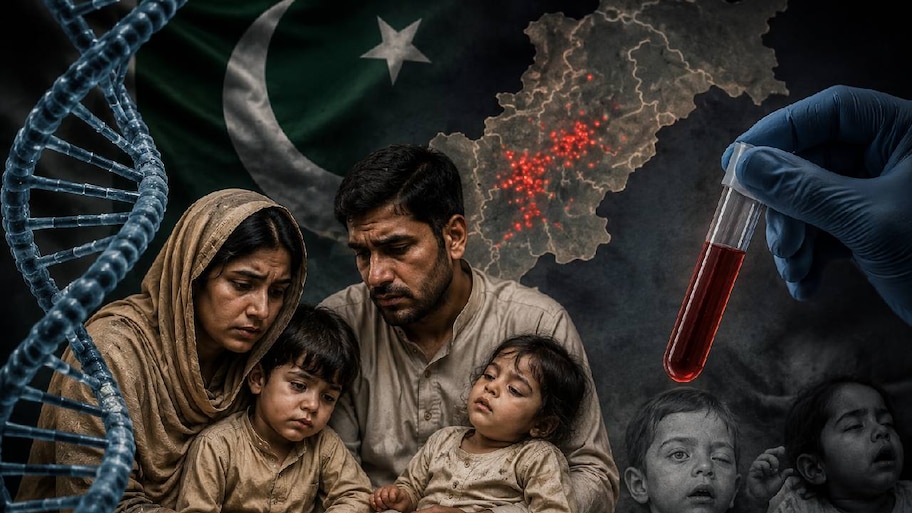
The biggest scientific revelation on cousin marriage: Why are human genes disappearing rapidly in Pakistan?

Cousin marriage (marriage between cousins and cousins) is a very old practice in many countries and cultures around the world. Especially in Muslim countries, it is considered very normal and correct at the social and family level. According to World Population Review data, the rate of cousin marriage in Pakistan is the highest in the world. However, despite being socially acceptable, from a scientific point of view such marriages are proving to be extremely dangerous for the future generations. Recent scientific research has warned that due to cousin marriage, the risk of serious genetic disorders and many fatal diseases in children increases manifold.
What is ‘Human Knockout’, which surprised scientists?
According to a very shocking study published in the famous science magazine ‘Nature’, a situation of ‘Human Knockout’ is being seen on a large scale in Pakistan. This rare condition has been found in about 34,000 people involved in the research. Human knockout is a genetic condition in which at least one gene present in the human body either stops working completely (switches off) or it disappears from the body forever.
How do essential genes of the body disappear due to cousin marriage?
According to biology, every person has two copies of every gene in his body—one copy comes from the mother and the other from the father. When marriage takes place between close blood relatives or cousins, the same mutation (genetic change) is transferred from both sides to the children due to the same family DNA of both the mother and father. Due to the conflict of this mutation, that particular gene is completely destroyed or disappears in the child’s body. One in five people included in the Pakistan Genome Resource have been found to have at least one gene completely missing, and approximately 6500 genes have been found ‘switched off’ throughout the research.
Now research will be done on human genes, not on rats; There will be a big change in the pharmaceutical industry
In this landmark genomic study, about 1,73,303 genomes from South Asian countries have been closely assessed. Till now any new medicine or treatment was tested on rats before humans. But scientists were often troubled by the fact that the genes of mice and humans work completely differently, due to which medicines that were successful on mice proved ineffective on humans and millions of dollars and years of hard work were wasted. Now, with the help of these ‘human knockouts’ found in Pakistan, scientists will be able to directly find out what direct effect the disappearance of a particular gene has on the human body and health, which has provided a huge clue in the accurate treatment of many incurable diseases and making new medicines.

Comments are closed.