By: The Obnews Editorial Team.
For a Canadian business considering India, the most useful question about a trade agreement is what it would change in an actual sale. Would a lower duty make a product competitive? Would clearer rules help a service company fulfil a contract? Would a distributor be able to move goods more reliably? Those questions are becoming more immediate as Ottawa and New Delhi press ahead with negotiations, but companies can investigate the answers before a deal is signed.
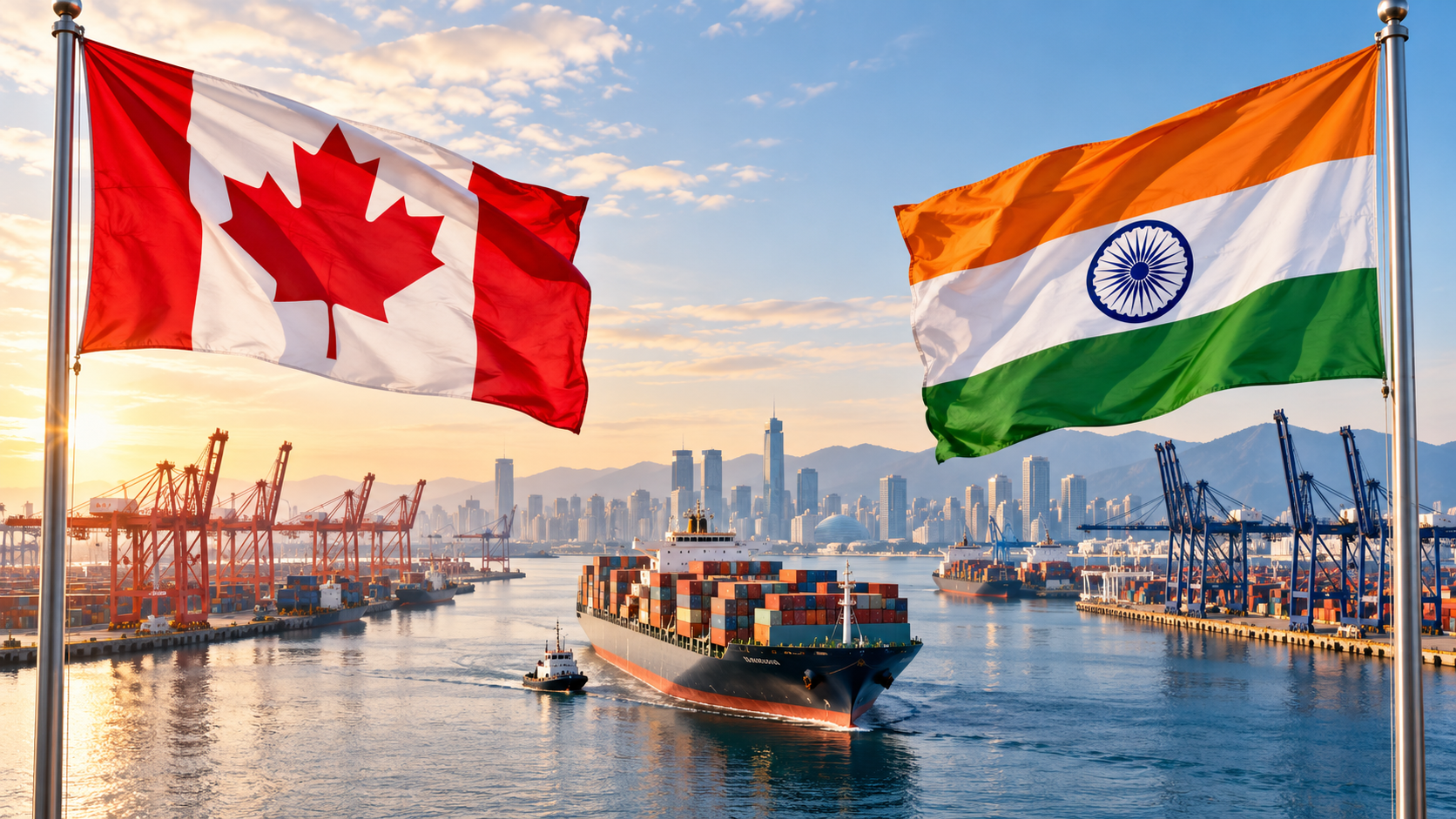
Prime Minister Mark Carney and Prime Minister Narendra Modi reaffirmed their commitment to concluding a Comprehensive Economic Partnership Agreement during an October 13 call. Their discussion coincided with the Team Canada Trade Mission led by International Trade Minister Maninder Sidhu. The governments’ stated objective has been to conclude negotiations by the end of 2026, while Canada is targeting C$70 billion in annual bilateral trade by 2030. Neither objective amounts to an implemented tariff schedule.


The starting point is already substantial: Global Affairs Canada reports C$30.4 billion in two-way goods and services trade in 2025, including C$13.6 billion in merchandise. The Trade Commissioner Service identifies potential across agri-food, clean technology, energy and life sciences. For an individual company, however, a large national market only becomes an opportunity when a particular customer has a need, the capacity to pay and a reason to choose its offering.
That argues for a narrower first move than launching an undifferentiated “India strategy.” A Canadian supplier of water-treatment equipment might begin with industrial customers in one region, while a food-ingredient business might target processors already buying imported inputs. The Trade Commissioner Service cautions that regional differences, regulation and the time needed to build local relationships require careful preparation. A distributor strong in one state should not automatically be treated as a national distribution solution.
Pricing needs to start with the delivered cost. A manufacturer should build a quotation that accounts for the applicable product classification and duties, freight, insurance, storage, local distribution and servicing. Taxes also affect cash flow even where a credit or recovery mechanism may eventually apply. The purpose is to establish the price a customer would actually face under today’s rules, with a separate scenario for any future concession once its terms are known.
Currency can overturn an apparently attractive offer. In an illustrative transaction, a C$100,000 invoice costs an Indian buyer ₹5 million at an assumed rate of ₹50 per Canadian dollar, but ₹5.3 million at ₹53. That is a ₹300,000 difference without any change to the exporter’s Canadian-dollar price. These are hypothetical rates, not market quotations; they show why contract currency, payment timing and responsibility for exchange-rate movements belong in the negotiation.


Partner selection requires the same precision. The Trade Commissioner Service recommends formal checks on prospective joint-venture partners’ operations, documents and legal and financial risks. A useful review should also establish who owns the relationship with the customer, whether the partner represents competing products, and what happens if agreed sales or service commitments are missed. Personal introductions can open a door, but documentary checks establish what is behind it.
After-sales support is often where an export plan becomes credible. An equipment customer needs to know who will diagnose a failure, where replacement parts will be stored and whether a warranty covers local labour. A software customer needs clear arrangements for implementation, data handling and support hours. These costs should be tested before treating the initial contract value as a measure of profitability.
Canadian companies can use the Trade Commissioner Service’s seven offices across India to assess opportunities and identify qualified contacts. Arriving with a defined customer profile, evidence of existing demand and questions about specific obstacles makes that assistance more productive. A small pilot, with agreed measures such as delivery performance and repeat orders, can expose problems before they become expensive commitments.
The trade talks therefore create a reason to prepare, rather than a reason to assume that every barrier will disappear. A company that knows its customer, current landed cost, regulatory obligations and service capacity can assess a final agreement on commercial terms. When the negotiated text arrives, it will be able to identify which provisions improve a viable business and which do little to change the underlying economics.