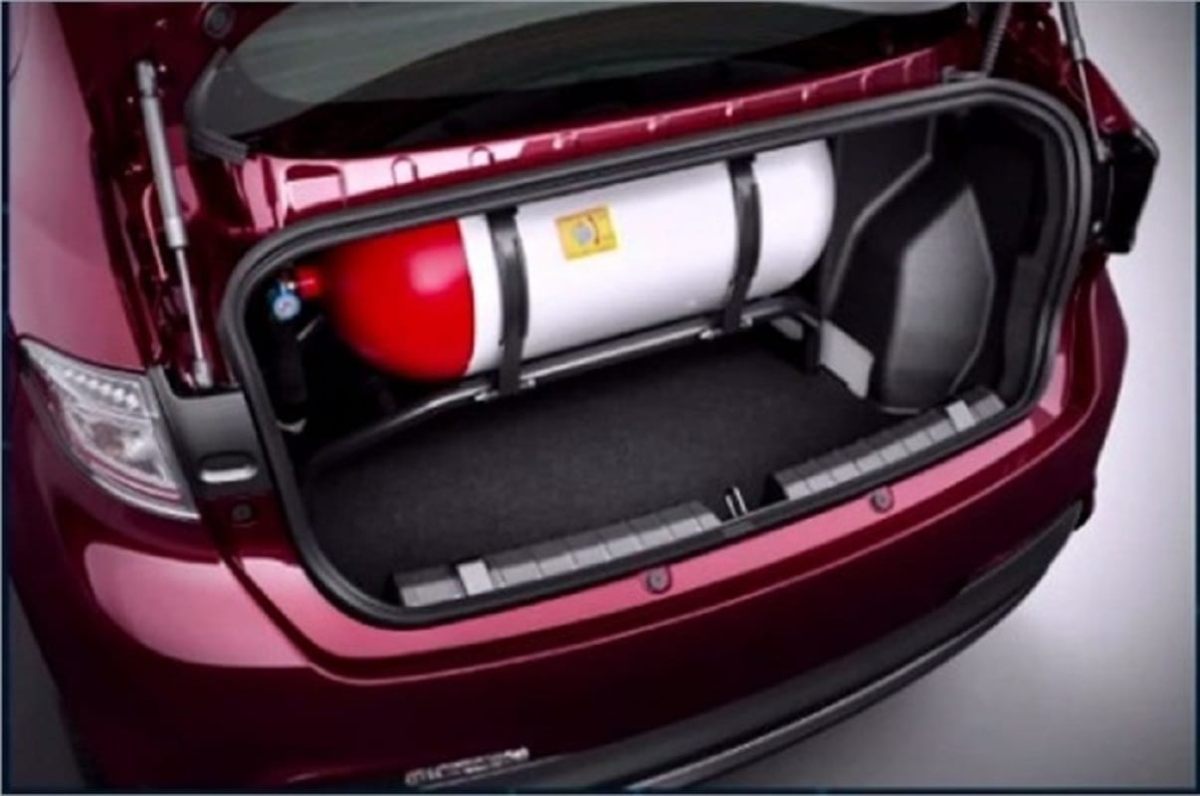
Automobile Desk – Whenever it comes to economical driving in the Indian automobile market, the name of CNG vehicles comes to mind first. Most of the CNG cars running on the roads come with petrol engines. CNG is not only easy on the pocket, but also gives tremendous benefits in terms of mileage. But have you ever noticed why the same 'Diesel-CNG' combination, which is working brilliantly with diesel in trucks, buses and heavy commercial vehicles, is completely missing from our everyday passenger cars?
The biggest reason behind this is the difference in the design of petrol and diesel engines and the basic principle of their working. To burn the fuel in petrol engine, there is a 'spark plug', which easily ignites the mixture of air and CNG by giving spark. In contrast, a diesel engine has no spark plug. In this, the air is heated through extreme pressure, due to which the diesel ignites automatically. The problem is that CNG does not burn so easily due to air pressure and heat alone.

This is the reason why when diesel-CNG system is installed in heavy vehicles, it cannot run on 100% CNG. To burn CNG in it, a small amount of diesel has to be sprayed, which is called 'pilot fuel' in automobile language. Instead of calling it a completely CNG vehicle, it would be more correct to call it a 'dual-fuel system'.
Now the question arises that if this technology is working in trucks, then why not in small passenger cars? So the biggest reason for this is complex engineering and lack of space. Fitment of a CNG setup in a normal diesel car requires a high-pressure pipeline, regulator, advanced control unit (ECU), various sensors and complex tuning to balance the two fuels. Also, the energy efficiency of CNG is slightly less than that of diesel, so to achieve good driving range, a larger and heavier cylinder will have to be kept in the car. Due to this, the boot space of the car will be lost and the weight of the car will also increase significantly.
The second and most practical challenge is the mathematics of cost. Diesel cars are already much more expensive in the market than petrol cars. Moreover, due to stringent emission norms (like BS6), diesel engines are already equipped with expensive systems like DPF and DEF (AW). If on top of this expensive diesel engine, the huge expense of the complex CNG kit is also added, the final price of the car will become so high that no common buyer would like to buy it.
Commercial vehicles (trucks and buses) have a daily running distance of hundreds of kilometres, due to which they recover their initial cost very quickly through fuel savings. But considering the limited mileage of a common car owner, the mathematics of the increased cost of a diesel-CNG car and its complex maintenance completely fails. This is the main reason why vehicle manufacturing companies have been avoiding this experiment in the passenger car segment.