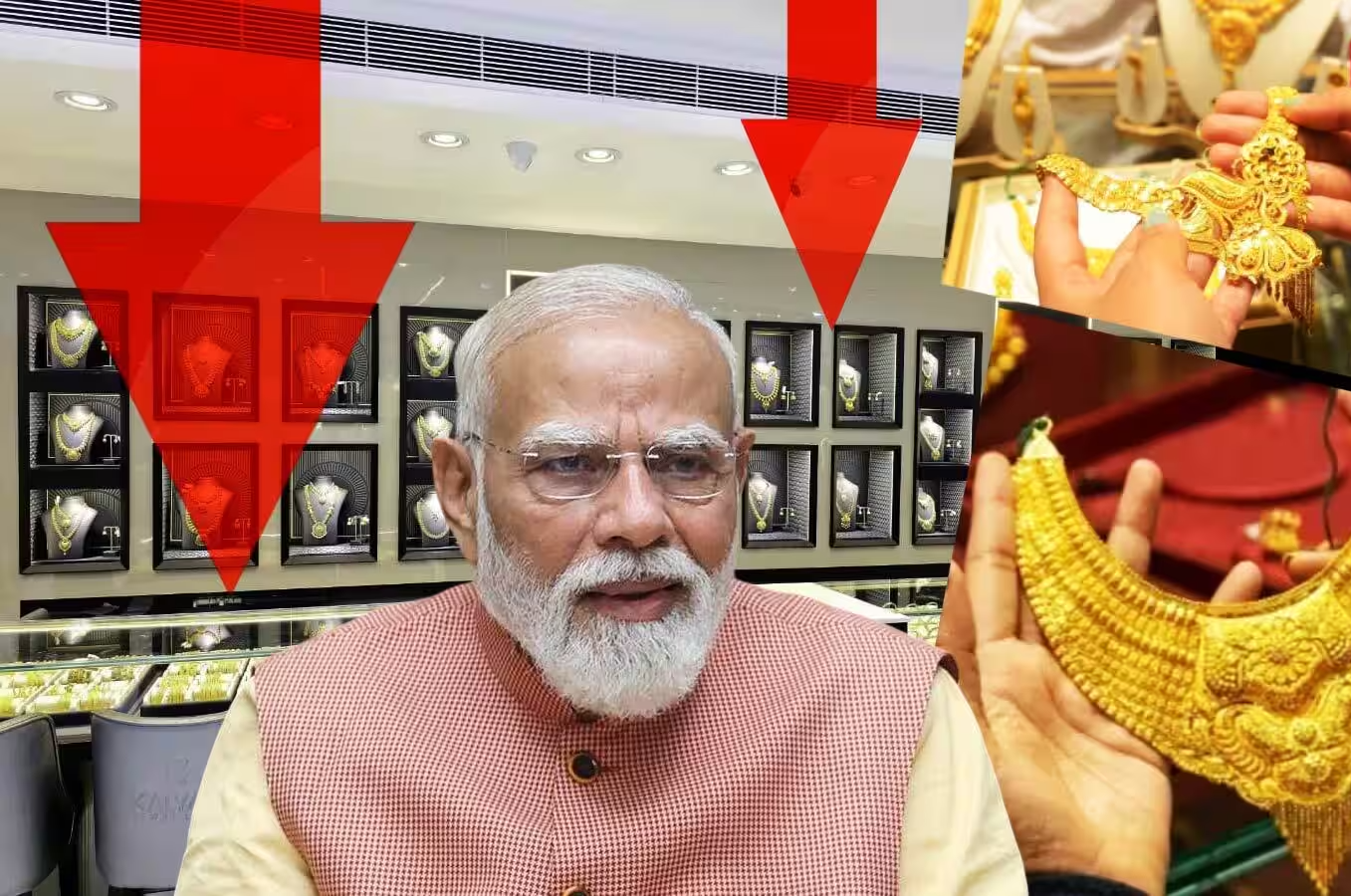
The record-breaking rise in gold prices in the Indian bullion market in the last few months has completely changed the normal life and shopping habits of the people. Gold has always been considered an important part of Indian culture and family security as a safe investment, but amid skyrocketing prices, the appeal made by Prime Minister Narendra Modi has made a major contribution in turning the market trend. To protect the country’s economy from external shocks and increasing pressure on foreign exchange reserves, the Prime Minister had clearly urged citizens to avoid non-essential purchases of gold for at least a year, unless there is extreme legal or family compulsion. The effect of this appeal is now visible at the field level, where the general public and investors have started changing their priorities.
Economic meaning of Prime Minister Narendra Modi’s appeal and curb on imports
Behind this appeal made by Prime Minister Narendra Modi is the country’s macroeconomic interest and a well-thought-out strategy to control the foreign trade deficit. India imports a large part of its total gold requirement from abroad, which puts huge pressure on the country’s foreign exchange reserves. When geopolitical tensions and crude oil prices rise globally, the import bill increases further. At such a time, the Prime Minister’s thinking that the country’s money should not get stuck in unproductive assets and should strengthen the financial stability of the nation is proving to be completely relevant. This step of the government has not only reduced unnecessary imports but has also put a psychological brake on the indiscriminate purchase of gold during festive and wedding seasons.
Changes in people’s buying habits and the condition of bullion markets
Due to the appeal of the Prime Minister and the double impact of high gold prices, the common consumers of the country have now changed their attitude towards gold. Families who earlier used to buy gold jewelery in large quantities for weddings or other festive occasions are now making sensible purchases in limited quantities or are turning to alternative and digital financial options. Bullion traders also believe that there has been a decline in the demand for unnecessary and heavy jewelery from customers. People are preferring government bonds and other financial instruments along with traditional methods of investment, leading to a balanced approach in the market.
A period of global uncertainty and fluctuations in gold prices
Gold prices continue to fluctuate due to turmoil in global markets, movement of the US dollar and geopolitical tensions at the international level. Despite this, whenever domestic prices reach new record levels, buyers become cautious. Experts believe that the Prime Minister’s appeal, even before the festive season, has forced people to think whether it really makes economic sense to buy gold at such high prices. The result of this awareness is that people have now started closely assessing the market movements and their personal financial situation instead of blindly throwing money in the name of investment.
Future economic vision and steps towards self-reliant India
The decline in gold imports is a clear indication that the people of the country are now becoming aware of the issues of national interest and economic security. When every citizen of the country exercises restraint in the use of energy, fuel and precious metals, it gives additional strength to the country’s economy to fight global crises. Prime Minister Narendra Modi’s appeal did not just take the form of a government directive, but became a medium of public participation that has brought about a positive change in people’s lifestyle and shopping preferences. In the times to come, this change will continue to play an important role in establishing India as a strong and self-reliant economy.