
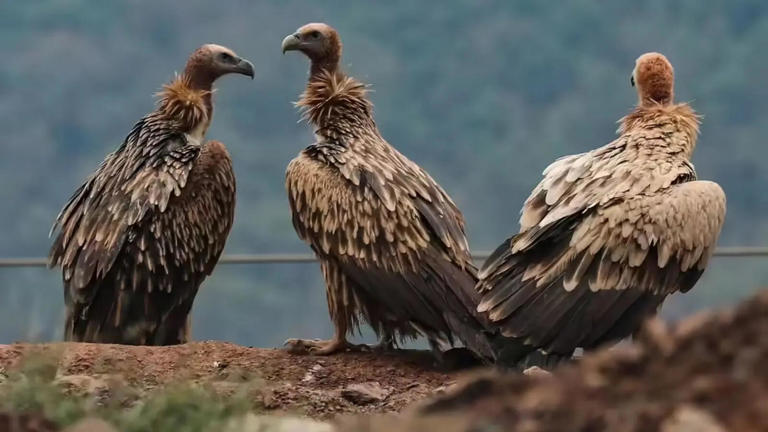
The flight of vultures started echoing in the Indian sky again; This is how our ‘Jatayu’ reached the protected tiger reserves from the brink of extinction.

About two decades ago, a strange silence started spreading in the skies of India. Vultures, the biggest and natural scavengers of our environment, were gradually disappearing from the sky. Due to poisonous drugs and human negligence, this species was almost on the verge of extinction. But now a very comforting news is coming out for wildlife lovers and environmentalists. Thanks to captive breeding and phased reintroduction programs, more than 700 vultures are making a safe return to the country. In this entire mega campaign, the protected tiger reserves of the country have emerged as the new and safest places for these vultures. The restoration project of the endangered White-backed and Long-billed Vultures, led by the Bombay Natural History Society (BNHS) and various state governments, has now reached its most important and successful phase. A painful history: why did vultures suddenly disappear? It was in 1999, when BNHS for the first time recorded a sudden sharp decline in the vulture population in the Indian subcontinent. A very shocking and bitter truth came to light in the scientific research conducted after this. ‘Diclofenac’, a simple pain reliever and anti-inflammatory drug given in the treatment of cattle (especially cows and buffaloes) turned out to be the main villain of this disaster. When a cattle treated with this medicine died and vultures ate its dead body, this medicine would enter their body and cause their kidneys to fail completely. After this discovery, in 2006, the government completely banned the use of diclofenac in veterinary medicine. After this, strict action was also taken against other harmful drugs like ketoprofen, aceclofenac and nimesulide. New lease of life from Jatayu conservation centers To save vultures from complete extinction, BNHS and state forest departments, in collaboration with the Royal Society for the Protection of Birds (RSPB), established special conservation and breeding centers in four different parts of the country. At present, you can easily understand the status of these centers and their success from the table given below: Name of the conservation center (Location) State (State) Current status and success (Current Status) Pinjore Center Haryana The white-backed vultures released here are now laying eggs and breeding in the forests completely naturally. Rajabhatkhawa Centre, West Bengal, 31 vultures released from here are now safely flying to the borders of India, Nepal and Bhutan. Rani Center Assam is the main center for conservation and enhancement of local species of vultures in North-East India. Bhopal Center Madhya Pradesh Plays an important role in rebalancing the vulture population in the forests of Central India. At present 740 vultures are living in a completely safe environment in these four centres. Under this entire program, so far 80 vultures have been provided to different states and about 110 vultures have been successfully released into the open forests. Why are tiger reserves becoming ‘safe haven’ for vultures? In recent years, the focus of wildlife scientists has focused on tiger reserves to protect these abandoned vultures. There are two main and very logical reasons behind this: Freedom from harmful drugs: Human interference and movement of pet cattle is completely prohibited within the tiger reserve. Because of this, there is absolutely zero risk of the dead animals found there containing traces of poisonous veterinary medicines. Abundant natural food: These dense forests are rich in herbivores like chital, sambar and wild boar. Leftover carcasses after being hunted by tigers become the purest and natural source of food for vultures. Maharashtra has currently emerged as a hotbed of vulture rehabilitation, where these birds are being released in famous tiger reserves like Pench, Tadoba-Andhari and Melghat. According to BNHS Director Kishor Rithe, who revealed surprising secrets from the GPS tracker, GPS and GSM transmitters are being installed on the bodies of the vultures being released in the forests to monitor their activities and their health. The results coming from this are thrilling the scientists. For example, a long-billed vulture released from Pench Tiger Reserve covered a long distance of 750 kilometers and reached Nashik in Maharashtra in just 17 days. The most pleasing thing is that none of the vultures released till now have died due to the poisonous medicines which had once wiped out their entire breed. The way forward and our responsibility Experts clearly say that the long-term success of this historic project cannot be limited to forests only. If we have to bring these beautiful birds back to our skies forever, we need to promote the use of only safe medicines to treat cattle in rural areas, even outside protected areas. This campaign, which is being run in coordination with the Central Zoo Authority, Environment Ministry and various state governments, is a great example of the fact that if man is determined, he can correct his past mistakes and return nature to its old form.

Comments are closed.