
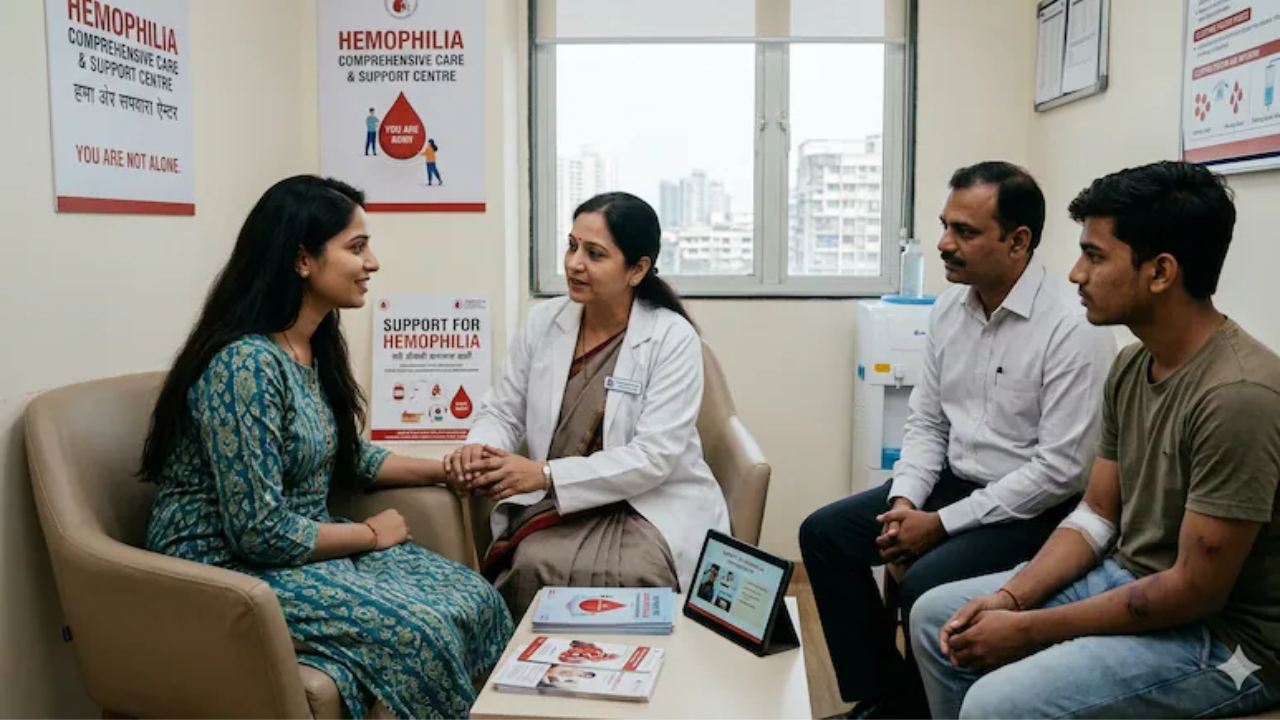
The future of Hemophilia treatment in India will change! ‘Mission 2026’ action plan presented by experts at IHC X conference

The ‘Initiative on Hemophilia Care X (IHC X)’ was launched today as an important national platform to bring together healthcare professionals, policy makers, patient advocates and stakeholders to raise the standard of hemophilia care in India. Organized under the theme “Advancing Treatments, Empowering Lives and Changing the Future of Haemophilia”, the conference focused on strengthening a comprehensive, patient-centred approach to disease management.
Give a small room a big look! Modern Bookshelf for Small Rooms; Style and space saving ideas
The main objective of this conference was to bridge the gap in healthcare between urban and rural areas and bring treatment to every patient.
A Revolution in Treatment: Dr. Tulika Seth (AIIMS, New Delhi)
Hemophilia care in India has changed significantly over the years due to increased understanding of the disease and its management. We have moved on from the era of plasma-based treatments like FFP and cryoprecipitate to more advanced treatments. It has increased availability of clotting factors and new treatment options are improving the health of patients. Importantly, old misconceptions such as concerns about inhibitors in preventive therapies have diminished over time. At the same time, there is increasing recognition of the benefits of preventive treatment to reduce complications and improve quality of life. The availability of prenatal tests has helped reduce uncertainty for families, enabling informed decision-making at an early stage of treatment.
With the support of government initiatives that increase the availability of diagnosis and treatment, today there is an increasing focus on early diagnosis, proactive management and empowering patients and their families with appropriate information. Together, these changes are helping to reshape hemophilia treatment toward more predictable, preventive, and patient-centered outcomes.”
Challenges in Awareness and Diagnosis: Dr. Sheikh Bilal (GMC, Srinagar)
Hemophilia is a rare genetic bleeding disorder, but unlike many other rare diseases, it is a disease that can be truly life-changing if treated promptly and appropriately. The disease is caused by a deficiency of blood clotting factors such as factor VIII or IX, and with proper treatment individuals can lead almost normal lives. This makes early diagnosis and consistent treatment extremely important.
However, the biggest hurdle is awareness. A large segment of patients remain undiagnosed, which reflects not only a lack of community awareness, but also a lack of diagnostic preparedness in the healthcare system. Diagnosis is the first and most important step in treatment; Without it, effective treatments may not reach those in need.
To address this, special focus should be placed on public awareness screening, strengthening of laboratory infrastructure and training of healthcare professionals in medical colleges and district level centres. Building this capacity is imperative to improve diagnosis and timely intervention.
At the same time, there is growing evidence to support the adoption of a proactive approach through routine preventive measures rather than on-demand treatment. This approach can significantly reduce bleeding events, hospital admissions, school absenteeism, and burden on caregivers, as well as improve long-term outcomes and overall health system efficiency.
Hemophilia care should be based on a comprehensive, multidisciplinary model, ensuring the availability of trained specialists and support services at all levels of care. A sustained focus on awareness, early diagnosis, preventive measures and strong healthcare infrastructure will be key to transform outcomes and ensure equal opportunities for all patients.”
Symptoms in women should not be ignored: Dr. Parul Bhatt (GMERS, Ahmedabad)
Hemophilia was once considered a rare disease, but today it is more recognized and better understood, making the term somewhat misleading in terms of its actual consequences. Previously, many patients were diagnosed only during surgery or after a major bleeding event. Now this approach is changing, and more emphasis is being placed on early diagnosis—such as prenatal screening, assessment at birth in high-risk families, and timely evaluation of chronic bleeding in children.
Bleeding disorders can often be overlooked due to less common symptoms such as unexplained excessive bleeding in women, underscoring the importance of early suspicion and diagnosis to avoid complications. However, challenges such as limited diagnostic infrastructure, delays in timely processing of samples, and the need for more coagulation laboratories and trained systems locally to enable accurate and early diagnosis remain.
Simultaneously, diagnostic capabilities are expanding and more laboratories are being equipped for timely diagnosis. Also, there is a growing consensus on the importance of adopting a preventive approach through routine preventive measures rather than occasional treatments. By reducing the risk of spontaneous bleeding, particularly in the joints, preventive measures can help prevent long-term disability and significantly improve quality of life.
Although progress has been made, the availability of preventive treatments is uneven across regions and sustained efforts are needed to ensure equal treatment for all. Looking to the future, methods such as home remedies and simpler treatment options have the potential to improve access to treatment, particularly for patients in remote areas. Raising public awareness, expanding infrastructure and prioritizing preventive treatment will be key to advancing hemophilia management in India.”

Comments are closed.