
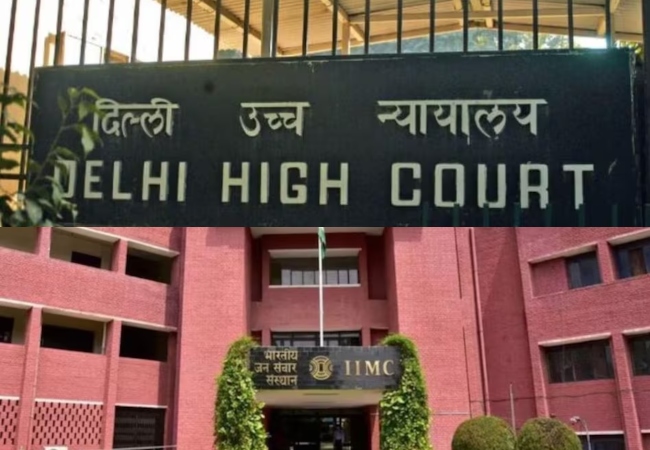
IIMC exam script controversy: Indian Institute of Mass Communication claims, says- only we have the right to decide the script of the exam

New Delhi. The Indian Institute of Mass Communication has filed its official reply in the Delhi High Court in a major development amid the Hindi-Urdu dispute. The institute has vigorously defended its right to set the script for entrance examinations.
Read :- Education: CBSE OSM failed! More than 4 lakh students asked for more than 11 lakh copies, re-evaluation window opens from today
Citing academic freedom, IIMC has made it clear that the demand to conduct the entrance examination for Urdu journalism in Devanagari (Hindi) script cannot be accepted at any cost. Also the organization has said that Devanagari can never be the script of Urdu. IIMC has clarified its legal position in an affidavit responding to the court notice issued on May 20.
Apart from this, IIMC gave constitutional argument saying that Article 343 of the Constitution (which declares Hindi in Devanagari script as the official language of the Union) does not give any legal right to any petitioner to demand Urdu journalism examination in Devanagari script. The institute also said that historical traditions cannot change modern institutional standards. The institute’s stance is that knowledge of the original Urdu script is mandatory for Urdu journalism, because Devanagari can never be the script of Urdu.
What is the whole legal dispute?
According to sources, the controversy started after sudden changes were made in the guidelines for Urdu journalism admission of IIMC. On April 27, the preliminary notification said that students can appear for the entrance examination of PG Diploma (Urdu Journalism) in either Urdu or Devanagari script. Then on May 6, the institute issued a reform notification withdrawing the option of Devanagari and making only the Urdu script mandatory.
Read :- Royal Albert Hall controversy: Pakistani host Fiza Ali’s video on Kumar Sanu’s song goes viral, people expressed displeasure
students’ petition
The students who had submitted the application form and fees on the basis of the earlier notification, moved their approach towards Delhi High Court. Students say that changing the rules at the last moment is a violation of their right to equal opportunity.
current situation
However, IIMC believes that internal decisions taken for administrative reasons cannot be challenged in court. Now the final decision is in the hands of the judiciary. Currently, the court is reviewing whether the sudden change in rules was procedurally wrong or falls within the administrative jurisdiction of the institute.
Comments are closed.