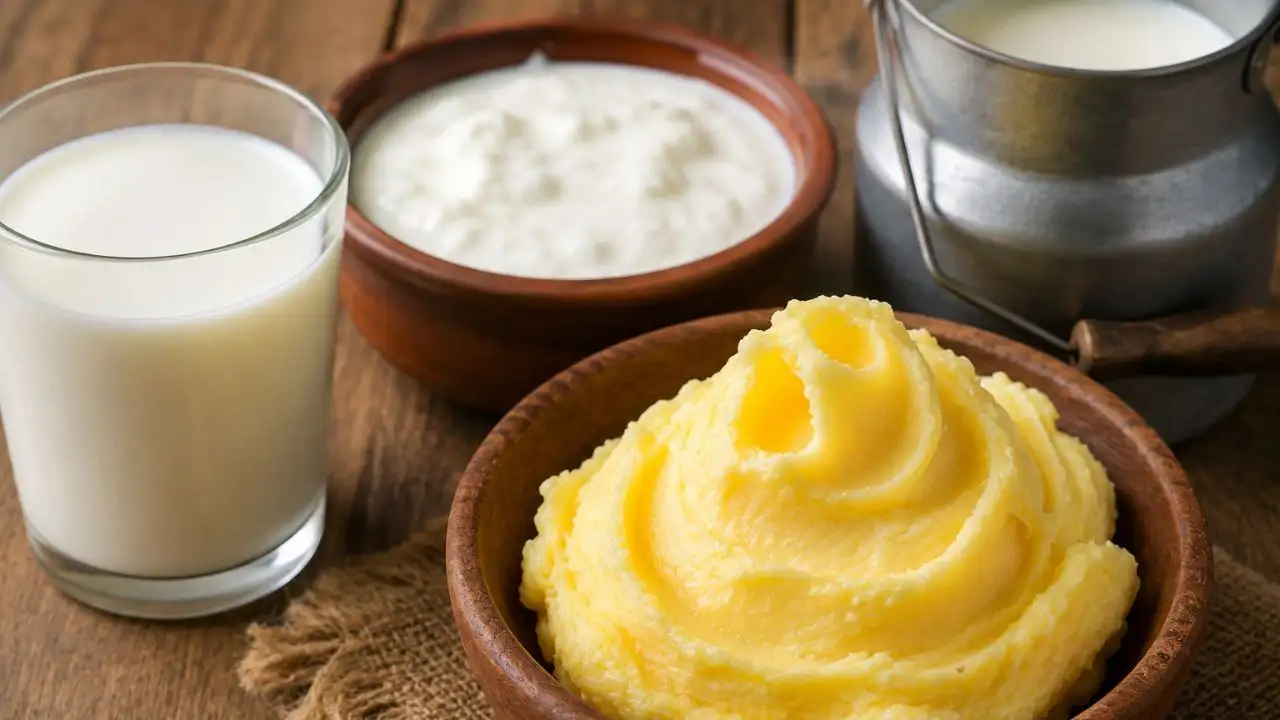
The Color of Milk and Butter
New Delhi: Milk and yogurt are white, but butter can appear light or dark yellow. Whether homemade or commercially available, the yellowness in butter is due to the natural pigments present in the cow’s feed and milk.
Cause of Yellow Color
The main cause of butter’s yellow color is beta-carotene, found in grass and other green plants. When a cow consumes grass, this pigment is transferred to its milk and deposited in the fat.
White Color of Milk
Milk is high in water, along with protein, fat, and other elements. The white color of milk is primarily due to the scattering of light by casein protein particles and fat globules.
However, with low fat content in milk, the yellow color of beta-carotene is not as pronounced, so milk generally appears white.
How Does Butter Color Change?
When cream is separated from milk and churned, the fat condenses and forms butter. This process increases the amount of beta-carotene, giving the butter a more pronounced color.
Butter made from cows fed on grass may be more yellow, while butter from cows fed on other feeds may be lighter.
Butter Color Variation
The color of butter depends on many factors, such as the cow’s diet, breed, season, and the amount of fat and beta-carotene in the milk. Milk from cows fed on green pasture may result in a darker butter color.
Conversely, butter from cows fed on grain or dry feed may be lighter yellow. Therefore, the color alone cannot be used to determine the type of butter.
Color of Goat and Sheep Butter
The utilization and storage of beta-carotene varies across animals. Cow’s milk contains a higher concentration of this pigment, while butter made from goat and sheep’s milk is often white.
Thus, the white color of milk and the yellow color of butter are related to the natural pigments present in the milk fat. When milk is churned to make butter, the color of beta carotene becomes more pronounced.