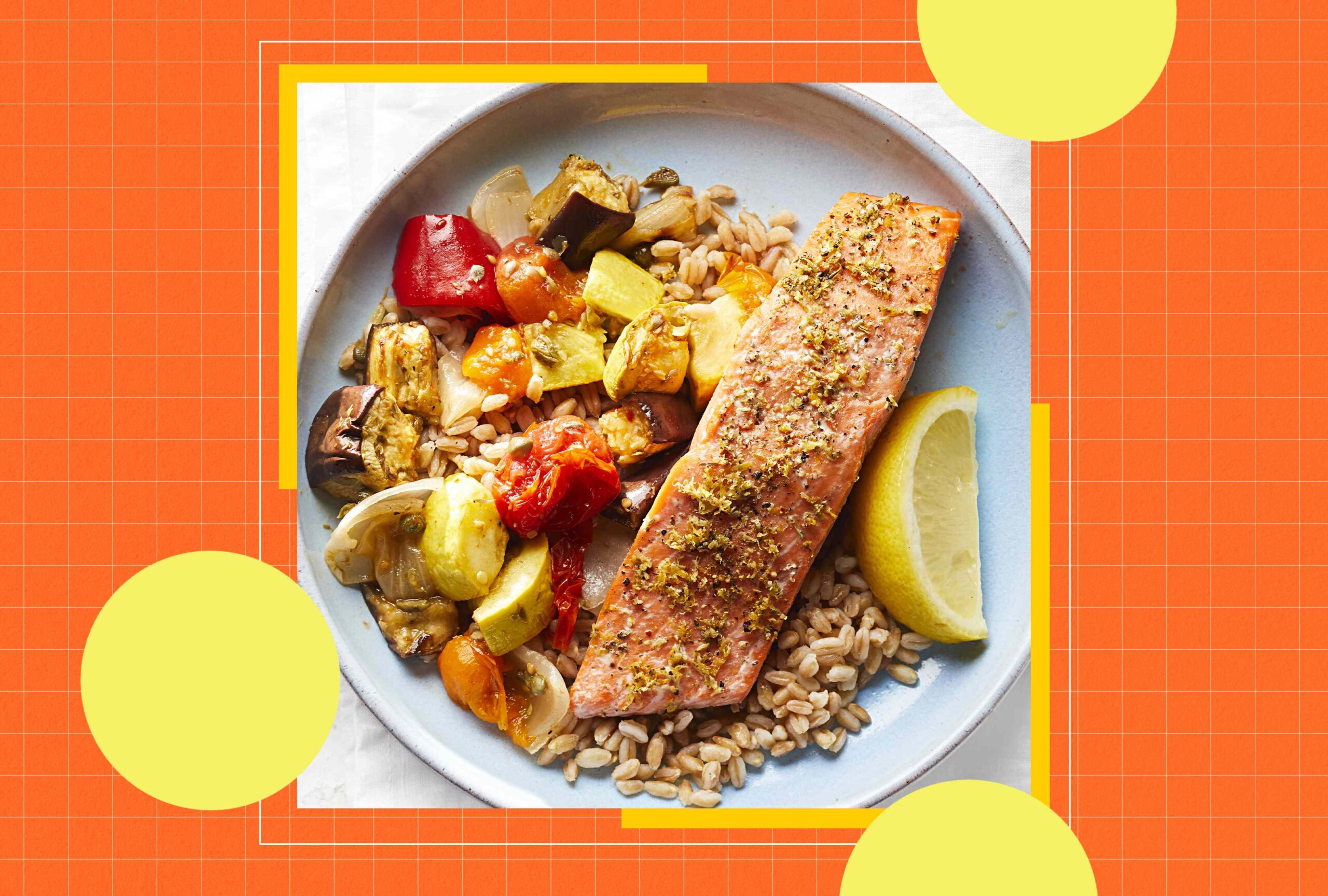
No, you don’t have to eat as if you live on the coast of Italy.
Reviewed by Dietitian Jane Leverich, M.S., RDN
Key Points
- The Mediterranean diet has been linked to improved heart health and longevity.
- This diet is an eating pattern that works with many types of ingredients and cooking styles.
- Dietitians share a simple formula for building a Mediterranean diet dinner.
You’ve probably heard the term “Mediterranean diet“ thrown around as the gold standard for healthy eating, and for good reason. This eating pattern is linked to numerous health benefits, including improved heart health and longevity. But if your first instinct is to picture a specific cuisine or a rigid list of approved foods, you may be both misunderstanding it and overcomplicating it. The truth is, the Mediterranean diet is less about eating exactly as if you live off the coast of Italy and more about how you build your plate. Think of it as a flexible framework: a set of eating principles that can work with many of the ingredients, flavor profiles and cooking styles you already enjoy.
We asked registered dietitians to break down what a Mediterranean diet dinner actually looks like in practice, and their answers followed the same simple formula. “Half the plate goes to non-starchy vegetables, a quarter to fiber-rich carbohydrates, and the last quarter to a lean or plant-based protein. Healthy fats, like extra-virgin olive oil, nuts, seeds, avocado, tie the whole plate together,” shares Jamie Lee McIntyre M.S., RDN. Get that foundation right, and the flavors are entirely your call.
How to Make a Mediterranean Diet Dinner
Here is a simple formula for building a Mediterranean-style dinner, even if you don’t love all foods traditionally associated with the Mediterranean region.
1. Start With Vegetables
Fill about half your plate with non-starchy vegetables. Think leafy greens, peppers, zucchini, tomatoes, broccoli, eggplant or mushrooms. You can enjoy them roasted, sautéed or raw, whatever you enjoy most.
Vegetables anchor the plate for a reason. They deliver fiber, vitamins and beneficial plant compounds while keeping the meal filling and adding variety. This is also where the Mediterranean pattern shines as a whole. Research suggests the diet may positively influence markers of healthy aging and has anti-inflammatory effects, benefits tied in part to a steady intake of plant foods.
2. Add a Fiber-Rich Carbohydrate
“Fill a quarter of your plate with fiber-rich carbohydrates like quinoa or farro,” says Whitney Stuart M.S., RDN, CDE. Fiber-rich carbohydrates help give the meal lasting power, supporting both fullness and steady digestion. Whole-grain intake has also been associated with healthier blood sugar responses and lower long-term risk of cardiovascular disease and all-cause mortality.
Choosing whole or minimally refined options over ultra-processed ones can help you get more fiber and other beneficial nutrients. Think whole grains like brown rice, barley or bulgur, or fiber-rich carbohydrates like beans and lentils.
3. Include a Moderate Portion of Protein
Use the remaining quarter of your plate for protein, leaning toward fish, poultry and plant-based sources like beans and lentils more often than red meat. A moderate portion is enough, as protein rounds out the meal rather than dominating it.
Fish deserves a regular spot on the plate. It’s a source of long-chain omega-3 fatty acids, which support heart and brain health. Favoring legumes and fish also fits neatly into a pattern shown to lower cardiovascular risk, which we’ll get to shortly.
4. Finish With Healthy Fats
Bring the plate together with extra-virgin olive oil or another source of unsaturated fat, like nuts, seeds or avocado. Use it in cooking or drizzle it over your meal as a finishing touch.
“Fat quality over fat avoidance—use extra-virgin olive oil in cooking or as a finishing touch,” per Stuart. Unsaturated fats can support healthy cholesterol levels when they replace saturated fats, so the goal isn’t to fear fat; it’s to choose unsaturated sources.
5. Keep the Structure, Swap the Flavors
Once you know the formula, you can dress it in any culinary tradition. “The overall pattern matters more than the specific flavor profile—there’s plenty of room for cultural foods, convenience and genuine enjoyment,” shares Johannah Katz, M.A., RDN.
“Think of ‘Mediterranean’ as a meal structure, not a fixed ingredient list—a Mexican-inspired bowl with black beans, roasted vegetables, avocado and an olive oil-lime dressing follows Mediterranean principles just as faithfully as anything from the Mediterranean coast,” adds Stuart.
Our Favorite Mediterranean Diet Dinner Combos
You don’t need specific recipes to build a Mediterranean-style dinner. Once you know the basic formula, you can mix and match ingredients based on what you have on hand and what sounds good. Here are a few combinations to get you started:
- Salmon, farro and roasted vegetables: Pair a portion of baked salmon with cooked farro and a mix of roasted zucchini and peppers, finished with a drizzle of olive oil.
- Lentil and vegetable grain bowl: Layer cooked lentils and quinoa over a bed of greens, then top with cucumber, tomato and an olive oil-based dressing.
- Mexican-inspired black bean bowl: Combine black beans, roasted vegetables and avocado over your grain of choice, dressed with olive oil and lime.
- Herbed chicken with greens and beans: Serve a moderate portion of poultry alongside sautéed greens and white beans, with olive oil to bring it together.
- Southwest bowl: Combine pinto or black beans with brown rice, peppers, corn, tomato and avocado, then add lime juice and olive oil.
- Peanut-lime protein plate: Pair tofu or shrimp with brown rice, stir-fried broccoli and peppers, then top with cashews and a peanut-lime sauce.
Other Tips for Following a Mediterranean Diet
The dinner formula is the foundation, but the Mediterranean diet extends beyond a single meal. A few simple habits make the eating pattern easier to stick with over time. These small choices support the same goals across your whole day.
- Lean into plants at every meal: Vegetables, legumes, fruit, nuts and whole grains form the backbone of the diet. The more meals built around them, the closer you are to the pattern.
- Choose fish a couple of times a week: Regular fish intake is a hallmark of Mediterranean eating and a reliable source of omega-3s. Rotate it in where you’d normally reach for ultra-processed red meat.
- Cut back on ultra-processed foods: Katz points out that the pattern leaves room for convenience, so this isn’t about perfection. Aim to reduce heavily processed items rather than eliminate every packaged food.
- Make meals a social occasion: The Mediterranean diet has always been about more than what’s on the plate. Sharing meals with family or friends, slowing down and eating without distraction are all part of the lifestyle. Bonus? Research suggests that social eating is linked to greater wellbeing and even better food choices. Traditional Mediterranean Dietary practices also avoid watching screens while enjoying meals.
Our Expert Take
The beauty of a Mediterranean diet dinner is that it asks so little of you and gives so much back. There’s no single ingredient to hunt down, no cuisine to master and no perfect meal to hit every night. What matters more is the overall pattern: half your plate vegetables, a quarter fiber-rich carbs, a quarter lean or plant-based protein, and an addition of healthy fat to bring it together. Nail that structure, and the flavors are yours to play with. So start where you are. Build one plate this week that follows the formula, then another the next. Share it with people you love when you can (away from screens), and let the little wins add up. You don’t need to eat perfectly to benefit from this way of eating, you just need to keep coming back to the same simple framework. That’s the real takeaway from the dietitians: consistency beats perfection, and every good plate counts.