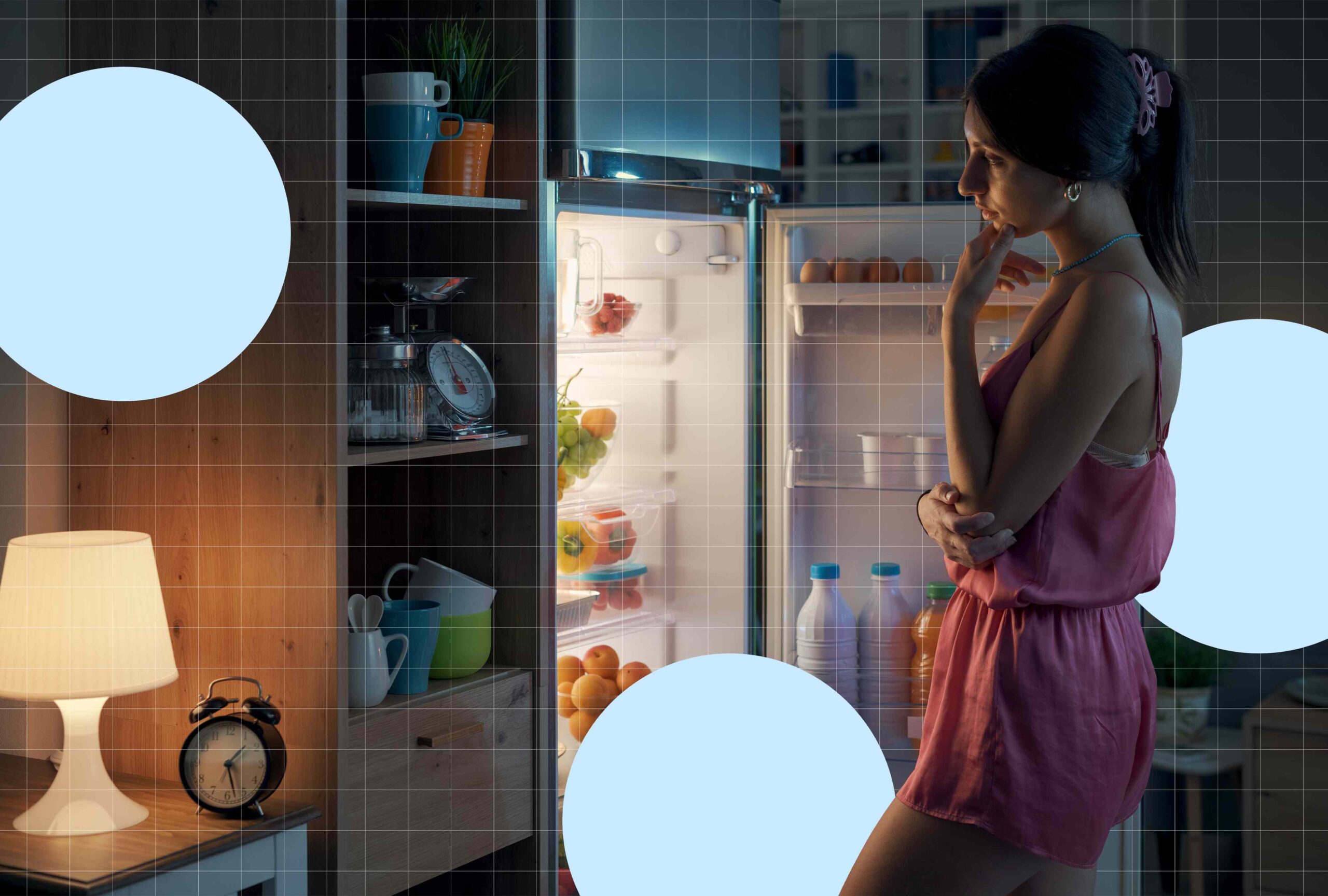
It only takes a few seconds, but it can make a huge difference.
Reviewed by Dietitian Katey Davidson, M.Sc.FN, RD, CPT
Key Points
- Pausing before snacking can help you identify whether you’re truly hungry.
- Eating enough protein, fiber and calories during the day may curb nighttime cravings.
- If you’re hungry at night, choose a balanced snack instead of ignoring your hunger.
If you’ve ever found yourself standing in front of the fridge at 9 p.m., not truly hungry but scanning the shelves anyway, you’re not alone. Late-night snacking is one of the most common habits people try—and often fail—to break. While it can sometimes arise from true hunger, nutrition experts say it’s more often driven by stress, boredom, exhaustion or simply being part of your wind-down routine.
The good news is that registered dietitians say stopping late-night snacking doesn’t require a strict diet or massive willpower. Instead, they recommend one simple trick: pausing before you reach for a snack. Read on to learn why this works and discover other ways to curb your late-night snacking habit.
Why Pausing Helps Curb Late-Night Snacking
It Helps You Differentiate True Hunger from Something Else
Most late-night eating isn’t a conscious decision—it’s a reflex. Often, our evenings follow a similar routine: the same trip to the kitchen, the same show and the same spot on the couch each night. This nightly routine trains your brain to do and expect the same things—like reaching for a bag of chips—without much thought behind it.
“A simple pause allows you to stop and ask yourself why you’re feeling the urge to eat,” says Lainey Younkin, M.S., RD. This can help you identify your individual triggers for late-night eating. For example, she suggests asking yourself if you’re actually physically hungry (e.g., you have hunger pangs or a growling stomach) or are reaching for food because you’re stressed, bored or have a specific craving. Research suggests that this type of self-monitoring and awareness may help reduce food intake.
That small moment of self-reflection is often enough to break the cycle before nighttime eating habits play out on autopilot.
It Interrupts Automatic, Cue-Driven Eating
Hunger, thirst and tiredness can feel remarkably similar, and it’s easy to reach for a snack when what your body actually needs is water or sleep.
“Our bodies easily confuse signals for hunger, thirst and fatigue,” explains Katherine Brooking, M.S., RD. “Often, someone may interpret a hunger signal when, in fact, you need a nap, an earlier bedtime or a glass of water.”
Pausing gives you a chance to check in and respond to what’s actually going on instead of defaulting to food. The goal isn’t to tell yourself “no”; it’s to create enough space to determine whether you actually want or need a snack at that moment.
It Reduces Distracted Eating
Eating while distracted, such as in front of a screen, makes it easy to lose track of how much you’ve had. A recent analysis of 50 studies found that distracted eating increased how much people ate in the moment, while paying closer attention to a meal helped people eat less. Distracted eating can occur during any type of screen activity, whether that means scrolling through social media, watching a show or even working on your computer.
It’s not just the screen alone that can lead to distracted eating—it’s also what you may be viewing. “Watching late-night TV commercials glorifying fast food and snack foods can certainly trigger cravings as well,” notes Lauren Harris-Pincus, M.S., RDN. In this case, she suggests pausing to determine if you were hungry before the visual temptation presented itself.
Pausing before you snack is a quick way to reset your attention and make sure you’re eating mindfully. If you have to have your phone nearby, listening to a podcast or audio book may be a better option, as you don’t have to look away from your plate to do it.
It Helps You Make Better Choices When You’re Hungry
Younkin says while there are many reasons people may reach for food at night, she has seen many of her clients do so when they’re not eating enough during the day. If this is the case, she says you may truly be physically hungry.
When this happens, the strategy shifts: The purpose of pausing is to help you make a better choice, not to stop the urge to eat. To determine if this is happening to you, simply retrace your eating habits that day leading up to your nighttime cravings to see if anything may have been off balance, such as a skipped meal, a smaller dinner than usual or a tougher workout that may have increased your need for an extra snack.
As Younkin puts it, “If you’re physically hungry, pausing can help you put together a balanced snack instead of reaching for whatever’s in the pantry.” That brief gap gives you room to choose something nourishing instead of grabbing the first thing within reach.
Other Tips for Reducing Late-Night Snacking
A simple pause can be powerful, but it’s not the only way to reduce late-night snacking. Here are a few additional tips from the experts that can help:
- Eat Enough During the Day. Skimping on breakfast and lunch is one of the most common reasons people end up raiding the pantry at night. “Make sure to eat enough during the day, especially at breakfast,” says Younkin, noting research suggests that eating more of your calories earlier in the day may help keep hunger and appetite in check later on.
- Prioritize Protein and Fiber. It’s not just about eating enough throughout the day; what you eat is just as important. Balanced meals rich in fiber and protein keep you fuller for longer, so you may be less likely to seek food out of true hunger later. Harris-Pincus recommends aiming for 25 to 38 grams of fiber a day based on individual needs, noting that fiber is filling and also feeds the gut bacteria tied to mood and eating behavior.
- Get Enough Sleep. Poor sleep can throw off the hormones that regulate hunger and fullness, making late-night cravings harder to resist. “Lack of sleep and poor-quality sleep can both lead to increased hunger,” explains Younkin. Aim to get seven to nine hours of quality sleep each night.
- Make a List of Non-Food Activities. If pausing reveals the urge isn’t about hunger, swapping in another activity can help break the cycle while addressing the underlying trigger. A short walk, a call with a friend, journaling or even just changing rooms can address boredom or stress without reaching for food.
Snack Ideas If You’re Truly Hungry
Sometimes late-night hunger is real, and that’s OK. Going to bed hungry can worsen sleep, and having a balanced snack can be a part of a healthy eating pattern. Here are a few balanced snack options dietitians recommend:
- Strained (Greek-style) yogurt with berries. Brooking notes that a high-protein snack like strained (Greek-style) yogurt may help curb hunger, with recent research showing increased satiety and satisfaction after eating it.
- A handful of almonds or walnuts. “Almonds offer protein, fiber and healthy fats,” says Brooking. This combination can help increase satiety, helping to reduce the need for another snack later on.
- Tart cherries. Harris-Pincus says tart cherries naturally contain sleep-promoting compounds like melatonin, which have been studied for their potential sleep benefits.
- A slice of whole-grain toast with avocado or peanut butter. If you need something more substantial, Brooking notes the fiber-plus-healthy-fat combination can be far more satisfying than a bowl of sugary cereal or a handful of cookies.
Our Expert Take
If your late-night snacking habit is a problem for you, there are simple ways to phase it out. Taking a moment to pause can help you tune into what your body actually needs, whether that’s a balanced snack, a glass of water, stress relief or simply some rest. With greater awareness and balanced nutrition throughout the day, you can build an evening routine that feels satisfying and sustainable.