
For decades, the biggest breakthroughs in computing came from making chips smaller. Then one startup asked a completely different question: What if the future of AI required making chips dramatically bigger?
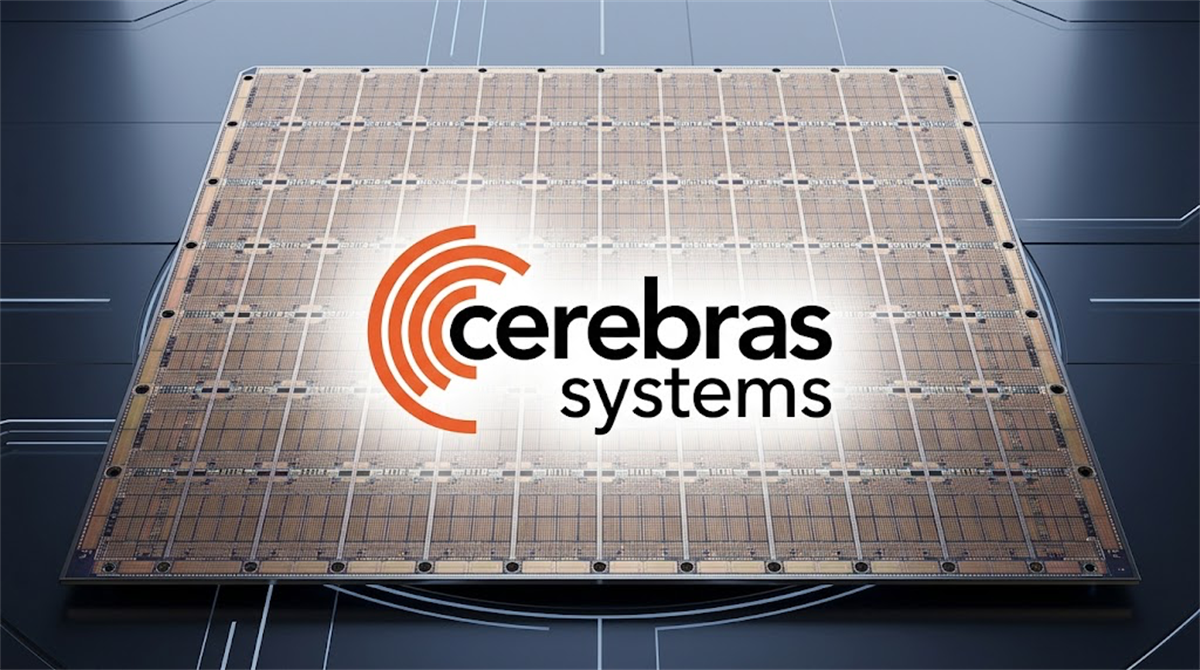
That simple yet radical idea became the foundation of Cerebras Systems, one of the most ambitious semiconductor companies ever built. While giants like Nvidia focused on improving GPUs, Cerebras threw away decades of chip design conventions and built the world’s largest computer chip—a processor so large that it occupies an entire silicon wafer.
The company’s journey is a story of bold engineering, repeated failures, patient investors, and founders who believed that AI deserved entirely new hardware rather than recycled graphics processors. Today, as AI models grow into trillions of parameters, Cerebras has emerged as one of Nvidia’s most serious challengers.
Credits: The Economic Times
From SeaMicro to a Bigger Vision
The origins of Cerebras begin long before the company officially existed.
Its CEO, Andrew Feldman, had already built and sold one successful startup called SeaMicro, a company that reinvented energy-efficient servers. Founded in 2007 alongside veteran chip architect Gary Lauterbach, SeaMicro was acquired by AMD in 2012.
For many entrepreneurs, that would have been enough.
For Feldman, it was only the beginning.
After spending time inside AMD, he began asking a much bigger question: what would computing look like if artificial intelligence truly became the future of software?
Back in 2014, this wasn’t an obvious bet. Deep learning was still largely confined to research labs. AlexNet had demonstrated the potential of neural networks only a couple of years earlier, and many industry experts still viewed AI as either a niche research project or another Silicon Valley buzzword.
Betting Against the GPU
Most researchers trained neural networks using Nvidia GPUs.
Not because GPUs were designed for AI.
Because they simply happened to perform better than CPUs for massively parallel workloads.
Feldman and his co-founders saw this as an accident of history rather than an optimal solution.
Graphics processors were originally built to render video games—not train trillion-parameter neural networks.
The team believed AI would eventually outgrow GPU architecture. Instead of squeezing more performance from graphics chips, they imagined an entirely new computer designed specifically for AI.
That conviction became the foundation of Cerebras.
It was an enormously risky bet because it required challenging the architecture that virtually every AI researcher already depended upon.
Building the Impossible
When Cerebras was founded in 2016, the company wasn’t trying to build a slightly faster chip.
It wanted to rewrite semiconductor design itself.
For decades, manufacturers cut silicon wafers into hundreds of individual chips because defects naturally occur during manufacturing. Smaller chips meant defective sections could simply be discarded.
Every major chip company followed this rule.
Cerebras decided not to.
Instead, the engineers attempted something many considered impossible: keeping the entire wafer intact and turning it into one gigantic processor.
The numbers sounded almost unbelievable.
Traditional high-end processors measured roughly 840 square millimeters.
Cerebras’ first Wafer-Scale Engine measured approximately 46,000 square millimeters—around 58 times larger than the biggest conventional chips ever produced.

Credits: MarketWatch
Why Bigger Was Better
Making chips larger sounds counterintuitive.
Normally, larger chips suffer from manufacturing defects, heat problems, and communication delays.
But AI presents unique challenges.
Modern neural networks spend enormous amounts of time moving data between processors rather than performing calculations.
Memory bandwidth—not raw computing power—often becomes the biggest bottleneck.
Cerebras believed eliminating communication between hundreds or thousands of smaller GPUs would dramatically accelerate AI training.
Instead of connecting many processors together, why not create one enormous processor that keeps almost everything on a single chip?
It was a completely different way of thinking about AI hardware.
Solving Problems Nobody Had Solved Before
The idea sounded exciting on whiteboards.
Building it proved extraordinarily difficult.
Every engineering problem became unprecedented.
How do you deliver electricity evenly across a processor the size of a dinner plate?
How do you cool it?
How do signals travel efficiently across tens of thousands of connections?
Since nobody had previously built a successful wafer-scale computer, there were no textbooks or best practices to follow.
The Cerebras team effectively had to invent solutions across multiple disciplines simultaneously—from semiconductor manufacturing and networking to software and system architecture.
Failure Was Part of the Process
Innovation rarely follows a straight path.
One of Cerebras’ earliest prototypes literally caught fire.
The company jokingly described it as a “thermal event.”
Behind the humor was months of painstaking engineering.
Board meetings became technical workshops where engineers openly explained what failed, why it failed, and what they planned to try next.
Every solved problem revealed another.
Power delivery led to cooling challenges.
Cooling exposed manufacturing issues.
Manufacturing revealed software bottlenecks.
Instead of expecting instant success, the company embraced constant iteration.
Investors supported the team through years of uncertainty because they trusted the founders’ technical discipline and long-term vision.
Credits: The Globe and Mail
The First Successful Run
In August 2019, years of work finally paid off.
The Wafer-Scale Engine powered up successfully.
To outside observers, nothing dramatic happened.
The computer simply ran.
But inside the lab, that quiet success represented one of the most significant engineering achievements in modern semiconductor history.
The team watched the system operate for about thirty minutes.
Then they returned to work.
There were still countless improvements to make.
A Different Kind of Company
Technology alone doesn’t explain Cerebras.
Its culture played an equally important role.
Andrew Feldman had worked with many of his engineers for decades.
Some joined him in the 1990s.
Many followed him from previous companies.
Rather than chasing celebrity hires, Cerebras relied on deep trust among experienced architects who had already solved difficult engineering problems together.
Feldman often argued that truly brilliant people were also remarkably kind—a philosophy that shaped hiring throughout the company’s growth.
By the time Cerebras employed hundreds of people, around one hundred employees had worked with Feldman across multiple companies.
Competing Against Giants
Cerebras entered one of the most competitive industries imaginable.
Its rivals included Nvidia, AMD, Intel, and later specialized AI hardware from Google, Amazon, and Microsoft.
Unlike those giants, Cerebras didn’t try to compete across every market.
It focused almost entirely on one mission: accelerating large-scale AI.
As language models exploded in size, this specialization became increasingly valuable.
Instead of requiring thousands of GPUs connected through complex networking infrastructure, Cerebras machines promised simpler architectures capable of training and serving enormous models with reduced communication overhead.
Its hardware has since been adopted by national laboratories, research institutions, cloud providers, and AI companies working on frontier models.

Credits: CMC Markets
The AI Boom Changes Everything
When Cerebras started, AI hardware was considered a niche investment.
Then ChatGPT changed everything.
Suddenly, every major technology company wanted more AI computing power.
Demand for advanced chips skyrocketed.
Nvidia became one of the world’s most valuable companies.
Cloud providers began spending tens of billions of dollars on AI infrastructure.
The market that Feldman and his co-founders had predicted nearly a decade earlier finally arrived.
Their original belief—that AI would become larger than previous computing markets—no longer looked unrealistic.
It looked prophetic.
Going Public After a Decade of Patience
Unlike many Silicon Valley startups chasing rapid exits, Cerebras spent years refining its technology before approaching the public markets.
Its journey reflected an unusual amount of patience—from founders, employees, and investors alike.
For early supporters, the IPO represented far more than a financial milestone.
It validated nearly two decades of relationships, engineering persistence, and belief in a vision that most people initially considered impossible.