
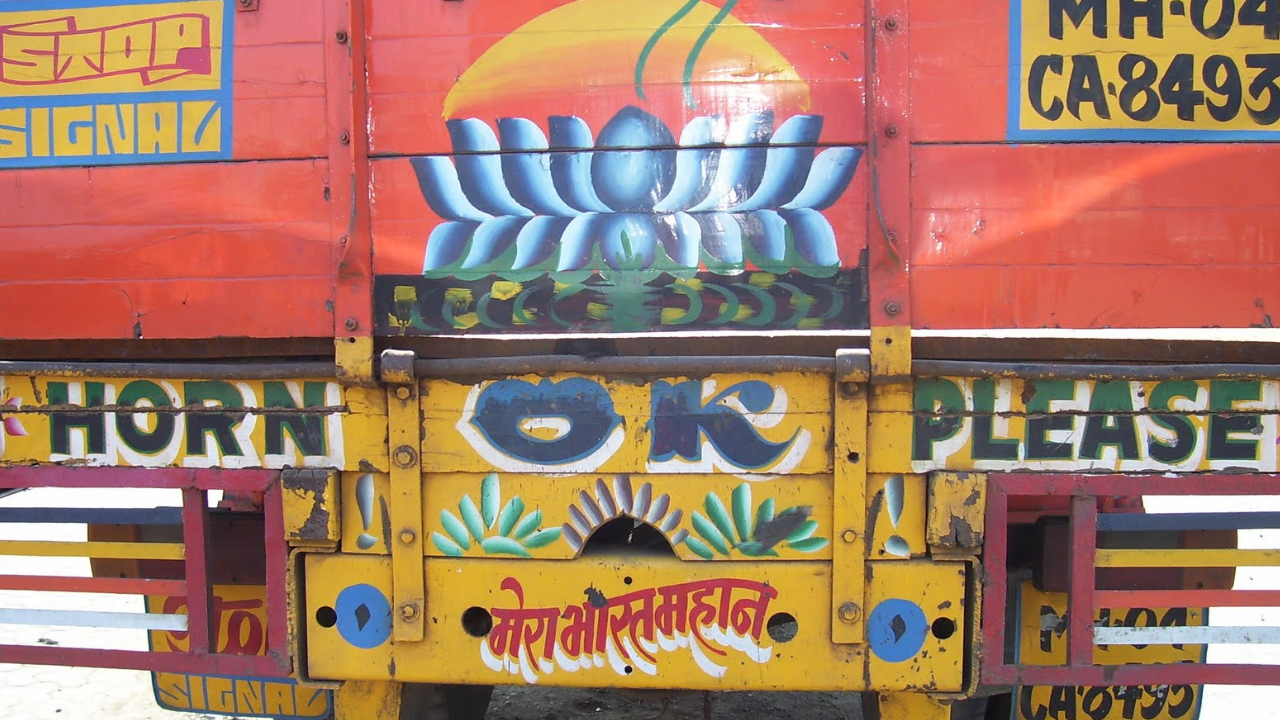
The True Story of the ‘Horn OK Please’ Sign on the Back of a Truck; Crazy connection to World War II!

One thing that definitely catches your eye while traveling on Indian highways is the famous phrase written on the back of every truck—’HORN OK PLEASE’. We have been seeing this phrase since childhood and often we think that it simply means that the vehicle behind you should honk its horn and proceed. But you will be surprised to hear that behind these three words there is a long history, which is directly connected with ‘World War II’!
World War II and the Diesel Shortage
This interesting history began during the Second World War. At that time, there was a huge shortage of fuel, especially diesel, all over the world. Due to the war, diesel stocks were kept in reserve for the army. A different way was found to keep the cargo trucks running under such difficult conditions. Instead of diesel, cars started running using ‘kerosene’ kerosene in trucks.
Zimmermann Telegram History: How did ‘that’ one secret letter change the history of World War I? Which strategy of Germany was reversed by America?
‘okay’ The true and shocking meaning of
Kerosene is a highly flammable and dangerous form of fuel compared to diesel. If these kerosene-fueled trucks were hit even slightly or had an accident, they would immediately burst into flames and turn into a huge bomb.
Therefore, a special warning was written on the back of the truck to warn other drivers coming from behind. That warning is ‘Horn Please: On Kerosene’. It meant, “This truck is running on kerosene, so please overtake by sounding the horn and maintaining a safe distance.” Later, the ‘O’ and ‘K’ from ‘On Kerosene’ were combined to form the word ‘OK’ and it was written in the middle of ‘Horn Please’.
Truck gutted in fierce fire, luckily driver escaped; Incidents in Hingoli district
Meaning that has changed over time
The World War ended, the use of kerosene also stopped and trucks started running on diesel again. However, the drivers got used to writing ‘Horn OK Please’ on the back of the trucks. Later generations forgot the original history behind it and made it a part of truck culture.
Although today this phrase is seen as just a traffic rule or design, behind these words running on the highway lies a great wartime need and security secret. So the next time you read this sentence on the back of a truck, be sure to remember this interesting story from World War II.

Comments are closed.