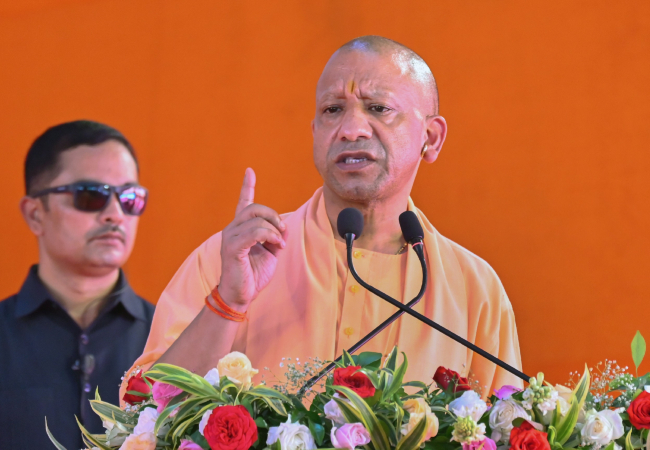
Lucknow. Under the leadership of Chief Minister Yogi Adityanath, a major initiative is being taken in Uttar Pradesh to make health services integrated and technology-based to provide timely treatment to patients in road accidents and other serious emergencies. Under this, a plan has been prepared to develop Uttar Pradesh Trauma and Emergency Network (UPTEN) as an integrated emergency medical network, whose objective is to provide proper treatment to the patient in the first 60 minutes i.e. 'Golden Hour' after an accident or medical emergency.
Read :- Cabinet Minister in Jharkhand Government Sudivya Kumar Sonu dies of heart attack, two-day state mourning declared
Through UPTEN, the scattered trauma, burn, cardiac, stroke and other emergency services of the state will be connected through one network. Under the scheme, a target has been set to develop 173 integrated trauma and emergency medicine units. These will include 11 level-1 apex hubs, 36 level-2 regional centers and 126 level-3 district level units. Its objective is to rapidly transport the patient to the nearest and competent medical center as per the need.
Target to save 12 thousand lives every year
Additional Chief Secretary Health Amit Ghosh said that a target has been set to save the lives of 10 thousand to 12 thousand people every year through the system. According to experts, by getting timely treatment, the cases of deaths and permanent disability in serious accidents can be reduced. For this, instead of merely increasing the number of hospitals, emphasis will be laid on connecting hospitals, ambulances, trauma centers, doctors, paramedical staff and command centers into a single emergency network. He said that the objective of UPTEN is to start the treatment process as soon as the emergency is received instead of waiting for the patient to reach the hospital. Under the scheme, 1,200 Advanced Life Support (ALS) ambulances will be connected to the network. Work will be done to use these ambulances as mobile emergency treatment centers rather than just as a means of transportation. Apart from this, 18 divisional level command centers of the state will play an important role in the operation of the network. Through these centres, a system will be developed to coordinate emergency calls, ambulances, hospital beds and specialist medical services.
Response time will be reduced by 30 to 50 percent
Read: 'Bihar Police broke not their legs but their dreams of joining the army', Rahul said – Modi ji, their broken bones will be fixed, can you bring back their broken dreams?
Additional Chief Secretary Health said that under the scheme, a target has been set to reduce emergency response time by 30 to 50 percent. The plan is to gain about 10 minutes of extra time to take important medical decisions before reaching the hospital. For this, it is proposed to use technologies like real-time networking, digital alert system and AI based triage. Its purpose is to determine which patient should be sent to which hospital or which specialist department. That is, the emergency system will be operated on the principle of 'Right Patient, Right Department, Right Time'. In the plan, it is being considered to make common people also a part of the emergency system. For this, a plan is being made to create a first responder network at three levels. In this, at the first level there will be people providing immediate help like police, ambulance drivers, fire service and highway patrol. At the second level, there will be police, home guards and other institutional responders, while at the third level, common citizens will be trained in basic emergency response and prepared for initial help in times of need.
Free emergency treatment for 48 hours
Under the scheme, there will be provision of free emergency treatment for all citizens for 48 hours. Its objective is to reduce the pressure of immediate treatment expenses on the patient and his family in the event of an accident or serious illness, so that treatment is not delayed due to financial reasons. Along with this, emphasis has also been laid on ensuring separate budget, human resource policy and availability of specialist doctors for UPTEN. Apart from this, steps like creation of Emergency Medicine Officer (EMO) cadre, pay scale as per AIIMS and arrangement of incentives for specialist doctors are included.