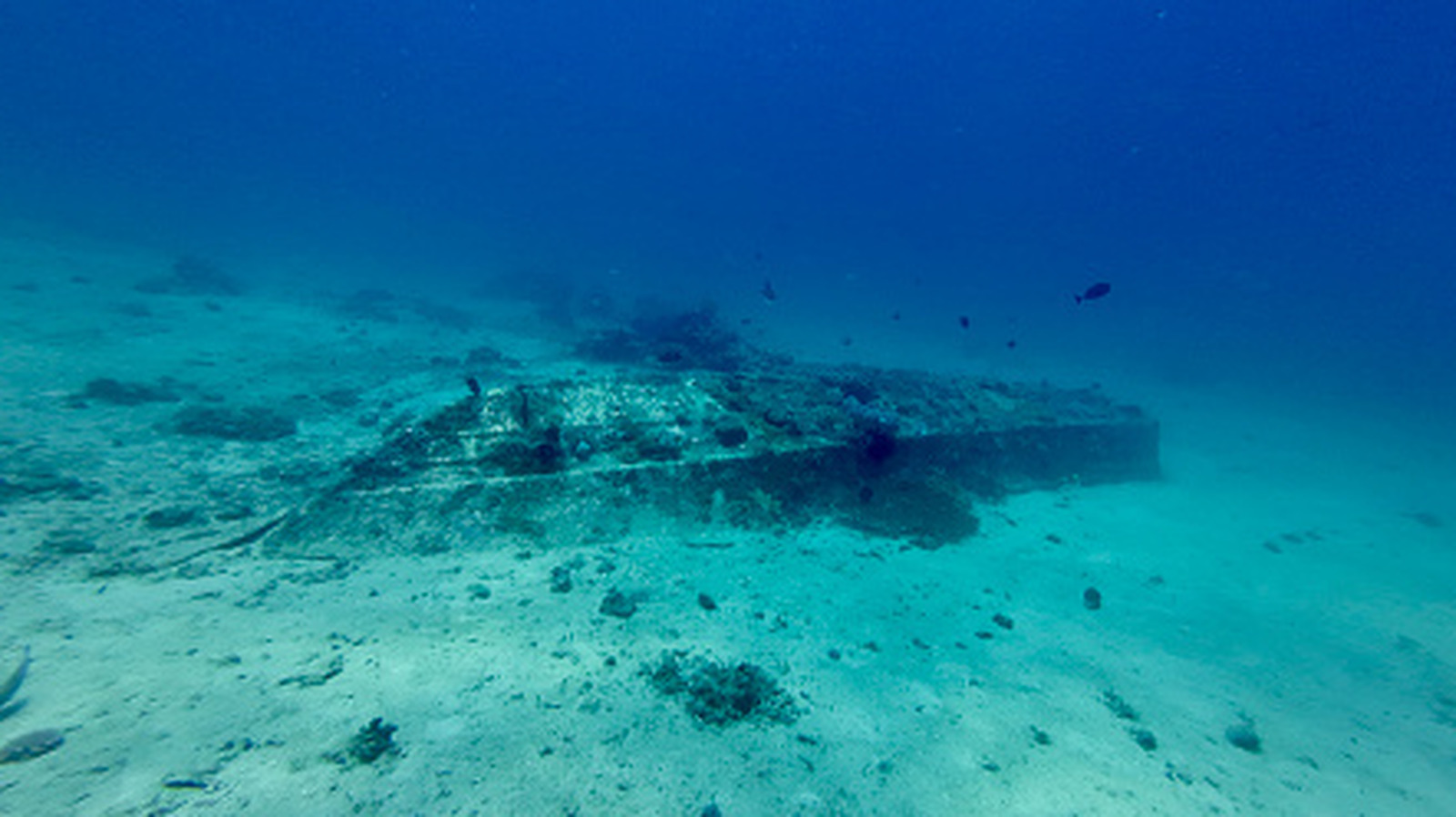
Shipwrecks are often found by accident. Of course, treasure hunters and scientists go looking for the big ones, like the Titanic or Sir John Franklin’s HMS Terror. But Unesco, the United Nations Educational, Scientific and Cultural Organization, estimates that there are more than three million undiscovered shipwrecks in the world’s oceans. Many of these ships are forgotten to history until divers, workers, or even fishermen stumble upon them.
In March of 1533, a ship named the Bom Jesus left Portugal from the port of Lisbon, bound for western India. It carried naval equipment and other goods that Portugal could trade for pepper and spices. The route was treacherous and long. It was centuries before the Suez Canal opened, and ships sailing from Portugal to India had to go around the Cape of Good Hope at the southern tip of Africa. Four months into a journey that would take more than a year, the fleet that included the Bom Jesus hit a storm, and the ship was blown off course. It disappeared and wasn’t seen again for 475 years.
In 2008, diamond miners working off the coast of Namibia, where the desert meets the Atlantic Ocean, found the remains of a ship. Incredibly well-preserved, the ship was laden with 40 tons of cargo, including gold and silver coins, copper ingots, and more than 100 elephant tusks. Described by archeologists as a time vessel, the Bom Jesus shipwreck offers a glimpse back in time and also leaves scientists with some unanswered questions.
A scientific glimpse into the past

This isn’t the first time people have found a lost shipwreck holding piles of untouched treasure. While the valuable coins may grab the general public’s attention, the elephant tusks opened a different window into the past. This is the largest-ever archaeological discovery of African elephant ivory. Scientists conducted tests on the tusks that not only provided information about elephant populations in the 16th century but also told a story about early trade networks.
The tusks came from at least 17 different herds of forest elephants, which were preferred due to their hard, straight tusks that could be more easily carved. Of these 17 lineages, only four still exist in modern Africa today. The genetic information provided by this ivory can help with modern study efforts, revealing the deep roots of elephant ancestry helps strengthen the case for conservation.
The lost populations are attributed to centuries of ivory hunting. Ivory was very valuable and could be used for jewelry, functional and decorative items, and religious objects. The Bom Jesus tusks came from male and female elephants both young and old and were supplied from different communities, indicating internal trade networks in Africa.
The cargo helps bring the past to life, but one mystery has yet to be solved. The remains of the approximately 200 sailors that were likely aboard the Bom Jesus were never found. Portugal waived its claim to the artifacts, and many are now on display at the Jasper House Museum in Oranjemund, Namibia. The ship is the oldest shipwreck ever found along the western edge of Sub-Saharan Africa.