

65
Petroleum-based solvents and detergents can be replaced by highly effective, low-toxicity, environment friendly, bio-derived, and mineral-based renewables.
78 years after Independence, we are still dependent on crude and gas from the Gulf region, a major strategic, economic and health vulnerability to the Strait of Hormuz choke point. Global pollution from smoke, microplastics, and oil spills, to consequences of climate change, is all due to unsustainable dependence on fossil fuels. With 17.7% (slightly more than a sixth) of the world’s population, we should lead the world in transition to sustainable energy, fertilizer, and recyclable biopolymer alternatives. The Solar Alliance, the shift towards green hydrogen, biofuels, biofertilizers, and thorium-based nuclear energy with nuclear waste recycling are all commendable, but we need a major push from our reform-minded, progress-oriented, mission-mode government, with active private participation.
ENERGY TRANSITION
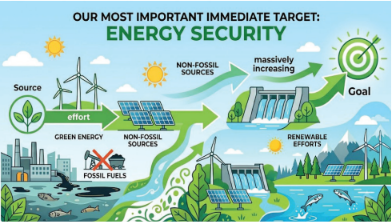
Energy security is our most important immediate target. We are making efforts to massively increase non-fossil sources of energy, but need to focus our research efforts on:
Synthetic fuels: Green hydrogen is being adapted for heavy transportation and power grid balancing. By capturing industrial carbon emissions and CO2 from air and combining them with green hydrogen, replacements for traditional gasoline, diesel, and jet fuel are being developed. Green Hydrogen is ideal for high-heat industrial processes like cement, steel, ceramics, and glass manufacturing.
Biofuels: The massive push to decarbonize aviation and marine transport is driving biodiesel and renewable diesel consumption. India crossed a historic 20% national average ethanol blending rate (E20) and introduced a mandatory Compressed Biogas (CBG) blending initiative starting at 1% and aiming for 5%. Conversion of agricultural waste into biofuel and gas will also permanently solve the air pollution caused by its open burning. Conversion of solid organic municipal waste into biocrude will similarly solve pollution problems at landfills and improve public hygiene. AI integration into bioreactor designs helps automatically adjust metabolic conditions for maximized fuel yields.
Renewable Natural Gas (RNG) from the breakdown of agricultural or organic waste, or sewage in an anaerobic digester, can replace piped natural gas (PNG) in existing gas grids. Compressed Biogas (CBG) as a substitute for Liquefied Petroleum Gas (LPG) is already in use for vehicles.
Advanced biofuel technologies: Custom enzymes have drastically optimized breakdown speeds and yields for cellulosic ethanol. Alcohol-to-Jet (ATJ) and hydroprocessed esters/fatty acids (HEFA) are helping airlines meet strict decarbonization pledges. Heavy shipping lines are steadily testing biomethanol and unrefined bio-oils as alternatives to traditional bunker fuels. Genetically Modified (GM) algae strains in wastewater bodies capture carbon dioxide and synthesize heavy concentrations of biofuel.
Hydro and geothermal energy: Capacity needs to be increased.
Energy storage technologies: Solar and wind energy are unavailable 24/7 and hence need to be stored when available and transmitted when required. The rapid development/improvement of these technologies and their commercialization need a concerted government-private effort. Key emerging and underdevelopment technologies include Sodium-Ion and Freevoy Hybrid Battery technologies, Solid-State Batteries (SSBs), Gravity Energy Storage, Advanced Compressed Air Energy Storage (CAES), Thermal storage, and Flow batteries. SSBs offer higher energy density (500 Wh/Kg), fast charging (80% in 15 min), efficiency over wider temperature ranges -30˚ to 100˚C, longer life, and elimination of thermal runaway risk of flammable liquid electrolyte, lower energy density, lithium-ion batteries.
Energy transmission technologies: Energy transmission challenges primarily stem from grid congestion, line losses, and the difficulties of integrating renewable energy. Bottlenecks cause delayed projects, wasted power, and higher consumer costs. Modern solutions include upgrading to high-voltage lines, decentralized energy generation and usage, and smart grid tech.
Nuclear Energy: After the recent success of the second-stage fast breeder reactor at Kalpakkam, we need to scale it up and complete the Thorium nuclear cycle by constructing the Advanced Heavy Water Reactors (AHWRs) to convert non-fissile Thorium-232 into Uranium-233, creating a sustainable, closed-loop fuel cycle. While the design and experimental validations for AHWR units have been largely completed, final regulatory clearances, projected site selection, and the official operational date are awaited. As a global first, the plutonium ‘nuclear waste’ from the first stage gets converted in the second stage to fuel the third stage, thus using up the hazardous plutonium waste produced by nuclear energy plants worldwide. Simultaneously, it solves our dependence on imported uranium, as we have the world’s largest thorium reserves. Other nuclear options are Small Modular Reactors (SMRs) and efforts at sustained controlled nuclear fusion to replicate the sun inside a reactor. Perovskite-silicon technology promises to significantly increase the efficiency of solar panels.
FROM PETROCHEMICALS TO RENEWABLE FEEDSTOCK
Biomanufacturing, synthetic biology, and advanced recycling are rapidly scaling to replace fossil fuels as raw materials in manufacturing plastics, fibres, and industrial chemicals, yielding identical, everyday materials.
Bioconversion of biomass: Microorganisms have been engineered to turn plants, grasses, marine biomass (fast-growing algae and seaweed), and agricultural residues (like bagasse or corn stalks) into base chemicals like bio-BDO (used in spandex and polyurethanes) and ethylene (the foundational block for plastics) and Active Pharmaceutical Ingredients (API). Polylactic Acid (PLA), PHA, Polyethylene from bioethanol can replace naphtha and ethane used for ethylene and propylene production, used to manufacture plastics, synthetic fibres, synthetic rubbers, and packaging materials.
Chemical conversion of biomass: Because biomass is typically hydrogen-poor and oxygen-rich, engineers are actively integrating green hydrogen into biomass conversion pathways to maximize the carbon yield and create high-value chemicals without greenhouse gas emissions. Processes are under development to turn seaweed-derived sugars into polyhydroxyalkanoates (PHAs), a type of biodegradable polyester that decomposes naturally in both home compost and marine environments.
Advanced chemical recycling: Using pyrolysis or gasification, old plastics and mixed municipal waste are converted into pyrolysis oils or synthetic syngas. These can be fed directly back into existing steam crackers to create virgin-quality plastics without needing to drill for new fossil fuels.
Urea and fertilizers: Urea is synthesised from hydrogen in fossil fuels and nitrogen from the air. Green hydrogen can entirely replace the use of fossil fuels for urea production. Calcium Ammonium Nitrate (CAN) is a less volatile and more effective fertiliser than urea. Nitrogen-fixing crops, aquatic ferns, microalgae, oil cakes, compost, treated sewage solids, and manure are natural and sustainable alternative fertilizers that also improve soil microbiology.
OTHER PETROLEUM ALTERNATIVES
Petroleum-based solvents and detergents can be replaced by highly effective, low-toxicity (volatile organic compounds-free), environment friendly, bio-derived, and mineral-based renewables, like citrus terpenes and alkyl polyglucosides.
Petroleum-based lubricants, engine oils, and electrical insulating oil can be substituted with bio-lubricants and synthetic esters.
Asphalt binders used in road construction and waterproofing sealants and coatings can be replaced by “bio-asphalt” (lignin and tall oil discarded by paper mills, and microalgae) and sustainable polymer mixes.
Paraffin wax has many renewable, plant-based, and animal-based alternatives like soy wax, beeswax, carnauba wax (from palm leaves), and candelilla wax (from shrubs).
For a secure, healthy, and wealthy Viksit Bharat and to be Vishwaguru in sustainable living, we need freedom from fossil fuels and supply chain uncertainties at the earliest.
* Dr P.S. Venkatesh Rao is a Consultant Surgeon, Former Faculty at CMC (Vellore), AIIMS (New Delhi), and a polymath in Bengaluru, drpsvrao.com

Comments are closed.