
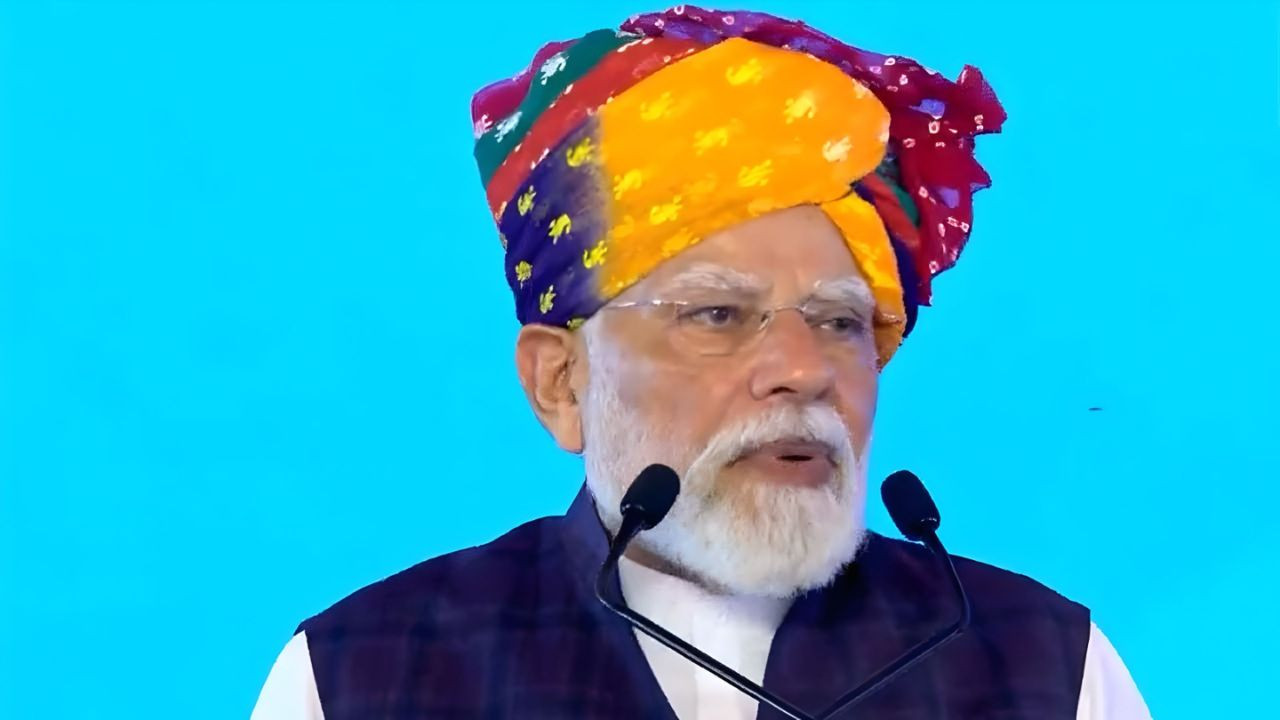
‘Today is a big day for self-reliant India’, PM Modi flagged off India’s first hydrogen train

Jind: Prime Minister Narendra Modi on Friday flagged off the country’s first hydrogen fuel cell train from Jind railway station in Haryana. This is not just the launch of a new train, but is being considered an important step towards connecting Indian Railways with environment-friendly and future technology. The operation of this train will not only reduce pollution but will also promote the use of clean sources of energy.
While addressing the public during this period, PM Modi said that, "The first train in India ran between Bombay and Thane. Similarly, whenever hydrogen train is mentioned in future, the names of Jind, Sonipat and Haryana will definitely come up. I congratulate all of you and the entire country for this big step towards the modernization of Indian Railways."
This hydrogen-powered train will initially operate on the Jind-Sonipat railway section of Northern Railway. On this approximately 89 kilometer long route, the train will serve passengers stopping at many major stations. This route connects many small stations including Jind Junction, Gohana Junction and Sonipat, which will also benefit local passengers. According to railway officials, the objective of this project is to incorporate new technology into the Indian Railways network and gradually promote clean energy based transportation.
How does a hydrogen fuel cell train work?
Unlike traditional electric trains, this train does not require overhead power lines to run. The hydrogen fuel cell installed in it generates electricity inside the train itself. In this process, hydrogen gas is mixed with oxygen present in the air, which generates electricity. The special thing is that no smoke or pollution is spread in this entire process. Only water vapor and little heat are released as by-products, making this technology considered extremely safe for the environment.
Use of clean energy instead of diesel and coal
Railway officials say this technology is a modern return to self-propelled trains, which previously depended on diesel engines. Now clean hydrogen fuel is being used in their place. This will reduce dependence on fossil fuels and will also reduce carbon emissions significantly. Additionally, the need for external power supply is also eliminated, making operation more convenient.
Modern systems installed for security
Keeping in mind the safe use of gas like hydrogen, many state-of-the-art safety equipment has been installed in the train. These include hydrogen leak detection sensors, fire and smoke detection systems and continuous temperature monitoring equipment. According to the Railways, an integrated monitoring system has been installed in the entire train, which keeps an eye on all technical activities at all times. If any kind of threat is sensed, this system immediately issues an alert and starts the necessary security procedures.
What will be the speed of the train?
The maximum operating speed of this hydrogen train has been kept at 75 kilometers per hour, while its design speed is 110 kilometers per hour. Railways believes that with further development of this technology in future, both its capacity and speed can be improved.
India joins select countries of the world
Hydrogen fuel cell trains are currently operating in only a few countries of the world. Germany became the first country to adopt this technology commercially. After this, France, Italy, Japan and China also started testing and operating such trains on a limited scale.
Now India has also joined this list. This has given new recognition to the country’s indigenous technological capability and the growing step towards green transportation. Experts believe that with the expansion of hydrogen-based rail services in the coming years, Indian Railways will become more environment-friendly, modern and energy efficient.

Comments are closed.