
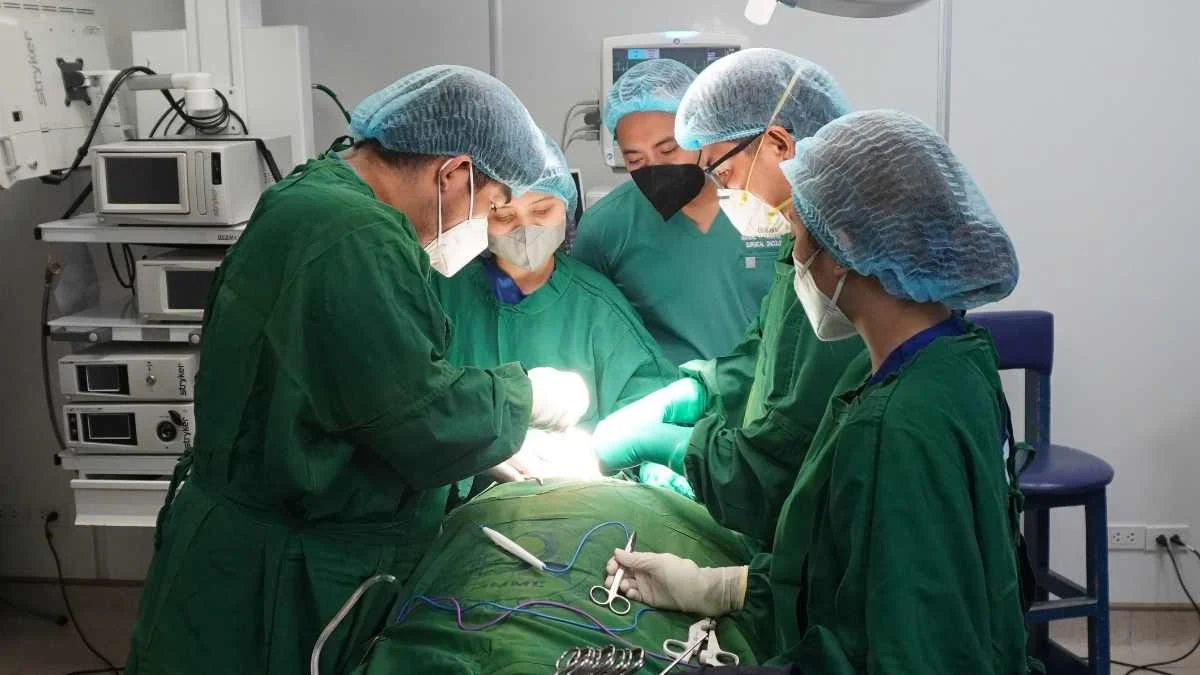

From the cath labs of Mount Sinai to the digital health corridors of Stanford, physicians of Indian origin have carved out an extraordinary presence in American cardiology. They run some of the busiest cardiac catheterisation laboratories in the world, lead landmark clinical trials, pioneer AI-driven diagnostics and reshape how the United States prevents, detects and treats heart disease. The American Association of Cardiologists of Indian Origin (AACIO), founded in 1986, now represents an influential community of cardiologists whose contributions span every subdiscipline of the field. Here are 12 of the most distinguished Indian-origin cardiologists practising in the United States today.
Dr Navin C. Nanda — The father of modern echocardiography
Institution: University of Alabama at Birmingham (UAB)
Specialty: Echocardiography, cardiovascular imaging
Few physicians have reshaped a diagnostic discipline as fundamentally as Navin Chandra Nanda. Born in 1937, Nanda is an Indian-American cardiologist and Distinguished Professor at the University of Alabama at Birmingham, widely known as the “Father of Modern Echocardiography” for his foundational work in cardiac ultrasound.
He is the Founding President of the American Association of Cardiologists of Indian Origin (AACIO) and the International Society of Cardiovascular Ultrasound (ISCU). Trained at Seth G.S. Medical College in Mumbai and subsequently in London and Rochester, New York, Nanda challenged the medical consensus that the pulmonary valve could not be imaged. Through contrast echocardiography, he demonstrated otherwise, a breakthrough that advanced the diagnosis of congenital heart disease in newborns and infants. His innovations provided cutting-edge advancements in the field, including three-dimensional, contrast and both conventional and color Doppler echocardiography.
He has authored and co-authored more than 1,000 publications including 530 original peer-reviewed pioneering papers, 17 textbooks and many video texts and compact discs dealing with this subject. The Cardiological Society of India, the Indian College of Cardiology and the Indian Academy of Echocardiography have all recognised him as the “Father of Echocardiography,” and the American College of Cardiology has created the Navin C. Nanda International Service Award in his honour. The award is given in perpetuity, in recognition of his “unparalleled contributions” which have “profoundly shaped the field of cardiology.”
Dr Deepak L. Bhatt — Director of Mount Sinai Fuster Heart Hospital
Institution: Icahn School of Medicine at Mount Sinai, New York City
Specialty: Interventional cardiology, cardiovascular prevention, heart failure
Deepak L. Bhatt is an American interventional cardiologist, researcher, and educator, known for novel clinical trials in cardiovascular prevention, intervention, and heart failure. He currently serves as Director of the Mount Sinai Fuster Heart Hospital and the Dr Valentin Fuster Professor of Cardiovascular Medicine at the Icahn School of Medicine at Mount Sinai.
His academic pedigree is formidable. After graduating as valedictorian from Boston Latin School, Dr Bhatt obtained his science degree as a National Merit Scholar at MIT, his MD from Cornell, an MPH from Harvard, and an Executive MBA from Oxford. He trained in internal medicine at the University of Pennsylvania and in cardiology at Cleveland Clinic. He previously served as Executive Director of Interventional Cardiovascular Programs at Brigham and Women’s Hospital and was a full Professor at Harvard Medical School.
He is the author of more than 1,500 publications and the editor of “Cardiovascular Intervention: A Companion to Braunwald’s Heart Disease.” His research interests encompass acute coronary syndromes, preventive cardiology, and advanced cardiac, cerebral and peripheral intervention techniques. He is also Editor of the peer-reviewed Journal of Invasive Cardiology.
Dr Samin K. Sharma — High-volume interventional pioneer
Institution: Mount Sinai Health System, New York City
Specialty: Complex percutaneous coronary intervention
Born in Alwar, Rajasthan, in 1955, Samin K. Sharma is an American philanthropist of Indian descent and an interventional cardiologist who co-founded the Eternal Heart Care Centre and Research Institute in Jaipur. Dr Sharma is the Director of the Mount Sinai Cardiovascular Clinical Institute, Senior Vice President of Operations and Quality at The Mount Sinai Fuster Heart Hospital, Director of Interventional Cardiology at The Mount Sinai Health System, and The Anandi Lal Sharma Professor of Medicine in Cardiology. Renowned for complex coronary interventions, he has a success rate over 99% and a major complication rate under 0.2%.
Dr Sharma received his medical degree from S.M.S. Medical College in 1978 in Jaipur, where he was ranked the top student in his medical school and State University, receiving eight gold medals and five honours. He joined Mount Sinai in 1990 and has served there for more than three decades. His honours include the 2011 Ellis Island Medal of Honor and the American Heart Association Achievement in Cardiovascular Science and Medicine Award. He also leads bilateral knowledge transfer, conducting monthly training sessions for cardiologists in India on advanced angioplasty techniques.
Dr Annapoorna S. Kini — Leading female interventionalist in the country
Institution: Mount Sinai Health System, New York City
Specialty: Percutaneous coronary intervention, structural heart disease
Dr Annapoorna S. Kini is the Director of the Interventional Structural Heart Disease Program, Interventional Cardiology Fellowship Program, and the Samin K. Sharma Family Foundation Cardiac Catheterisation Lab at Mount Sinai Fuster Heart Hospital. She is distinguished as a high-volume operator — the highest number of procedures by a female interventionalist in the United States — with an extremely low complication rate of less than 0.5%.
Kini is an international leader in the field of percutaneous coronary intervention and heart valve therapy. After receiving her medical degree from India, she completed her training in England, followed by a fellowship in general cardiology and interventional cardiology at The Mount Sinai School of Medicine, New York. A gold medallist from Kasturba Medical College, Mangaluru, and a native of Puttur in Dakshina Kannada, she is internationally acclaimed for complex chronic total occlusion, calcific and bifurcation lesions. She maintains a large interventional database of more than 30,000 PCI patients, which helps in the analysis and publication of short and long-term outcomes after all kinds of coronary interventions.
Dr Ajay J. Kirtane — Academic chief of Columbia interventional cardiovascular care
Institution: Columbia University Irving Medical Center / NewYork-Presbyterian Hospital
Specialty: Interventional cardiology, coronary and peripheral vascular disease
Ajay J. Kirtane is the Director of Columbia Interventional Cardiovascular Care and Professor of Medicine at Columbia University Irving Medical Center. He is an internationally-renowned leader in the field of Interventional Cardiology, with a particular focus on providing exceptional and evidence-based care to patients with complex coronary and peripheral vascular disease.
Born to Indian immigrant parents in Brooklyn and raised in New Jersey, Kirtane graduated from Princeton and Columbia University College of Physicians and Surgeons. He completed his residency and chief residency in internal medicine at the University of California — San Francisco. He then completed fellowships in cardiovascular disease and coronary and peripheral vascular intervention at Beth Israel Deaconess Medical Center / Harvard Medical School, and obtained a Master of Science in Clinical Epidemiology from the Harvard School of Public Health. As Chief Academic Officer of the Division of Cardiology, he has been principal investigator and steering committee member on numerous landmark international clinical trials, and his Google Scholar citation count exceeds 69,000.
Dr Mintu Turakhia — Founder and director, Stanford Centre for Digital Health
Institution: Stanford University School of Medicine / VA Palo Alto Health Care System
Specialty: Cardiac electrophysiology, digital health, AI in cardiovascular medicine
Mintu Turakhia is an internationally renowned cardiologist and cardiac electrophysiologist, outcomes researcher and clinical trialist, executive, and leader in digital health, AI, and heart rhythm care. Of Indian origin, he has built one of the most distinctive research portfolios in modern cardiology by fusing clinical medicine with data science and wearable technology.
At Stanford, he was the Founding Director of the Stanford Centre for Digital Health, started in 2015 and the first of its kind, where he led a large multidisciplinary programme on clinical research, education, technology incubation, and international thought leadership on digital health, wearables, and AI, with an emphasis on cardiovascular disease and heart rhythm disorders. He served as co-principal investigator of the landmark Apple Heart Study, enrolling over 400,000 participants and published in the New England Journal of Medicine. His TREAT-AF retrospective study, encompassing more than 500,000 patients with newly diagnosed atrial fibrillation, remains the largest known research cohort of its kind. He has authored more than 300 publications and his work has been cited more than 44,000 times.
Dr Amit Khera — 2025 American Heart Association Chairman’s Award recipient
Institution: University of Texas Southwestern Medical Center, Dallas
Specialty: Preventive cardiology, familial hypercholesterolaemia, cardiovascular risk
Amit Khera, director of preventive cardiology and clinical chief of cardiology at UT Southwestern Medical Center, received the 2025 Chairman’s Award at the American Heart Association’s Scientific Sessions in New Orleans — one of the most prestigious honours in American cardiovascular medicine. In addition to his roles as director of preventive cardiology and clinical chief of cardiology, Dr Khera is also a professor of medicine and co-director of the Familial Hypercholesterolaemia Clinic at UT Southwestern Medical Center, as well as a professor of epidemiology at the Peter O’Donnell Jr School of Public Health. In addition, he holds the Dallas Heart Ball Chair in Hypertension and Heart Disease.
Dr Khera has authored more than 250 peer-reviewed publications, including serving on the writing committee for the “2019 ACC/AHA Guideline on the Primary Prevention of Cardiovascular Disease.” A past president of the American Society for Preventive Cardiology, he is also the founding director of UT Southwestern’s Preventive Cardiology programme and earned his medical degree at Baylor College of Medicine.
Dr Jay Giri — Director of cardiovascular catheterisation laboratories, University of Pennsylvania
Institution: Perelman School of Medicine, University of Pennsylvania, Philadelphia
Specialty: Interventional cardiology, vascular intervention, health outcomes
Jay Giri is an Interventional Cardiologist, Director of the Cardiovascular Catheterisation Laboratories at the Hospital of the University of Pennsylvania, Director of the Penn Cardiovascular Outcomes, Quality and Evaluative Research Centre, and Associate Professor at the Perelman School of Medicine. His clinical interests include complex coronary artery intervention, venous thromboembolism, transcatheter aortic valve replacement, and endovascular denervation therapies.
Of Indian origin, Giri completed his MD at Northwestern University and residency at Massachusetts General Hospital. In 2017, he was selected as one of 12 interventional cardiologists worldwide with fewer than 10 years in practice for the Society for Cardiovascular Angiography and Interventions’ Emerging Leader Mentorship Fellowship. He received the 2019 Transcatheter Therapeutics Thomas J. Linnemeier Spirit of Interventional Cardiology Young Investigator Award, given to one interventional cardiologist worldwide under age 40 for academic and clinical excellence. He has authored more than 300 original research manuscripts and led multiple multisite international clinical trials.
Dr Ankur Kalra — Division chief, podcast host and hypertrophic cardiomyopathy specialist
Institution: State University of New York, Upstate Medical University, Syracuse; Krannert Cardiovascular Research Centre, Indiana University
Specialty: Interventional and structural cardiology, hypertrophic cardiomyopathy
Dr Kalra is the Division Chief of Cardiology, interventional cardiologist, and associate professor of medicine at State University of New York, Upstate Medical University and Norton College of Medicine in Syracuse, NY. Educated at Indira Gandhi Medical College in Shimla, he completed medical and cardiology training at the All India Institute of Medical Sciences in New Delhi, Cooper University Hospital in Camden, New Jersey, and Hennepin County Medical Center and Minneapolis Heart Institute. He completed fellowships at Beth Israel Deaconess Medical Center and Harvard Medical School, and pursued advanced interventional and structural cardiology training at Houston Methodist Hospital.
Kalra has published over 325 scientific manuscripts. His notable professional honours and awards include the Sones-Favaloro Excellence in Research Award from the Cleveland Clinic in 2020 and Castle Connolly Top Doctors recognition in both 2025 and 2026. He is also the host of Parallax, described as an award-winning, top-ranked cardiology podcast, and the founder of the non-profit start-up makeadent.org. He serves as Director of the Barry J. Maron Hypertrophic Cardiomyopathy Centre in New Delhi, maintaining a meaningful bridge between the US and Indian cardiology communities.
Dr Aakriti Gupta — Structural heart specialist at Cedars-Sinai
Institution: Smidt Heart Institute, Cedars-Sinai Medical Center, Los Angeles
Specialty: Interventional cardiology, structural heart disease, transcatheter valve interventions
Aakriti Gupta earned a medical degree from Panjab University in India and completed her internal medicine residency at Yale University School of Medicine. She completed her general cardiology fellowship and interventional cardiology fellowship at Columbia University College of Physicians and Surgeons and pursued advanced training in structural heart disease interventions. She then joined the Smidt Heart Institute at Cedars-Sinai, where she has developed particular expertise in performing transcatheter valvular interventions alongside complex coronary procedures.
Gupta has authored over 75 scientific publications in leading medical journals, including Nature Medicine, JAMA, JACC and Circulation. She has performed approximately 4,000 cardiac operations, of which around 1,000 involved heart valve procedures, making her one of the most prolific structural heart interventionalists of her generation. Her arrival at Cedars-Sinai was part of a broader expansion of the institute’s structural heart and interventional capabilities.
Dr Anand Rohatgi — Pioneer in HDL function and South Asian cardiovascular health
Institution: University of Texas Southwestern Medical Center, Dallas
Specialty: Preventive cardiology, HDL biology, cardiovascular risk biomarkers
Anand Rohatgi is a Professor of Medicine in the Department of Internal Medicine’s Division of Cardiology at UT Southwestern Medical Center, specialising in preventive cardiology. Dr Rohatgi earned his medical degree at Duke University School of Medicine. He completed an internal medicine residency at the University of Pennsylvania Health System and a cardiology fellowship at UT Southwestern.
His research interests include heart-disease risk prediction, high-density lipoproteins (HDL, or “good cholesterol”), inflammation, and atherosclerosis. Rohatgi is the principal investigator of several multi-year NIH-funded grants examining the genetic and molecular basis of cholesterol efflux, and his work on HDL function — how well HDL removes cholesterol from artery walls — has been published in Circulation, JAMA, the Journal of the American College of Cardiology and The Lancet. Notably, he has devoted a significant strand of his research to cardiovascular risk in people of South Asian ancestry, a population disproportionately susceptible to heart disease at lower body-mass indices than other ethnic groups. He won the Young Investigator Award from the AACIO in 2010.
Dr Aravinda Nanjundappa — Complex intervention specialist at the Cleveland Clinic
Institution: Cleveland Clinic, Cleveland, Ohio
Specialty: Interventional cardiology, vascular medicine, peripheral artery disease
Aravinda Nanjundappa is an interventional cardiologist at Cleveland Clinic, Cleveland, Ohio, and a recognised expert in complex peripheral and coronary interventions. Of Indian origin, Nanjundappa has built a distinguished clinical and academic career centred on some of the most technically demanding catheter-based procedures. He has been a faculty presence at major international cardiovascular meetings, including India Live — the flagship interventional cardiology conference hosted annually in New Delhi — where he has presented alongside the world’s leading practitioners.
His work encompasses peripheral artery disease management, advanced structural heart procedures and coronary revascularisation in high-risk patients. He has contributed to peer-reviewed literature in vascular medicine and interventional cardiology and represents the next wave of Indian-American cardiologists who have reached senior leadership positions at elite American institutions.
A community remaking American heart medicine
The physicians profiled here are not an anomaly. They are representative of a broader pattern in which Indian-origin doctors have risen to the very summit of academic and clinical cardiology in the United States. AACIO, founded in 1986, provides a central forum for physicians and scientists of Indian origin living in the United States who have an interest in cardiovascular medicine, committed to promoting and maintaining high standards of academic excellence and clinical practice through educational, social, and scientific activities.
Beyond this list of 12, several other Indian-origin cardiologists practising in the US merit a mention. Dr Dinesh K. Kalra (University of Louisville) was recently named editor-in-chief of JACC: Advances and received the Kentucky Medical Association’s Educational Achievement Award for 2025. Dr Sripal Bangalore (NYU Langone Health) is a tenured professor and Director of Invasive and Interventional Cardiology with over 350 publications in journals including the NEJM, JAMA and The Lancet. Dr Garima Sharma (Inova Schar Heart and Vascular, Virginia), who founded the Cardio-Obstetrics Programme at Johns Hopkins, is a nationally recognised expert in women’s cardiovascular health and has contributed to several ACC/AHA guidelines. Dr Hashim H. Gazi, trained at McGill University before practicing as a structural interventional cardiologist at Providence Cedars-Sinai Tarzana Medical Center in Los Angeles. Dr Neel Chokshi (Penn Medicine) directs both the Penn Sports Cardiology Programme and the Penn Centre for Digital Cardiology, fusing wearable technology with cardiovascular outcomes research. Dr Nilay S. Shah (Northwestern University), a National Academy of Medicine fellow, focuses on cardiovascular health equity and South Asian heart disease risk. Dr Prashant Vaishnava (Columbia University) is Co-Director of Inpatient Clinical Services for Columbia Interventional Cardiovascular Care and an editor of the 15th edition of Fuster and Hurst’s The Heart.
Their collective impact spans the full breadth of the discipline — from Dr Nanda’s foundational work in imaging technology, which now underlies billions of echocardiograms performed worldwide, to Dr Turakhia’s integration of wearable devices and artificial intelligence into heart rhythm research; from Dr Bhatt’s prolific clinical trials output to Dr Gupta’s structurally demanding transcatheter valve procedures. Several, including Dr Sharma and Dr Kalra, have also built institutions or programmes in India, creating a sustained flow of expertise between the two countries.
What unites them, beyond heritage, is a shared commitment to evidence-based medicine, international collaboration and a willingness to take on the cases that others turn away.

Comments are closed.