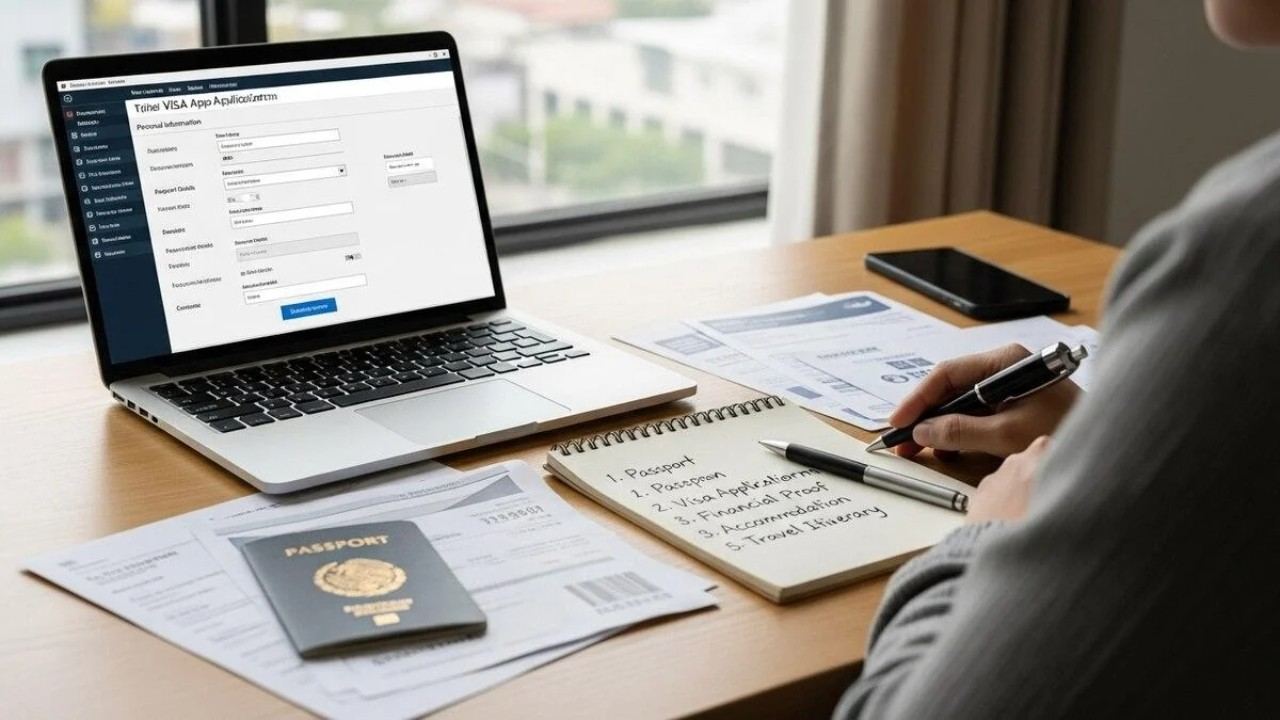
It is now going to be very easy to apply for visa for foreign nationals coming to India to visit, get treatment, study or business. The Union Ministry of Home Affairs (MHA) has informed on 11 November 2026 that the columns to be filled in the Indian visa application form have been reduced by 65 to 70 percent. This change will be applicable to all 23 visa subcategories including tourist, business, medical and student.
This decision of the government is also very important because these travelers coming from abroad give about Rs 2.73 lakh crore to Rs 2.93 lakh crore of foreign currency to the Indian economy every year, but after this announcement, the biggest question arising is whether just because the application form is shorter, will the foreigners be able to get the Indian visa sooner than before?
Also read: 'Congratulations to Sam Bhai', PM Modi responded to the interview of Congress's Sam Pitroda
When has the visa system been changed?
MHA has made several major changes in the last one year to ease the visa process. The main categories of visas were reduced from 22 to 13 in October 2025. After this, on August 27, 2026, the number of main categories was reduced from 13 to 9 and sub-categories were reduced from 49 to 23.
Now on 11 November 2026, the Ministry has announced to reduce the columns in the forms of all these 23 sub categories by 65-70%. To implement this new system, the Home Ministry is updating its IT system. According to the ministry, visas will start being issued under the new system by the end of 2026.
Big difference in form and visa issuance time
The government believes that removing unnecessary and repetitive information from the form will save time of applicants and make it easier for officials to investigate. For example, if earlier an applicant had to fill 100 columns and now only 30-35 columns have to be filled, then the mistakes made while filling the form will also reduce.
However, less time to fill the form and getting the visa quickly are two different things. After the application is submitted, it takes time for scrutiny, security clearance and other approvals. According to the official visa portal, it takes a minimum of three days for the visa to be issued once the application reaches the application center or Indian Mission. This time limit may also be extended. Processing time takes 72 hours or more under e-Visa guidelines.
The recent announcement by MHA does not provide any new figures to reduce the current visa processing time limit. The situation is not clear on the list of documents and data of each category. Some important aspects are still not clear in this entire exercise. For example, first, the ministry has talked about reducing the columns in the form but has made no mention of reducing passport requirements or the number of supporting documents required for business, medical and student visas. That means the information will have to be filled at one place but certificates may have to be submitted as before.
Second, business, medical, student and work visas have different requirements. The government has definitely stated an overall reduction of 65-70% but how many columns were there in each sub-category earlier and how many are left now. Its details have not been made public. Apart from this, there is no official data on how much the visa rejection rate will reduce due to shortening of the form.
Why are these foreign guests special?
There is also a big economic reason behind simplifying the visa rules. Statistics from the Ministry of Tourism and other agencies show that foreign travelers provide a major support to the country's economy. In government statistics, visiting tourists and businessmen are counted as 'Foreign Tourist Arrivals' (FTA). Apart from these, more than 1 crore non-resident Indians (NRIs) also come to India every year.
The country earned Rs 2,93,033 crore ($35.01 billion) from foreign travelers in 2024 and is estimated to earn Rs 2,73,638 crore ($31.69 billion) by 2025. This money goes to hotels, airlines, transport and local markets, generating huge revenues for the government in the form of GST, corporate tax, airport charges and visa fees.
Also read: 'Stop terrorism, nothing will come out', Farooq Abdullah gave advice to Pakistan
India's medical tourism market is growing rapidly. A foreign patient spends many times more than an ordinary tourist, because along with the hospital bill, the long-term stay, food and travel expenses of the patient and his family are also added to it. Students from about 200 countries are studying in many colleges and universities of the country.
However, the earnings from foreign students are still quite low compared to other categories. Now the eye is on the end of 2026, when the official MHA figures will be released. Only then will the actual difference between the old and new forms and its impact on the speed of visa issuance be assessed.