
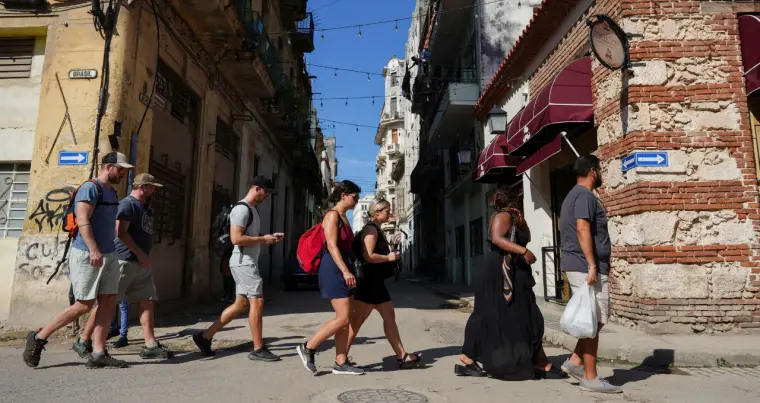

There has been a huge decline in tourism in Cuba due to US sanctions. The number of foreign tourists decreased by 58% in 2026. The shortage of fuel, food and electricity in the country has become more serious due to the closure of airlines and hotels.
Havana: The tourism industry in Cuba is going through a serious crisis. According to the latest data from government statistics agency Onei, there has been a huge decline in the number of foreign tourists since the beginning of 2026. Less than 3.6 lakh foreign tourists arrived in the country between January and May 2026, which is 58.4% less than the same period last year. The decline comes at a time when Cuba’s economy is already under pressure due to tough sanctions and political pressure imposed by the United States.
American sanctions have direct impact on tourism
According to reports, Cuba’s tourism sector has been specifically targeted by the US Trump administration. Tourism is considered the most important source of foreign exchange for the Cuban government, and a strategy has been adopted to increase the economic crisis by putting pressure on this sector. The sanctions have caused many international airlines and hotel companies to close or limit their services to Cuba, leading to a sharp decline in the number of tourists visiting the country.
Return of airlines and hotel companies
Recently Air Canada announced that it was indefinitely suspending its flight services to Cuba. The company cited “continued political and economic uncertainty” as the reason. Air Canada had already grounded flights in February due to fuel shortages, which remains a major problem in Cuba. Similarly, Spain’s major hotel companies Meliá and Iberostar have also ceased operations from several hotels due to US pressure and the new deadline.
US allegations and sanctions on GAESA
US Secretary of State Marco Rubio has made serious allegations against Cuba’s military-controlled group GAESA. According to him, this organization works like a “state within a state” and controls the major economic resources of the country. Rubio said that GAESA uses the income from its businesses to benefit a small elite rather than the public and represses those who express dissent. On this basis, the US has also set a deadline for companies to stop doing business with GAESA, which has further affected foreign investment and tourism.
Severe shortage of fuel, food and medicines
Cuba’s fuel crisis has deepened due to tight sanctions and restrictions on oil supplies. Due to this, not only the transportation system has been affected, but the entire economy seems to be almost at a standstill. Due to shortage of fuel in many areas, basic services like garbage collection have also been disrupted, due to which heaps of garbage are accumulating in the cities. Apart from this, shortage of medicines and food items has further increased the problems of the general public.
Impact on health services: decline in children’s cancer treatment
The survival rate for childhood cancer has dropped from 85% to 65% since January 2026, state-run media Cubadebate reported. This decline reflects the increasing pressure on the health system and the lack of resources. Experts believe that the shortage of medicines and medical equipment has seriously affected the quality of treatment.
Electricity crisis and life affected
Frequent and prolonged power outages have become common in Cuba. Power shortage has badly affected industries, hospitals and domestic life.
Due to power crisis, production has stopped in many areas and essential services are being disrupted. Due to this, dissatisfaction is increasing among the public and protests have also been seen at many places.
Social tension and protest incidents
Protests have also taken place from time to time due to increasing economic problems and power crisis in the country. Although public dissent is often strictly controlled in Cuba, incidents of dissent have increased in recent years. Experts say that continued economic pressure can become a challenge to social stability.
Impact on religious institutions also
According to reports, religious activities are also being affected in Cuba. There has been a shortage of communion wafers used in Catholic churches. Some priests said that they have been asked to use these religious items in limited quantities. These wafers are produced in a monastery in Havana, but power shortages have affected production.
Widespread impact of international sanctions
Experts believe that the impact of the economic and oil embargo imposed on Cuba is not limited to the government only, but it is also deeply affecting the lives of ordinary citizens. The simultaneous crisis in sectors such as tourism, health, energy and food supply has further weakened the country’s economic condition.

Comments are closed.