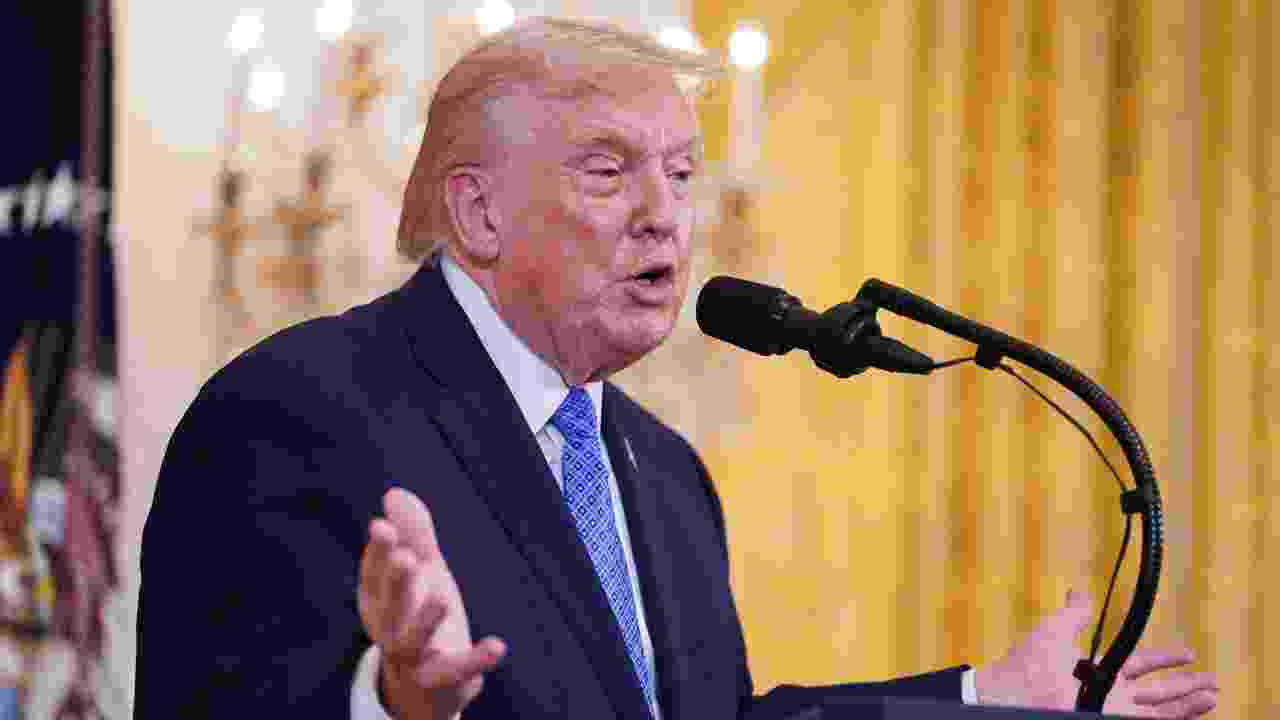
In a major diplomatic development, U.S. President Donald Trump has officially announced what he describes as a “historic” multinational agreement designed to secure the complete disarmament of Hamas within the Gaza Strip. In a high-profile press briefing, we announced a comprehensive framework to end years of devastating conflict and fundamentally alter the security architecture of the Middle East. By shifting the focus from temporary truces to permanent demilitarisation, the administration hopes to pave the way for long-term stability and economic recovery in the region.
The Core Framework of the Disarmament Deal
According to the preliminary details released during the announcement, the agreement requires a phased but absolute demilitarisation of the territory. The core of the plan mandates the verifiable surrender of heavy weaponry, subterranean military infrastructure, and rocket stockpiles by Hamas and affiliated factions. In exchange for strict compliance with the disarmament protocols, the framework guarantees a massive influx of international reconstruction aid. This financial assistance, intended for rebuilding Gaza’s critical civilian infrastructure, hospitals, and residential zones, will be strictly administered by independent, international third-party organisations to ensure funds entirely bypass militant networks.
Regional Partnerships and Multinational Oversight
A key part of this new deal is integrating key regional power brokers. The diplomatic breakthrough was reportedly secured through intense mediation involving Egypt, Qatar, and Saudi Arabia, working in tandem with the U.S. to provide necessary security guarantees to Israel. To enforce the terms, the agreement sets up a multinational oversight committee. Joint monitoring task forces, featuring representatives from moderate Arab nations and Western allies, are slated to oversee the disarmament process on the ground, manage border security, and prevent the future smuggling of munitions.
Implementation and Acknowledged Challenges
While the announcement has been met with cautious optimism from global markets and international diplomatic circles, geopolitical experts emphasise that the true test of the agreement lies in its execution. Disarming entrenched factions within a complex, densely populated urban environment presents unprecedented logistical and security hurdles. However, the administration expressed unwavering confidence in the initiative, emphasising that the severe economic incentives for compliance—coupled with unified diplomatic pressure from neighbouring Arab states—will drive the long-term success of the protocol. If successfully implemented, this framework could serve as a definitive turning point in one of modern history’s most protracted conflicts.