
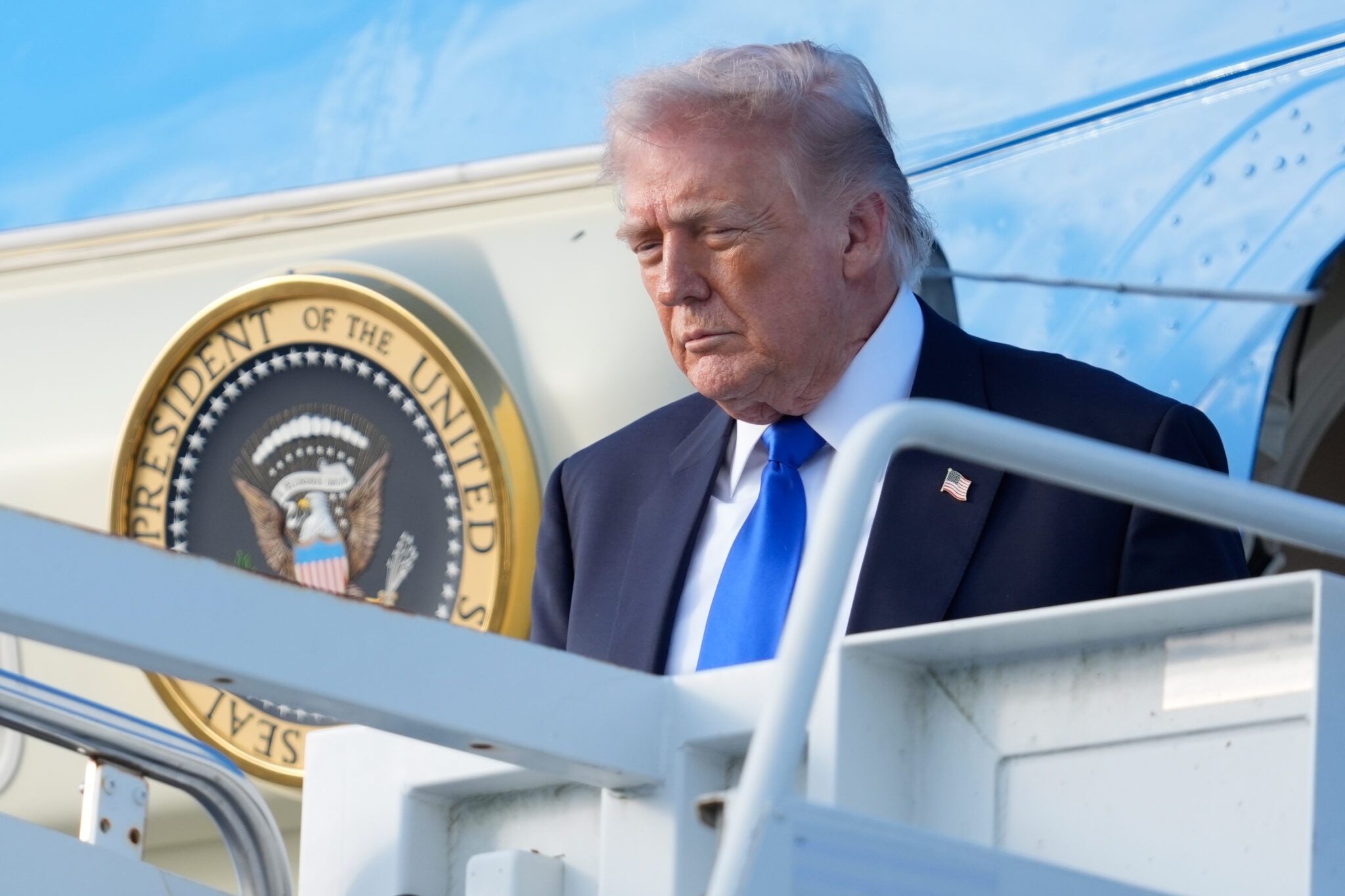

Trump, Journalists to Face Off at White House Correspondents’ Dinner/ TezzBuzz/ WASHINGTON/ J. Mansour/ Morning Edition/ President Donald Trump is expected to attend the White House Correspondents’ Association dinner for the first time as president, placing his tense relationship with journalists in the spotlight. The annual Washington event comes amid lawsuits, press access battles, and growing criticism over the administration’s treatment of media organizations. Trump’s appearance is also reigniting debate over whether journalists should socialize with the officials they cover.
- Trump is expected to attend the White House Correspondents’ Dinner Saturday
- It would be his first appearance as president at the event
- He skipped the dinner during his first term and early second term
- The administration has battled major media outlets in court
- Nearly 500 retired journalists signed a petition criticizing Trump’s press attacks
- The dinner continues debate over journalists socializing with politicians
- Mentalist Oz Pearlman replaces the traditional comedian this year

Trump Returns to White House Correspondents’ Dinner Spotlight
President Donald Trump’s expected appearance at Saturday’s White House Correspondents’ Association dinner is drawing intense attention as the annual event places his often combative relationship with the press front and center.
The dinner, one of Washington’s most closely watched media and political gatherings, traditionally brings together presidents, journalists, lawmakers, and top administration officials for a night of speeches, awards, and entertainment.
For Trump, the moment carries extra weight.
He did not attend the dinner during his entire first term in office and also skipped it during the first year of his second term.
This year marks what is expected to be his first appearance at the event as president.
That alone makes it one of the most closely watched White House Correspondents’ dinners in years.
A Long History With the Event
Trump’s relationship with the dinner goes back years.
He attended as a guest in 2011, when then-President Barack Obama famously joked about him from the stage while Trump sat in the audience.
Many political observers have long pointed to that night as one of the moments that fueled Trump’s eventual White House run.
He also attended again as a private citizen in 2015 before launching his successful presidential campaign.
But once in office, Trump avoided the event entirely during his first presidency, often criticizing both the media and the dinner itself.
Now, his return signals a major shift—or at least a moment worth watching closely.
A Traditionally Friendly but Tense Event
Presidents who attend the dinner usually deliver remarks celebrating the First Amendmentdefending freedom of speech, and lightly roasting journalists, rivals, and even themselves.
The event has historically served as both a celebration of press freedom and an unusual moment of social peace between the White House and the press corps.
This year’s dinner program is expected to begin after 8 p.m. EDT, with Trump’s remarks not expected before 8:30 p.m.
Unlike previous years when comedians headlined the event, the White House Correspondents’ Association selected mentalist Oz Pearlman as this year’s featured entertainer.
The choice reflects a more cautious tone for an event already surrounded by political tension.
Trump’s Relationship With the Press Remains Combative
Trump’s second term has been marked by ongoing legal and political battles with major media organizations.
His administration has clashed with outlets including The New York Times, The Wall Street Journal, and The Associated Press.
There have also been disputes over access restrictions at the Pentagon and fights involving individual reporters and White House press credentials.
Trump’s criticism of the press has remained a defining feature of his presidency.
He has repeatedly accused major outlets of bias and unfair coverage while positioning himself as fighting against what he calls the political media establishment.
That backdrop makes his presence at the dinner especially significant.
Retired Journalists Push Back
On the eve of the event, nearly 500 retired journalists signed a petition calling on the White House Correspondents’ Association to take a stronger stand against what they described as Trump’s attacks on press freedom.
The petition urged the group “to forcefully demonstrate opposition to President Trump’s efforts to trample freedom of the press.”
That public criticism adds another layer of tension to the event.
Many in journalism see the dinner as more than a social gathering—they view it as a symbolic defense of independent reporting and constitutional protections.
Trump’s attendance makes that symbolism even sharper.
WHCA Defends the Gathering
White House Correspondents’ Association President Weijia Jiang, a CBS News reporter, defended the importance of holding the dinner despite criticism.
“The White House Correspondents’ dinner reinforces the importance of the First Amendment in our democracy,” Jiang said.
“As we mark America’s 250th birthday, our choice to gather as journalists, newsmakers and the president in the same room is a reminder of what a free press means to this country and why it must endure. Not for the media or the president, but for the people who depend on it.”
Her statement framed the event not as a party, but as a public reminder of the role journalism plays in democracy.
Debate Over Journalists Socializing With Power
Trump’s attendance is also renewing a long-running debate inside journalism itself.
Critics argue that journalists should not be seen socializing with the very politicians and officials they are supposed to scrutinize.
The concern is that such events create the appearance of cozy relationships and weaken public trust.
The New York Times stopped attending the dinner more than a decade ago for exactly that reason.
Kelly McBride, ethics expert at the Poynter Institutewrote that the dinner is now “simply a bad look.”
“What was once (a fairly long time ago) a well-intended night of fundraising and camaraderie among professional adversaries is now simply a bad look,” she said.
The criticism has only grown stronger in today’s highly polarized political climate.
Many Reporters Still Defend the Event
Despite criticism, many White House reporters say the dinner still serves a professional purpose.
It offers rare face-to-face access to administration officials, lawmakers, and sources in a less formal setting.
Those personal interactions can lead to stronger reporting relationships and better access later.
Returned phone calls, background conversations, and off-the-record insights often begin in rooms like this.
For many journalists, the dinner is less about glamour and more about practical reporting value.
That tension between ethics and access remains one of the event’s defining debates.
Even Guest Lists Are Politically Sensitive
Who attends—and who sits with whom—also matters.
Many news organizations invite government sources or former officials as guests.
This year, The Associated Press invited Taylor Budowich, a former White House deputy chief of staff who previously helped shape White House communications policy.
The invitation stands out because Budowich was named as a defendant last year when the AP sued the administration after access was reduced over the outlet’s refusal to adopt Trump’s preferred renaming of the Gulf of Mexico.
AP spokesman Patrick Maks defended the move.
“We maintain professional relationships with people across the political spectrum because we are nonpartisan by design — focused on reporting the facts in the public’s interest,” he said.
The guest list itself reflects the complicated relationship between journalism and power.
Reporting Awards May Also Create Tension
The correspondents’ dinner also includes awards honoring major reporting achievements.
Some of those winning stories directly angered Trump.
That includes reporting from The Wall Street Journal about a birthday message Trump once sent to convicted sex offender Jeffrey Epstein.
The story led to a presidential lawsuit and became one of the most controversial media stories of the year.
Recognizing such reporting during an event Trump attends could create another moment of tension.
It is a reminder that while the dinner may include smiles and formal attire, the conflict underneath remains very real.
A Night That Reflects a Bigger Fight
Saturday’s White House Correspondents’ Dinner is about much more than speeches and social events.
It reflects a broader national struggle over press freedom, political power, public trust, and the role of journalism in modern democracy.
Trump’s presence ensures that those tensions will not stay hidden.
Whether the evening feels like reconciliation, confrontation, or simply political theater, it will serve as another public chapter in one of the most contentious White House-media relationships in modern history.
For both Trump and the journalists covering him, every moment will be closely watched.
More on US News
Comments are closed.