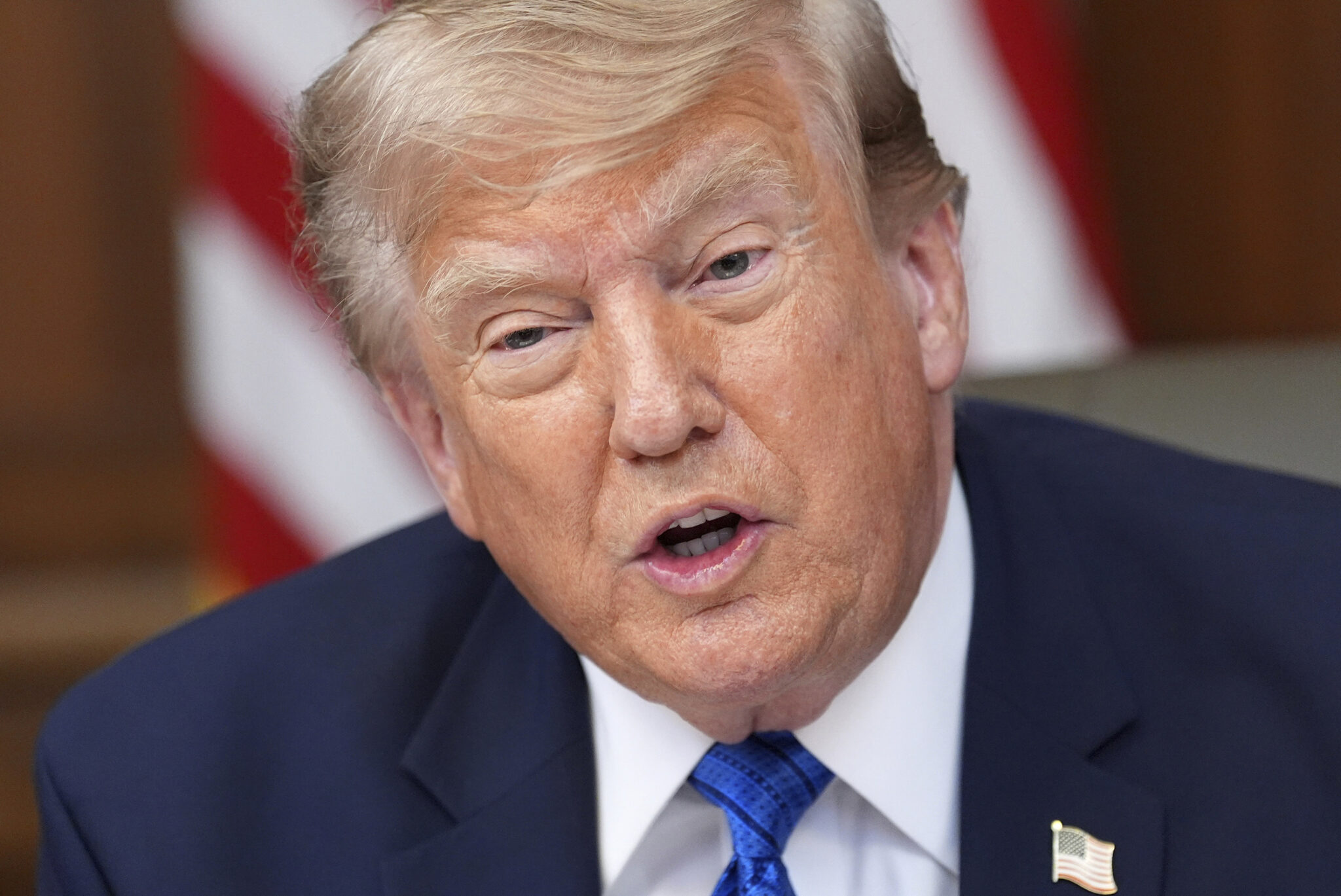
Trump Rejects Iran’s Compensation Demand, Says Tehran Must Pay for ‘All People They Killed’/ TezzBuzz/ WASHINGTON/ J. Mansour/ Trump rejected Iran’s demand for $300 billion in war compensation and the release of up to $100 billion in frozen assets. He said Tehran should instead compensate people allegedly killed or wounded in attacks and conflicts connected to Iran. The competing claims have added another obstacle to negotiations over reopening the Strait of Hormuz.
Quick Look
- Iran is seeking $300 billion in compensation for war damage.
- Tehran also wants up to $100 billion in frozen assets released.
- Iran linked those demands to fully reopening the Strait of Hormuz.
- Trump rejected Tehran’s compensation claim on Truth Social.
- He described Iran’s request as an “interesting idea.”
- Trump said the United States would make its own compensation demand.
- He cited people allegedly killed or wounded in Iran-linked violence.
- Trump also demanded compensation for families of Iranian protesters.
- He claimed 52,000 people were killed during the five-month war.
- Iran also wants sanctions lifted and U.S. military threats ended.
- Commercial traffic through Hormuz remains severely disrupted.
- Iranian officials say the strait will remain a “theatre of war” until their conditions are met.
Deep Look
Trump rejects Iran’s compensation demand
President Donald Trump rejected Iran’s demand that Washington pay $300 billion for damage caused by U.S. and Israeli strikes during the war.
Tehran is also seeking the release of as much as $100 billion in frozen Iranian assets.
Iran has made the financial demands part of a broader set of conditions for fully reopening the Strait of Hormuz, the strategically important waterway through which roughly one-fifth of the world’s traded oil normally passes.
Trump responded Monday on Truth Social, describing Iran’s compensation demand as an “interesting idea” and announcing that the United States would present its own claim in future negotiations.
Trump proposes a counter-demand
Trump said Iranian representatives were seeking compensation for destruction caused during the “last five month military conflict.”
The U.S.-Israeli war against Iran began Feb. 28. Trump said the conflict started because Tehran refused to abandon its nuclear weapons ambitions.
Iran has maintained that the United States and Israel should compensate it for military strikes that damaged infrastructure and killed Iranian officials and civilians.
Trump argued that Tehran should instead be held financially responsible for deaths and injuries he attributed to Iran and Iran-backed forces.
“I am likewise demanding compensation from Iran, for all of the people that they have killed and gravely wounded,” Trump said.
The president said he had directed U.S. representatives to include that counterclaim in all future discussions with Tehran.
Trump cites Soleimani and past attacks
Trump referred to the late Iranian military commander Qassem Soleimani while alleging that Tehran had participated in conflicts resulting in thousands of deaths.
Soleimani led the elite Quds Force, the branch of Iran’s Revolutionary Guard responsible for overseas operations and support for Tehran-aligned armed groups.
He was killed in a U.S. drone strike ordered by Trump in Baghdad in January 2020.
Trump also cited the 2000 bombing of the USS Cole and other attacks while discussing the U.S. compensation claim. His statement alleged an Iranian connection but did not provide supporting evidence.
The USS Cole was attacked by al-Qaida suicide bombers in Yemen, killing 17 American sailors.
Trump demands payments for Iranian protesters’ families
Trump said the proposed U.S. counterclaim should also include compensation for the families of protesters allegedly killed by Iran’s government during the past five decades.
He further claimed that 52,000 people had been killed during the last five months of war.
The president did not explain how the figure was calculated or provide a detailed breakdown of the deaths.
“I have instructed my representatives to put this firmly into any, and all, future negotiations,” Trump said.
The competing demands introduce another contentious issue into discussions already stalled over sanctions, military operations, frozen assets and control of the Strait of Hormuz.
Iran makes compensation a condition for Hormuz reopening
Iran says the United States must compensate it for war damage before Tehran will agree to reopen the strait fully.
Its other conditions include lifting economic sanctions, ending military threats against Iran and releasing frozen Iranian assets.
Iran has also demanded an end to the U.S. naval blockade of its ports and the withdrawal of American forces from the region.
Washington has not accepted those conditions.
Iran is separately discussing a possible temporary shipping arrangement with Oman, but Tehran has emphasized that a limited maritime corridor would not necessarily amount to a full reopening.
Shipping remains heavily disrupted
Iran’s ability to threaten vessels transiting the Strait of Hormuz has constrained the Trump administration’s military and diplomatic options.
Missile and drone attacks have repeatedly disrupted commercial traffic and increased risk for oil tankers and other ships.
The continuing instability has contributed to higher oil prices and growing concern in global financial and energy markets.
Trump has repeatedly said the strait is open, but shipping activity remains far below normal levels.
Many companies remain reluctant to send vessels through the waterway because of the threat of missiles, drones and mines.
Threats of escalation fail to resolve standoff
Trump has threatened Iran with a “massive bombing campaign” if Tehran refuses to accept U.S. conditions.
Iran, however, has indicated that it is prepared for an extended conflict.
The country retains the ability to target commercial shipping and energy infrastructure despite months of U.S. and Israeli strikes.
That capacity has made a purely military resolution of the Hormuz crisis difficult and increased pressure for a negotiated settlement.
The addition of competing compensation demands could make such an agreement even harder to achieve.
Iran says strait remains a war zone
Iran’s Revolutionary Guard said Sunday that the Strait of Hormuz would remain closed until Washington accepted Tehran’s conditions, including compensation for war damage.
Iranian security official Mohammad Bagher Zolghadr had also called for an end to the “war and aggression” against Iran and allied forces in Lebanon, Palestine, Yemen and Iraq.
The Revolutionary Guard said the strategic waterway would remain a “theatre of war” until the United States agreed to Iran’s demands.
Trump’s counterclaim indicates that Washington does not intend to accept financial responsibility without pressing Tehran over its own alleged role in regional violence.
The dispute now centers not only on whether shipping can resume but also on which country bears responsibility for the war and its human and economic costs.
More on US News