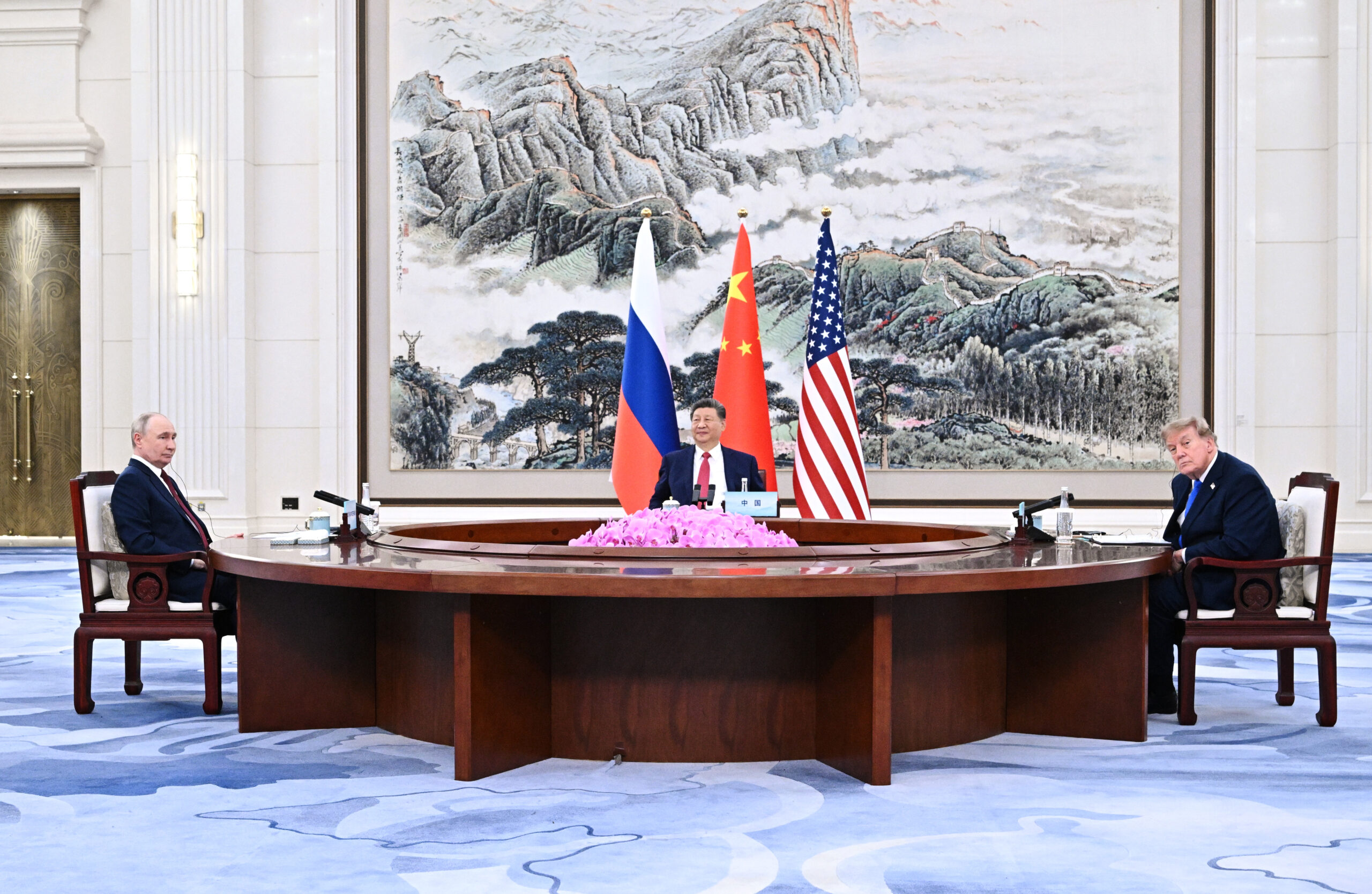
Trump-Xi Meeting Offers Putin Diplomatic Boost, Global Spotlight as Ukraine Fears Concessions/. NEWSLOOKS/ WASHINGTON/ Jehan Mansour/ Vladimir Putin’s meeting with Donald Trump and Xi Jinping offers the Russian leader a platform to project global influence. Ukraine and European allies fear the talks could encourage a settlement favoring Moscow without their participation. Russia also hopes to expand economic cooperation with Washington while discussing nuclear arms control.


Putin’s Summit Strategy: Quick Look
- Sharing the stage with Trump and Xi helps Putin counter Western efforts to isolate him.
- Trump and Putin met separately Thursday before the trilateral gathering in Shenzhen.
- Ukraine and European allies are concerned about agreements reached without their involvement.
- Recent U.S.-mediated Russia-Ukraine negotiations produced few visible results.
- Moscow welcomed a proposal to include broader European security in settlement discussions.
- Russia wants renewed U.S. economic cooperation, potentially before a peace agreement.
- Nuclear arms control remains complicated by differences between China’s arsenal and those of Russia and the United States.


Putin’s Summit Strategy: Deep Look
Summit gives Putin a platform to project power
For Russian President Vladimir Putin, appearing alongside Donald Trump and Xi Jinping offers a diplomatic benefit regardless of whether their talks produce major agreements: an opportunity to present Russia as an equal of the United States and China.
The three-way meeting in Shenzhen challenges Western efforts to isolate the Kremlin leader over Russia’s invasion of Ukraine. It also gives Putin another opening to press Trump to support Moscow’s demands for ending the war.
Trump and Putin met separately Thursday before joining Xi on the sidelines of the Asia-Pacific Economic Cooperation summit.
Kremlin foreign affairs adviser Yuri Ushakov said the discussions were expected to address Ukraine and other conflicts that “are literally festering now.”
For Kyiv and its European partners, the concern is that decisions affecting their security could emerge from negotiations in which they have no seat.
Ukraine and Europe fear another Alaska outcome
German Chancellor Friedrich Merz has warned of another “Anchorage moment,” referring to the August 2025 meeting between Trump and Putin in Alaska.
That encounter produced proposals rejected by Ukraine and its partners. The Shenzhen talks have revived concerns that Washington could endorse terms favorable to Moscow.
The summit follows U.S.-mediated negotiations between Russia and Ukraine in Abu Dhabi last week, their first such talks in nine months. Those discussions yielded few visible results, with the two sides maintaining sharply different demands.
Moscow has welcomed a U.S. proposal to discuss broader European security as part of a possible settlement. That approach aligns with Russia’s longstanding demand that the West address its security concerns.
Ukraine and its allies oppose expanding the negotiations in that direction, fearing Moscow could use the process to divert attention from the war and pursue wider strategic goals.
Yalta comparisons highlight concerns over smaller nations
Some Western observers have compared the three-way gathering to the 1945 Yalta conference, where American, British and Soviet leaders negotiated arrangements that shaped postwar Europe.
Russia publicly downplays that comparison, emphasizing instead its support for a multipolar international order. China also regards the analogy as unwelcome.
Fyodor Lukyanov, a pro-Kremlin foreign policy analyst, said Moscow nevertheless appears to believe the three leaders could “reach agreements and make decisions that will determine global developments.”
Of the three countries, “it seems that only Russia really believes in the possibility of global control,” he told a recent roundtable.
Chatham House director Bronwen Maddox argued that the symbolism itself benefits Putin.
“Standing with Xi and Trump, Putin will look like one of the three main leaders of the world,” she wrote, while arguing that “Russia is no superpower” and pointing to its economic strains.
She warned that “the danger for Ukraine is that Trump uses this summit to try to advance his notion of peace, including giving Russia territory it has not managed to seize by force.”
Recent U.S. decisions have encouraged Moscow
Several recent Trump administration decisions have strengthened the Kremlin’s position heading into the talks.
Trump waived tough new sanctions against Russia and reached a diesel agreement allowing Moscow to resume fuel exports, reversing years of American pressure.
He also urged Ukraine to stop attacking Russian refineries, blaming those strikes for higher U.S. diesel prices, although the Iran war has been the main driver of those increases.
Ukraine has separately reported restrictions on Starshieldthe military-grade version of SpaceX’s Starlink satellite internet service. Those disruptions have been widely interpreted as an effort to pressure Kyiv into negotiating concessions.
Together, the developments have deepened Ukrainian and European concerns about Washington’s approach to a settlement.
Fighting continues despite diplomatic activity
Both Russia and Ukraine have intensified long-range strikes as fighting remains largely stalled along the approximately 750-mile front.
Ahead of the Shenzhen meeting, Ukrainian drones and missiles seriously damaged the Kerch Bridgea major symbol of Moscow’s control over Crimea and a project closely associated with Putin.
Russia has continued attacking Ukraine’s electricity network and bridges in Kyiv.
Putin has acknowledged damage from Ukrainian attacks while maintaining that Russia has inflicted greater losses.
He continues to resist Ukraine’s calls for a ceasefire, arguing instead for a comprehensive agreement. Moscow says a temporary pause would allow Ukrainian forces to rest and rearm.
Russia seeks economic openings and nuclear discussions
Beyond Ukraine, the Kremlin wants to revive economic cooperation with the United States and establish new business opportunities, potentially before a peace agreement is reached.
Nuclear arms control is another major issue.
Trump has said he wants to discuss “denuclearization.” Russia has expressed willingness to address arms control while acknowledging China’s reluctance to reduce an arsenal much smaller than those held by Washington and Moscow.
Russia also displayed reminders of its nuclear capabilities ahead of the summit.
Two nuclear-capable Tu-95 bombers visited Vietnamwhile Russian television highlighted an officer accompanying Putin in China with a briefcase containing codes for Russia’s nuclear forces.
For Putin, the combination of diplomatic access, economic discussions and nuclear symbolism reinforces the central message of his summit appearance: Russia expects a leading role in decisions about international security.
More on US News