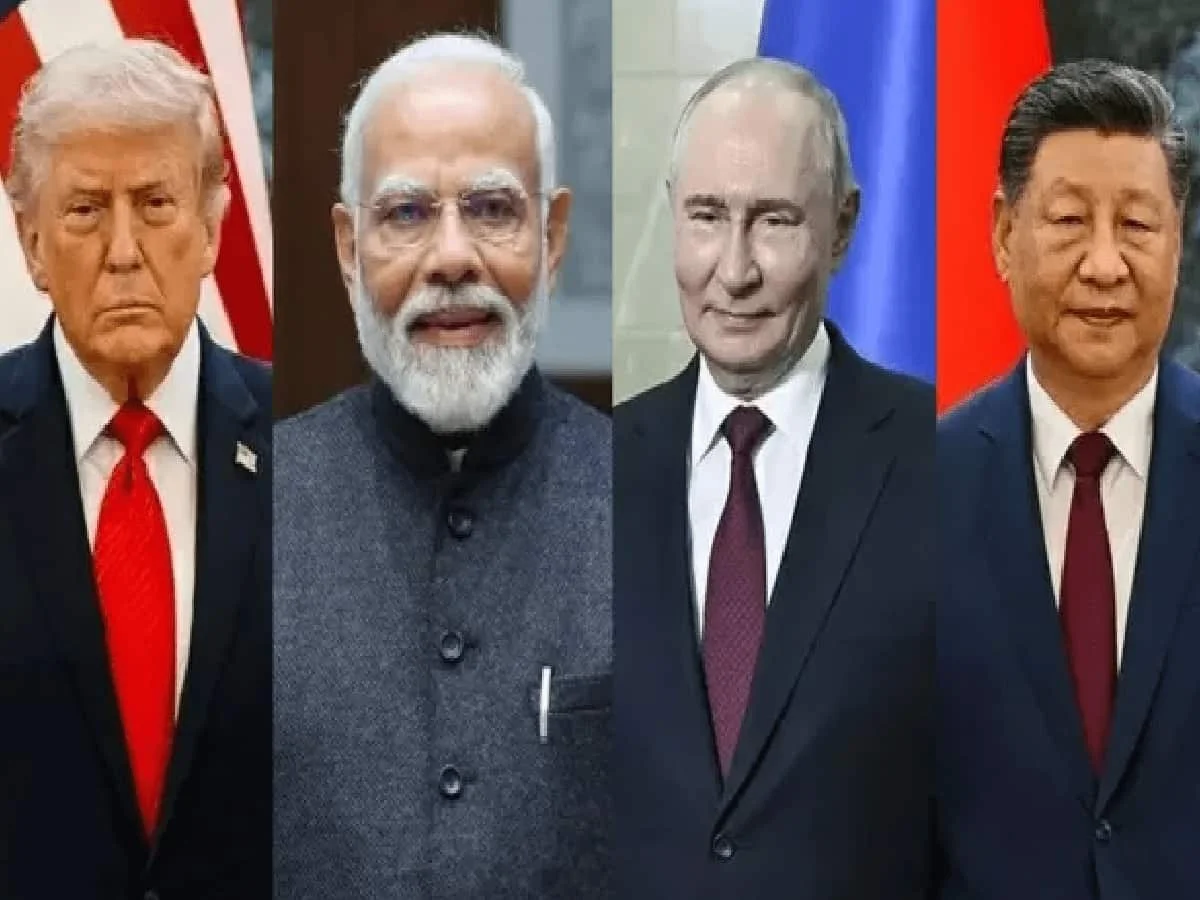
Against a backdrop of shifting geopolitical alliances, domestic political setbacks, and intense global scrutiny, United States President Donald Trump has officially embarked on a sweeping diplomatic tour across Asia. The high-stakes itinerary features critical bilateral engagements with key regional leaders, high-profile trade negotiations, and a historic trilateral dialogue involving the world’s premier nuclear superpowers.
From navigating trade discussions in Southeast Asia to sitting down with Indian Prime Minister Narendra Modi and orchestrating a unprecedented summit with Chinese President Xi Jinping and Russian President Vladimir PutinTrump’s journey across the Pacific is shaping up to be one of the most consequential foreign policy tests of his administration.
Diplomatic Stop in Manila: Trade Deals and the Anticipated Modi Meeting
The first major leg of President Trump’s tour centers on the Philippine capital, Manilawhere he is scheduled to engage with regional leaders seeking robust American partnership to counter expanding geopolitical influence in the Indo-Pacific.
Among the most closely watched diplomatic events in Manila is a potential meeting between President Trump and Indian Prime Minister Narendra Modi. Diplomatic circles have also buzzed with speculation regarding a possible Quad summitbringing together leaders from India, the United States, Japan, and Australia. While the U.S. State Department previously signaled that plans for a Manila-based Quad gathering were under consideration, India’s Ministry of External Affairs has maintained that no formal confirmation has yet been issued regarding a standalone bilateral summit. Nevertheless, any interaction between Trump and Modi occurs at a vital juncture as both nations navigate ongoing bilateral trade negotiations and strategic defense cooperation.
In addition to regional security consultations, the White House confirmed that Trump will formally sign a comprehensive trade agreement with Thailand during his Manila stop, aiming to cement economic ties across Southeast Asia.
A Historic Trilateral Summit: Nuclear Talks With Xi Jinping and Vladimir Putin
The defining geopolitical moment of the entire tour will occur during its final leg at the Asia-Pacific Economic Cooperation (APEC) summit in Shenzhen, China. There, President Trump is scheduled to participate in a first-of-its-kind trilateral meeting with Chinese President Xi Jinping and Russian President Vladimir Putin.
According to senior U.S. administration officials, the core agenda for this rare and sensitive dialogue will center squarely on the nuclear arsenals held by the three superpowers, exploring potential frameworks for strategic arms control and deterrence management. While formal deliberations on the ongoing conflict in Ukraine are reportedly excluded from the primary agenda, broader regional security dynamics, including escalating geopolitical tensions involving Iran, are expected to form the backdrop of the discussions. China’s Foreign Ministry has acknowledged the monumental nature of the gathering, describing the proposed trilateral talks as a significant milestone in great-power diplomacy.
Domestic Political Turbulence and the Nvidia Controversy
President Trump’s overseas diplomatic push comes at a time of severe political vulnerability on the home front. The journey unfolds immediately following bruising midterm elections in November, which saw the Republican Party lose control of both the House of Representatives and the Senate to the Democratic Party. This dramatic shift in congressional power promises to ramp up legislative oversight and investigative pressure on the White House.
Compounding these domestic challenges is a major controversy involving American semiconductor giant Nvidia. The tech sector was rocked recently by the resignation of Nvidia CEO Jensen Huang amid intense public scrutiny and allegations concerning potential links to a foreign national accused of acting as a Chinese agent. Although U.S. officials have stated there are no formal plans to raise the Nvidia controversy during formal talks with Xi Jinping, the unfolding scandal casts a heavy shadow over Washington’s technology and trade policy toward Beijing.
Elon Musk Joins the Delegation Amid Rising Congressional Scrutiny
Adding a unique corporate and technological dimension to the presidential delegation, billionaire entrepreneur Elon Musk—chief executive of Tesla and SpaceX—is traveling alongside President Trump on the Asian tour.
Musk’s presence underscores the intersection of American tech dominance, space exploration, and statecraft. However, political analysts note that with the Democratic Party holding a newly minted majority in Congress, Musk is expected to face aggressive parliamentary scrutiny upon his return regarding his evolving advisory roles within government administration and the intersection of his corporate commercial interests.
As President Trump navigates the bustling convention halls of Manila and the high-security diplomatic chambers in Shenzhen, the success of this Asian tour will be measured not just by signed trade pacts, but by his ability to project strength abroad while managing mounting political turbulence back home.