
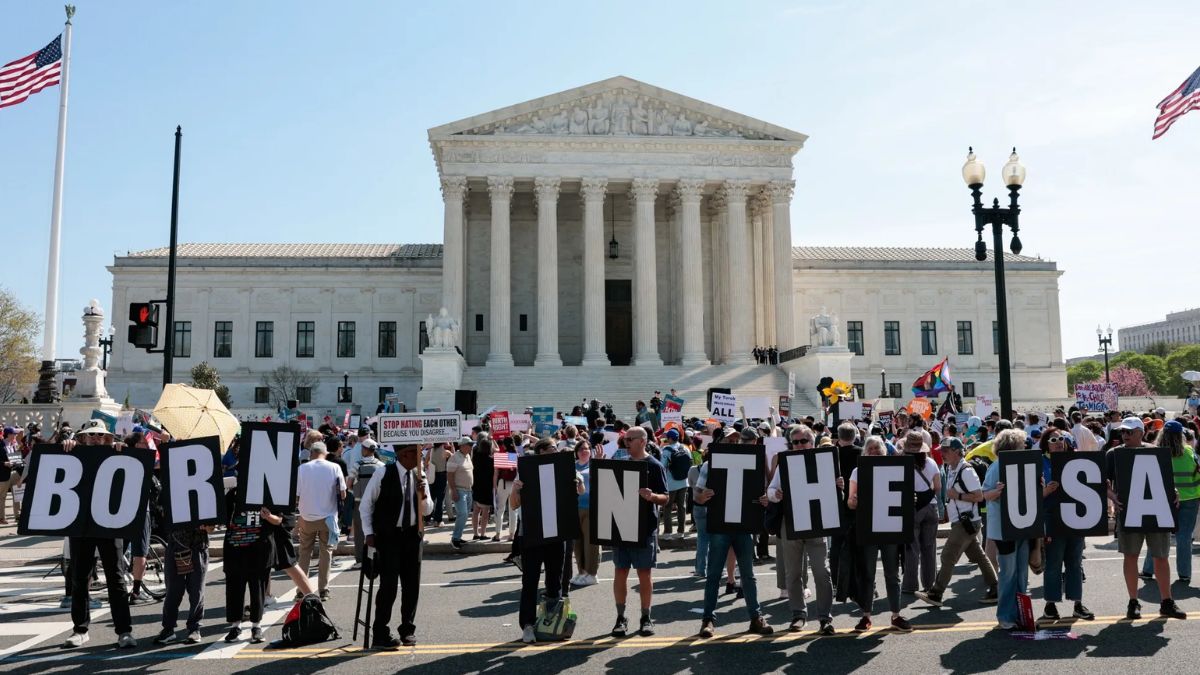

The U.S. Supreme Court has ruled against President Donald Trump’s executive order seeking to end automatic birthright citizenship for certain children born in the United States, reaffirming that those born on U.S. soil to parents who are in the country illegally are entitled to citizenship under the Fourteenth Amendment of the U.S. Constitution.
Key Takeaways
- The U.S. Supreme Court ruled against Trump’s executive order on birthright citizenship.
- The Court reaffirmed that children born in the U.S. to undocumented parents are citizens under the Fourteenth Amendment.
- Trump’s Day One executive order had sought to restrict automatic citizenship for certain U.S.-born children.
- The ruling upholds the long-standing constitutional interpretation and the 1898 Wong Kim Ark precedent.
- The decision blocks implementation of the executive order and preserves existing birthright citizenship protections.
The ruling marks a significant legal setback for one of the Trump administration’s key immigration initiatives. The executive order, signed on the first day of Trump’s second term, sought to deny automatic U.S. citizenship to children born in the country if their parents were in the United States unlawfully or on temporary visas. The order had been challenged in multiple federal courts and was blocked before it could take effect.
In its decision, the Supreme Court reaffirmed the long-standing interpretation of the Citizenship Clause of the Fourteenth Amendment, which guarantees citizenship to nearly all individuals born on U.S. territory, subject only to limited exceptions such as children of foreign diplomats. The judgment also reinforces the precedent established in the landmark 1898 United States v. Wong Kim Ark case, which has governed birthright citizenship for more than a century.
The ruling effectively prevents the administration from implementing the executive order and preserves existing constitutional protections for children born in the United States regardless of their parents’ immigration status. Legal experts had argued that altering birthright citizenship would require a constitutional amendment rather than executive action.
The case attracted nationwide attention as one of the most consequential immigration disputes before the Supreme Court during Trump’s second term. It also represented the first final Supreme Court ruling on one of the administration’s major immigration policies.
Supporters of the executive order had argued that birthright citizenship encouraged illegal immigration and “birth tourism,” while opponents maintained that the Constitution’s language and longstanding judicial precedent clearly protected citizenship by birth.
With the decision, the Supreme Court has left intact the constitutional framework governing U.S. citizenship at birth, ensuring that the existing interpretation of the Fourteenth Amendment continues to apply nationwide.

Comments are closed.