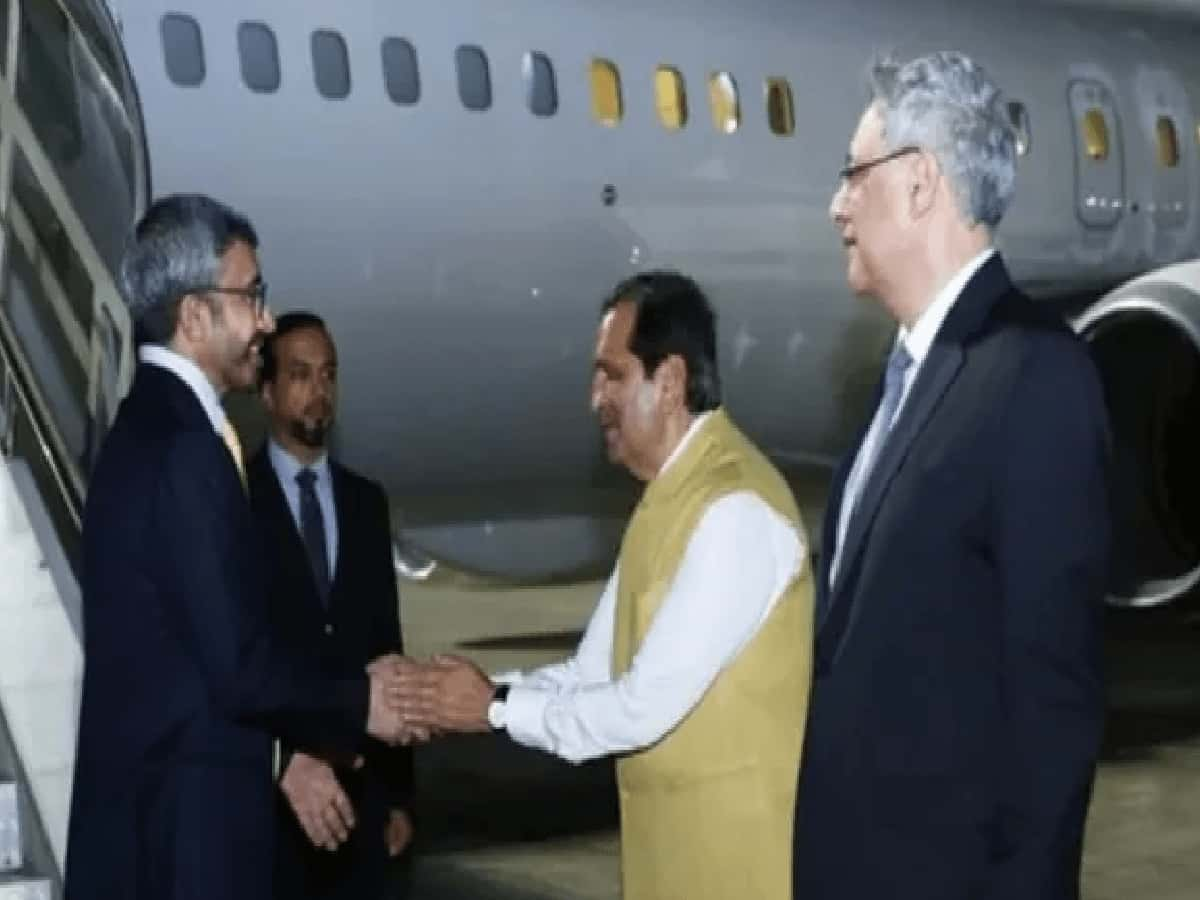
In a swift diplomatic maneuver reflecting growing regional urgency, United Arab Emirates (UAE) Deputy Prime Minister and Minister of Foreign Affairs Sheikh Abdullah bin Zayed Al Nahyan landed in Mumbai late Monday night for crucial bilateral talks with India’s External Affairs Minister Dr. S. Jaishankar. Scheduled for Tuesday, October 20, 2026, the high-profile engagement comes within days of Jaishankar concluding an intensive three-day official tour to Abu Dhabi from October 14 to 16, where initial deliberations were described as cordial and productive. The back-to-back diplomatic outreach highlights how New Delhi and Abu Dhabi are closing ranks to secure mutual geopolitical, commercial, and security interests amid volatile military escalation across West Asia, maritime choke points, and fluctuating global energy flows.
Agenda of the Mumbai Dialogue: Comprehensive Strategic Review Across Critical Sectors
Official diplomatic channels have outlined an expansive agenda aimed at deepening existing bilateral frameworks:
Review of Comprehensive Strategic Partnership: Ministry of External Affairs (MEA) official spokesperson Randhir Jaiswal confirmed that the Mumbai talks serve as an immediate vehicle to assess progress achieved across core bilateral pillars.
Core Domains of Deliberation: The ministerial dialogue will focus on accelerating ongoing joint initiatives across traditional and renewable energy, trade corridors, sovereign investments, fintech, defense industrial manufacturing, and regional digital connectivity.
Multilateral and Global Consensus: Beyond economic avenues, both ministers will conduct comprehensive appraisals of changing power dynamics in West Asia, multilateral cooperation, and shared positions within international forums.
Soaring West Asia Tensions: Strait of Hormuz, Houthi Threat, and Maritime Security
The rapid back-and-forth high-level visits between New Delhi and Abu Dhabi underscore mounting geopolitical and supply chain vulnerabilities:
Strait of Hormuz Disruptions: Military escalations involving Iran in 2026 and targeted assaults against commercial maritime shipping through the Strait of Hormuz have cast a severe shadow over global crude oil exports, sparking supply volatility and surging fuel prices.
Bab al-Mandeb Chokepoint Risks: Sustained Houthi operational attacks originating from Yemen have heightened threats around the Bab al-Mandeb strait, leaving critical sea lines of communication exposed to ongoing disruption.
Energy Security and Diaspora Safety: For India, the UAE serves as a vital anchor not only for strategic fuel imports but also as the primary home to an extensive 4.5 million-strong Indian diaspora whose economic stability and physical safety remain top diplomatic priorities.
Expanding Beyond Hydrocarbons: CEPA Gains and the $200 Billion Trade Target
Economic ties between India and the UAE have undergone a historic structural upgrade over recent fiscal cycles:
Surpassing the $100 Billion Milestone: Following the operationalization of the landmark Comprehensive Economic Partnership Agreement (CEPA) in 2022, bilateral trade volumes between the two countries have crossed the historic $100 billion threshold.
Doubling Horizons to $200 Billion: Both nations have formally set their sights on reaching an ambitious $200 billion bilateral trade target by 2032, propelled by rapidly expanding non-oil exchanges.
Local Currency Settlements and Investments: Bilateral transactions have been reinforced through direct Indian Rupee (INR) and UAE Dirham (AED) local currency settlement mechanisms, cementing the UAE’s standing as one of India’s most prominent foreign direct investment sources.
Advancing the Strategic Defence Partnership Framework
Security and defense industrial collaboration form a foundational axis of the Mumbai discussions:
The May 2026 Strategic Defense Accord: Bilateral security cooperation received a transformative boost following Prime Minister Narendra Modi’s official visit to the UAE in May 2026, which established the Strategic Defence Partnership Framework.
Deepening Industrial and Cyber Collaboration: The framework encompasses joint defense equipment manufacturing, co-development of advanced technologies, integrated military training programs, counter-piracy operations, maritime domain awareness, cyber defense, and real-time intelligence sharing.
Securing Indo-Gulf Connectivity: The Mumbai summit will specifically focus on translating these strategic defense blueprints into actionable ground networks, reinforcing open sea corridors and bolstering regional stability across the Arabian Sea.