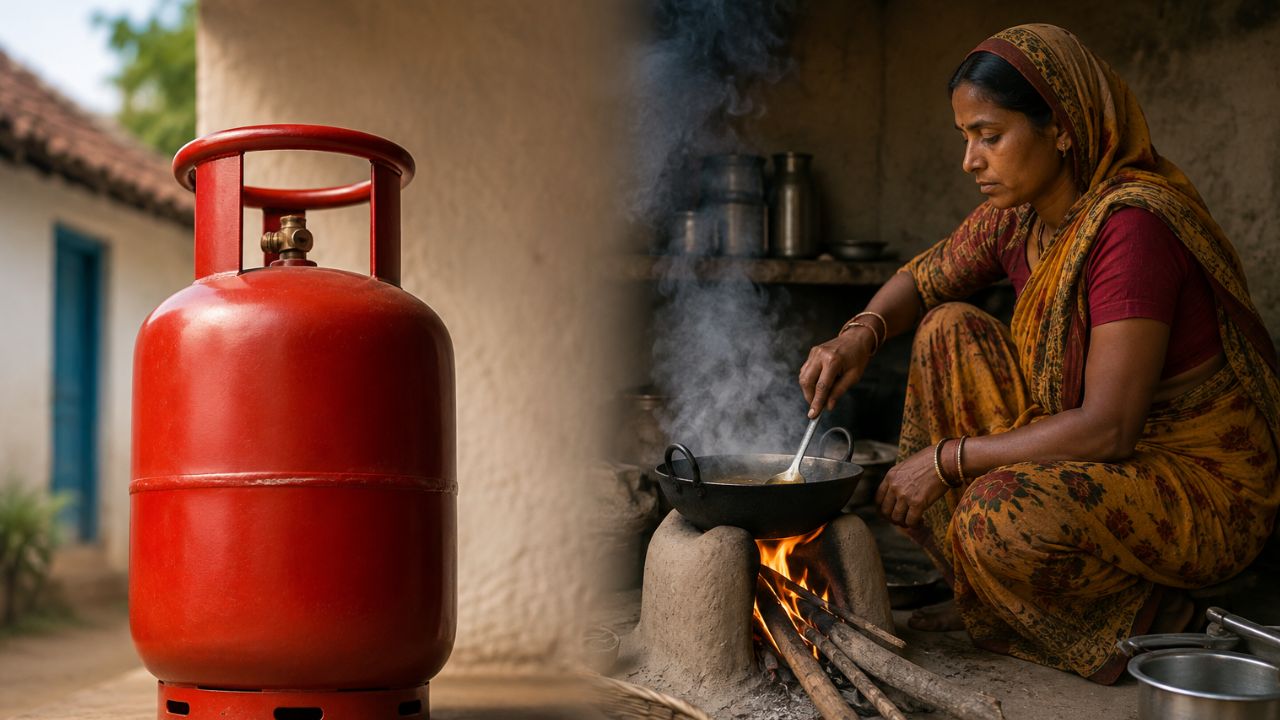
The central government launched the Pradhan Mantri Ujjwala Yojana (PMUY) on May 1, 2016. Under this scheme, free gas connections were provided to rural and poor women, enabling them to use clean cooking fuel instead of wood and coal smoke. According to government data, more than 105.7 million LPG connections have been provided to women from poor families so far. The government also provides Ujjwala beneficiaries with a subsidy of ₹300 per 14.2 kg cylinder for up to nine refills.
Despite this, during 2025-26, more than 25.2 million households in the country did not refill their LPG cylinders even once. Meanwhile, approximately 45.8 million people only refilled their cylinders one to four times a year. Typically, a typical Indian family needs six to twelve LPG cylinders per year. This raises the question: why, even after receiving a connection, millions of families are not regularly refilling their cylinders.
Connection is free, then why are people not getting it refilled?
The biggest reason behind this is the cost of refill cylinders. Under the Ujjwala Yojana, gas connections are free, but the full cost of refilling the cylinder is paid upfront. The subsidy is credited to the bank account later. Therefore, many low-income families find it difficult to spend so much money at once. On the other hand, in rural areas, many families still use wood, cow dung cakes, and farm waste for cooking, as these items are easily available and inexpensive. Therefore, many people use gas cylinders only for special occasions or when absolutely necessary.
According to government data, Ujjwala beneficiaries refilled an average of 4.8 cylinders in 2025-26. This is better than before, but still falls short of the typical household requirement of approximately 6 to 12 cylinders annually. If beneficiaries are unable to refill their gas cylinders regularly, the scheme’s primary objective remains unfulfilled.
There are many other reasons behind this.
The government provides a subsidy, but consumers have to pay the full price upfront to refill the cylinder. The subsidy is credited to their account later. This makes it difficult for low-income families to raise a lump sum. Families with daily wage workers often don’t have regular incomes, so they often spend on essential needs like rations, children’s education, and medical care before refilling. Furthermore, some families still believe that cooking on a wood stove is better or haven’t developed the habit of using LPG regularly. Furthermore, in some remote villages, it’s difficult to reach an LPG agency or receive timely delivery of the cylinder, which further delays refills.
Aims to improve women’s health
Under this scheme, the government aims to reduce dependence on traditional stoves and improve women’s health by providing clean fuel to every household. According to the World Health Organization (WHO), indoor smoke from solid fuels such as wood, coal, and cow dung cakes causes millions of premature deaths worldwide each year.
This increases the risk of respiratory illness, lung infections, heart disease, and stroke. The government also intended to protect women and children from serious illnesses caused by stove smoke. Therefore, if Ujjwala beneficiaries are unable to refill their LPG cylinders regularly, the scheme’s primary objective remains unfulfilled.